
Summer Washington, D.C. Itinerary
How to plan Washington, D.C. in the heat — a summer itinerary that front-loads the monuments at dawn, retreats into the free, air-conditioned Smithsonian museums through the worst of the afternoon, and saves the neighborhoods, the waterfront and the lit memorials for the long evening. Built around shade, water and timing rather than a checklist, because in a DC July the schedule matters more than the sights.

Photo: Caroline McFarland / Unsplash
- ✓DC summers are hot and humid, and the Mall has very little shade — so the whole plan is timing: monuments early, museums midday, neighborhoods and lit memorials at night.
- ✓The headline sights are free and most are air-conditioned, which makes the heat manageable: you can duck into a Smithsonian museum or the National Gallery whenever the afternoon turns brutal.
- ✓Start each day at or near dawn while the marble is cool and the light is best, then treat the 1–5 pm block as indoor time by design, not by accident.
- ✓Carry water, a hat and sunscreen for the Mall, and use the Metro for longer hops rather than route-marching the full two miles in the sun.
- ✓Summer evenings are long and lively — the Wharf, the rooftops and the floodlit monuments come into their own once the worst heat lifts after sunset.
The summer plan at a glance
Before the day-by-day, the handful of facts that shape a hot-weather trip to the capital:
- Weather: DC summers (roughly June to early September) are hot and humid, with afternoon highs that regularly sit in the upper range and sticky air; sudden thunderstorms are common on summer afternoons. Check the forecast each morning and keep a rain plan.
- Cost: the memorials and almost all the museums are free, so the heat strategy costs you nothing — ducking into an air-conditioned Smithsonian is a free retreat, not a paid one.
- Shade: the open Mall has very little of it. The shade and cool sit indoors (museums, the National Gallery), in tree-lined neighborhoods (Georgetown, Dupont), and along the water at dusk.
- Rhythm: monuments and outdoor walking at dawn and after sunset; museums and indoor sights through the hot middle of the day. Build every day around that arc.
- Hydration: carry a refillable water bottle, a hat and sunscreen; water fountains exist along the Mall but are not everywhere. Verify current museum bag and bottle rules before you go.
- Crowds: summer is peak season and school-holiday busy, so the early start beats the lines as well as the heat. Timed-pass sights book up — reserve ahead.


Why DC in summer is all about timing
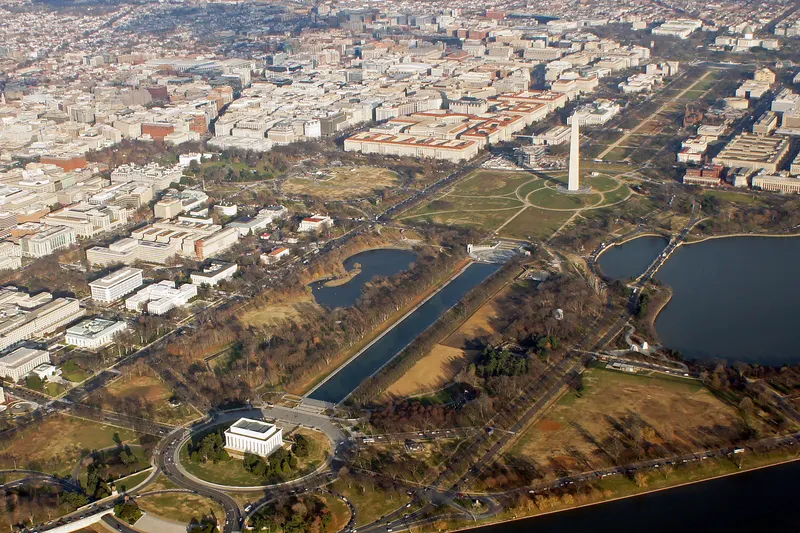
Washington was laid out as a grand, open, monumental city — which is glorious in spring and autumn and punishing in July. The National Mall is a two-mile lawn with almost no shade, the marble holds the heat, and the humidity makes the midday feel heavier than the thermometer suggests. The mistake that ruins summer trips is treating the day as one long outdoor march: by early afternoon you are sunburnt, footsore and short-tempered, and you still haven't seen the museums.
The fix is simple and it transforms the trip: split every day into an outdoor shoulder and an indoor middle. Do the monuments and the open walking at dawn, when the light is best and the air is briefly tolerable. Then, as the heat builds toward midday, move indoors into the free, air-conditioned Smithsonian museums and the National Gallery — and stay there through the worst of it, roughly one to five in the afternoon. When the sun drops and the air softens, come back out for the neighborhoods, the waterfront and the floodlit memorials. The same sights everyone else fights over at noon are yours, cooler and quieter, at the edges of the day.
The other gift of a DC summer is that the strategy is free. Because the museums cost nothing, retreating from the heat is never a paid decision — you can step into Natural History or the National Gallery for an hour purely to cool down, with no ticket and no guilt. Summer in DC is less about which sights you choose and more about the order you take them in.
Before you go: passes, water and a rain plan
Two bookings deserve attention before a summer trip. First, any timed-entry museums: some of the most-wanted Smithsonians release free passes online in advance and they go fast in peak season — reserve early so your indoor midday block is guaranteed, not a gamble at a sold-out door (verify each museum's current pass policy before you travel). Second, if a Capitol tour or the White House is on your list, those are arranged ahead through your representative or embassy and are best slotted into a morning, before the heat and while you are fresh.
Then pack for the climate rather than the postcard. A refillable water bottle, a hat and high-SPF sunscreen are the difference between an enjoyable Mall morning and a miserable one; the lawn offers little cover, and you will be out in direct sun. Build a rain plan too: DC summer afternoons spawn fast, heavy thunderstorms, and the same museums that shelter you from heat shelter you from a downpour, so a wet hour is rarely a wasted one here. Comfortable, broken-in shoes matter more than usual when the pavement is hot and the distances are long.


Day 1 — monuments at dawn, museums through the heat
Start before the day warms. Walk the western memorials in the early light while the marble is still cool: the Lincoln Memorial at the top of its steps, the Reflecting Pool stretching back toward the Washington Monument, the Vietnam Veterans Memorial wall, the Korean War Veterans Memorial and the World War II Memorial all sit in one walkable loop. This is the single most photogenic hour of a DC summer day — long light, low crowds, breathable air — and doing it first means you have banked the trip's headline images before the heat arrives. Refill your water at the start and keep moving while it's pleasant.
By late morning, retreat indoors and stay there. The big Mall museums — Natural History, American History, the National Gallery of Art — are free, air-conditioned and vast enough to fill the hot middle of the day without ever stepping back into the sun. Pick two or three rooms you actually want (the Hope Diamond, the Star-Spangled Banner, a wing of the National Gallery) rather than trying to 'do' a whole building; museum fatigue is real, and the point today is as much shelter as it is sightseeing. Eat lunch indoors where you can. Then, when the sun finally drops and the air eases after sunset, come back out for an evening monument walk — the same memorials you saw at dawn are floodlit, cooler and almost empty, and the contrast makes them feel like two different places.


Day 2 — the cool middle: Tidal Basin dawn, indoor afternoon, waterfront night
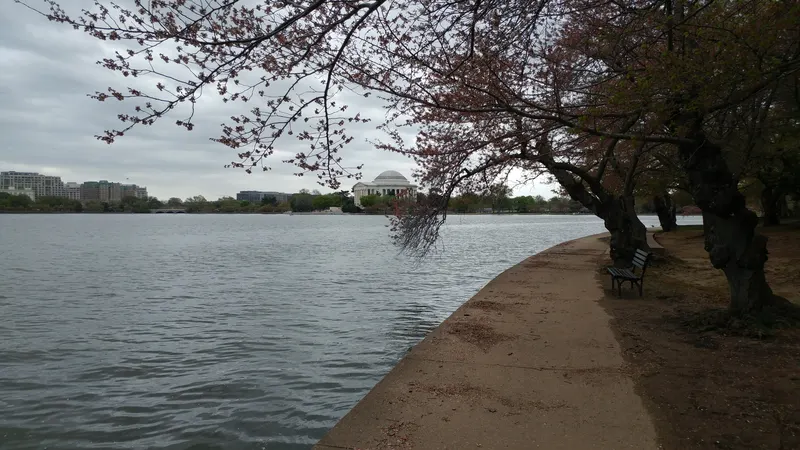
Give the second dawn to the Tidal Basin, the loop that gathers the Jefferson Memorial, the Martin Luther King Jr. Memorial and the Franklin D. Roosevelt Memorial around the water. Early morning is by far the best time here — the light comes off the basin, the temperature is bearable, and the FDR Memorial's outdoor 'rooms' and waterfalls are genuinely cooling to walk through. The basin path has more tree cover than the open Mall, which helps, but it is still a morning job; by midday this stretch bakes.
Spend the hot afternoon on the indoor sights that reward a longer, focused visit and never see the sun: the National Museum of African American History & Culture (which has used free timed passes — verify and book ahead), the National Archives to stand before the Declaration and the Constitution, or a deep hour or two in a single Smithsonian. These are full, air-conditioned blocks by design. Then make the evening the reward: head to the Wharf on the Southwest waterfront, where the breeze off the channel, the open-air restaurants and the long summer dusk turn the day's final hours into the easiest, most pleasant part of it. Sit by the water, eat late, and let the heat of the day become someone else's problem.
Day 3 — leafy neighborhoods, water and an easier pace
A third day is the moment to leave the exposed federal core entirely and spend the heat where the city is shadier and the pace is gentler. Georgetown is the obvious choice: the C&O Canal towpath runs leafy and flat under tree cover, the brick side streets hold their cool better than the Mall, and the waterfront gives you a breeze and a place to sit. Pair a slow canal walk with an air-conditioned lunch and an afternoon of browsing — Georgetown rewards aimlessness, which is exactly what a hot afternoon calls for. Dupont Circle, with its tree-lined streets, bookshops and cafés, works the same way and keeps you on the Metro.
For an active third day that still beats the heat, swap pavement for water: a kayak or paddleboard on the Potomac, a paddle boat on the Tidal Basin in the cooler morning, or simply more time on the breezier waterfront. If the family has energy, the National Zoo runs uphill and downhill through Rock Creek Park's tree cover, which makes it more bearable than the open Mall — but it is still a hot-weather outing best done early, with the animals most active in the cooler morning hours (verify current free entry-pass requirements). However you fill it, keep Day 3 looser than the first two: by the third day of a DC summer, the kindest thing you can plan is less.


Staying cool: water, Metro, storms and the long evening
The practical rules that make a DC summer comfortable are few but they matter. Drink more water than you think you need and refill at every chance; the heat plus the humidity dehydrates faster than the dry sun of a desert trip. Use the Metro for any hop longer than a few blocks rather than marching the full Mall in the sun — the trains are air-conditioned, the stations are a brief escape from the heat, and a SmarTrip card covers the whole network (verify current fares). Reapply sunscreen, wear a hat, and treat the early afternoon as indoor time on principle, not as a failure of nerve.
Respect the thunderstorms. DC summer afternoons can turn from clear to violent quickly, with lightning and heavy rain; if one rolls in, the nearest free museum is both your shelter and a perfectly good hour of sightseeing, so a storm rarely costs you the day. And lean into the long evenings, which are the real prize of a summer trip: the light lingers, the air softens after sunset, the rooftops and the waterfront come alive, and the monuments stand floodlit and quiet for anyone willing to walk them after dark. Plan a DC summer around its mornings and its nights, surrender the middle to the museums, and the heat stops being the story.
 Best rooftop bars in DC
Where to catch a breeze, a monument view and a long summer sunset over a drink.
 Where to stay in DC
Area-by-area advice, with bases near a Metro station to keep summer walking short.
 Washington DC in July
The month in detail — the heat, the humidity, the Fourth of July and what to expect.

Related guides
Washington, D.C. in July
What a July trip to Washington is really like — the hottest, most humid month, the Fourth of July on the National Mall with its crowds, security and fireworks, and the heat-smart rhythm that makes the rest of the month not just bearable but genuinely good: cool museums by day, monuments by night.
Read guide
Best Museums in Washington, D.C.
Washington has more world-class museums than any sane trip can hold, and almost all of them are free. This is a guide to the best museums in DC sorted by topic, age, ticket needs, location and rainy-day value — so you can choose two or three with confidence instead of trying to see them all.
Read guide
The Wharf & Southwest Guide
How to enjoy The Wharf and Southwest Waterfront in Washington — the mile-long boardwalk on the Washington Channel, seafood and the historic fish market, music at The Anthem, riverfront hotels, cruises and water taxis, the Spy Museum, and date-night sunsets.
Read guideMore in Itineraries
6
A Washington, D.C. Itinerary with Kids
A family-paced Washington, D.C. itinerary — short museum blocks at the free Smithsonians, the dinosaurs and the Hope Diamond, the National Zoo, the Mall carousel, plenty of food and bathroom breaks, stroller notes and fewer long walks, built so children and parents both enjoy the day.
Read guide
A Weekend in Washington, D.C.
A Friday-to-Sunday Washington, D.C. weekend — where to base yourself, an arrival-night monuments walk, a full Saturday of the Mall, museums and a Capitol tour, a Sunday of brunch, the Tidal Basin and a neighbourhood, built around Metro access and slower evenings.
Read guide
Four Days in Washington, D.C.
An unhurried four-day Washington, D.C. itinerary — the Mall monuments and free Smithsonian museums, a Capitol tour and the founding documents, the Tidal Basin and Georgetown, then deeper museums, fuller neighbourhoods and a relaxed day trip to Arlington, Old Town Alexandria or Mount Vernon, with slower evenings throughout.
Read guide
Low-Walking Washington, D.C. Itinerary
A gentler way to see Washington, D.C. — a low-walking itinerary built for limited mobility, seniors, hot days and anyone who wants to avoid the long, exposed Mall marches. It leans on the Metro, on drop-offs and rideshare, on the few seated and short-distance options, and on the simple truth that the museums and many monuments can be seen well without crossing two miles of lawn on foot.
Read guide
Luxury Washington, D.C. Itinerary
Washington wears luxury quietly — grand historic hotels a block from the White House, chef's-counter tasting menus, private after-hours tours and a rooftop city of monument views. This is a high-end Washington, D.C. itinerary that pairs the free, world-class sights with the polish, ease and access that make the difference: where to stay, where to dine, what to book privately and how to fold in Mount Vernon in style.
Read guide
One Day in Washington, D.C.
A realistic single-day route through the capital — the western monuments early, one Smithsonian museum at midday, the Mall's headline sights, Capitol views and the monuments lit at dusk, all walkable and free.
Read guide