
Washington, D.C. in July
What a July trip to Washington is really like — the hottest, most humid month, the Fourth of July on the National Mall with its crowds, security and fireworks, and the heat-smart rhythm that makes the rest of the month not just bearable but genuinely good: cool museums by day, monuments by night.

Photo: Vihan Dalal / Unsplash
- ✓July is peak DC summer — hot, humid days where the heat index can climb high, so the whole trip is built around staying cool in the middle of the day.
- ✓The Fourth of July is the city's biggest day: a parade, a concert and a major fireworks display over the Mall, all wrapped in heavy security and enormous crowds.
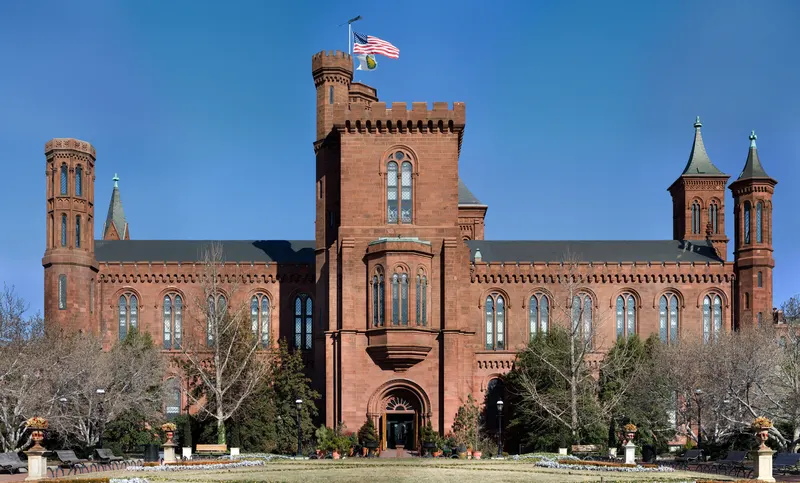
- ✓The free, air-conditioned Smithsonian museums are the season's secret weapon — the obvious indoor block when the afternoon sun is brutal.
- ✓Late evenings are the reward: walk the floodlit monuments after sundown, when the air finally eases and the crowds thin.
- ✓Afternoon thunderstorms are common and can be sudden — keep a flexible plan and an indoor backup ready.
Why July is the heat-smart month
July is the hottest, most humid stretch of the Washington year, and pretending otherwise is how visitors end up miserable. The honest framing is simpler: this is a month you plan around the heat, not against it. Do that, and July is a perfectly good time to visit — the free museums are at their most valuable, the city is in full summer swing, and the long evenings are some of the loveliest of the year on the Mall.
The rhythm that works is the one locals live by all summer. Start early, when the air is at its kindest. Move indoors for the middle of the day, when the sun on the open lawn is at its hardest. Then come back out in the late afternoon and evening, when the light softens, the crowds fall away and the monuments are lit. Get that cadence right and the heat becomes a backdrop rather than the whole story.


Weather: hot, humid and stormy
July is typically Washington's warmest month, with daytime highs commonly in the upper 80s to low 90s Fahrenheit (around 30–34°C) and the famous Mid-Atlantic humidity pushing the heat index higher still. Nights stay warm and muggy. Afternoon and evening thunderstorms are a regular feature — they can blow in fast, drop heavy rain, and clear just as quickly, sometimes taking the edge off the heat for an hour. Treat these as typical ranges and check the forecast close to your trip.
Practical heat defence matters more here than in any other month. Carry and refill water, wear a hat and sunscreen, build in shade and indoor breaks, and don't try to walk the entire Mall in a single midday push — there's almost no shade out on the open lawn. Pace the outdoor stretches for the morning and the evening, and treat the air-conditioned museums as part of the cooling plan, not just sightseeing.

The Fourth of July on the Mall
Independence Day is the single biggest day of the Washington year, and it unfolds on and around the National Mall: a daytime parade along Constitution Avenue, a televised evening concert near the Capitol, and a major fireworks display launched over the monuments after dark. Hundreds of thousands of people come for it. The reward is real — fireworks over the Washington Monument is a genuinely unforgettable sight — but so is the logistical reality of the crowds, the heat and the security.
If you want to be on the Mall for the fireworks, plan for it like an event, not a stroll. Expect bag checks, a published list of prohibited items, security screening and street closures across the federal core; arrive early to claim a spot, bring water, and have a clear plan for getting back to your hotel afterward, because the Metro and the streets are overwhelmed when it ends. If crowds aren't your thing, the good news is that the fireworks are tall enough to be seen from many points around the city — a rooftop, a riverside vantage or a spot across the Potomac in Arlington can give you the show with a fraction of the crush. Exact timings, the concert and the security rules are set fresh each year, so verify the official details before the day.
- Plan the Fourth like an event: arrive early, expect bag checks and a prohibited-items list, and screen-security delays.
- Bring water and sun protection — you may be outdoors for hours in peak heat before the fireworks begin after dark.
- Have an exit plan; the Metro and downtown streets are jammed the moment the display ends.
- Prefer calm? Watch the fireworks from a rooftop, the riverfront or across the river in Arlington instead of the Mall itself.
- Verify the year's parade route, concert and security rules in advance — they're set fresh annually.

The rest of July: cool blocks and late walks
Once the Fourth has passed, July settles into its steady summer pattern, and the free museums become the spine of the trip. The Smithsonians and the National Gallery are vast, air-conditioned and cost nothing, so there's no pressure to power through a whole building — pick two or three rooms, see them well, and use the cool interior as a midday reset before heading back out. The Folklife Festival often runs into the very start of the month, an open-air bonus if your dates catch it.
Save the monuments for the evening, when July is at its best. They're open and lit year-round, the late summer sunset buys you a long golden window, and walking the Lincoln Memorial, the Reflecting Pool and the World War II Memorial after the heat breaks is one of the season's quiet pleasures. A July day that runs cool-museum-then-evening-monument loses almost nothing to the weather and gains the city at its most atmospheric.
- Anchor the day on the free, air-conditioned museums — they're the heat plan as much as the sightseeing.
- Don't try to 'finish' a museum; pick a few rooms and treat the cool interior as a midday break.
- Walk the monuments in the evening, when the air eases, the light is golden and the crowds thin.
- Stay hydrated and flexible — a sudden thunderstorm is easier to absorb when the day already leans indoors.

July at a glance
A quick read on the month before you commit. Use the ranges as typical, not promised — DC summers swing year to year, and any given week can run hotter or stormier than the average.
- Weather: typically the hottest month; highs often in the upper 80s–low 90s°F (~30–34°C), high humidity, frequent afternoon thunderstorms. Verify near your dates.
- Crowds: heavy around the Fourth of July; steady summer leisure crowds the rest of the month.
- Prices: peak-summer demand around the holiday; otherwise typical summer rates.
- Daylight: long — late sunsets give you a cool second window for the monuments.
- Watch for: Independence Day on the Mall (parade, concert, fireworks, heavy security and closures). Verify the year's details.


Related guides
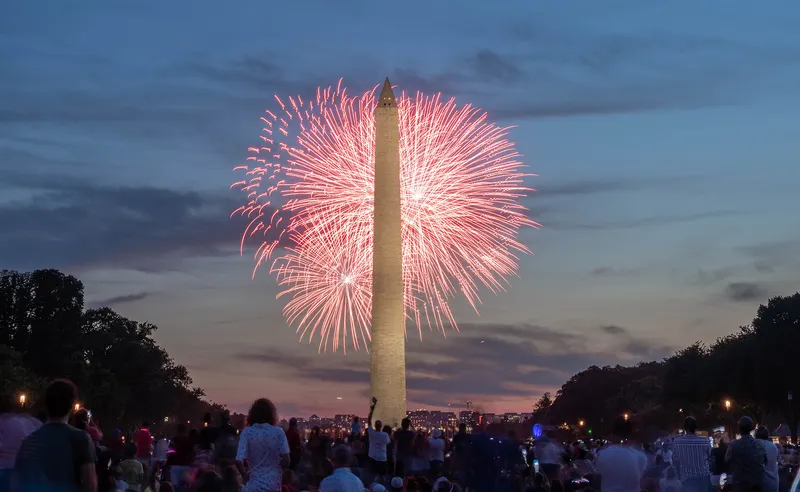
Fourth of July in Washington, D.C.
How to do Independence Day in the capital — the parade, the concert and the big fireworks over the National Mall — plus the security, closures, Metro reality and heat-smart planning, with calmer ways to watch if the crowds aren't for you.
Read guide
Summer Washington, D.C. Itinerary
How to plan Washington, D.C. in the heat — a summer itinerary that front-loads the monuments at dawn, retreats into the free, air-conditioned Smithsonian museums through the worst of the afternoon, and saves the neighborhoods, the waterfront and the lit memorials for the long evening. Built around shade, water and timing rather than a checklist, because in a DC July the schedule matters more than the sights.
Read guide
Washington, D.C. Weather Guide
What Washington's weather actually means for a trip — the humid, heavy summers, the gentle spring and autumn shoulder seasons, the uncertain cherry-blossom window, the mild but raw winters, and how each season should shape your days on the Mall, in the museums and out for dinner.
Read guideMore in Travel Tips
6
Accessible Washington, D.C.
How to visit Washington with mobility, distance or stamina in mind — the step-free Metro, the largely flat but very long Mall, accessible museums and memorials, taxis and rideshare, and ways to build a low-walking plan that still reaches the city's best places.
Read guide
Are Washington, D.C. Passes Worth It?
An honest look at whether a bundled DC attraction pass saves you money — why a city built on free museums and monuments changes the maths, and the short list of paid sights where a pass or a single ticket actually helps.
Read guide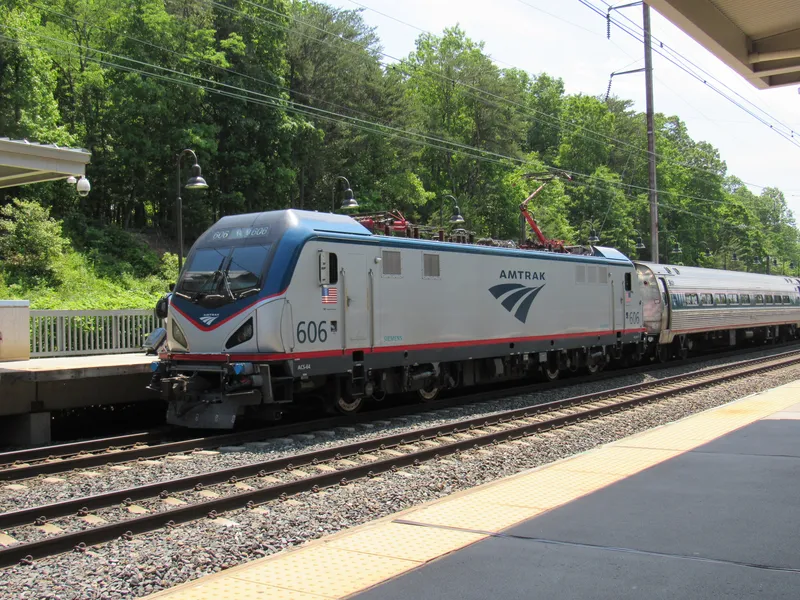
BWI Airport to Washington, D.C.
How to get from Baltimore/Washington International (BWI) into Washington, D.C. — the MARC and Amtrak trains via the BWI rail station, the free terminal shuttle, taxis and rideshare, and an honest look at whether BWI is the right airport for a DC trip.
Read guide
Capitol & White House Tour Planning
How official tours of the two most famous buildings in Washington actually work — the request windows, who to ask, the security to expect, realistic odds, and the strong free backups if a tour doesn't come through.
Read guide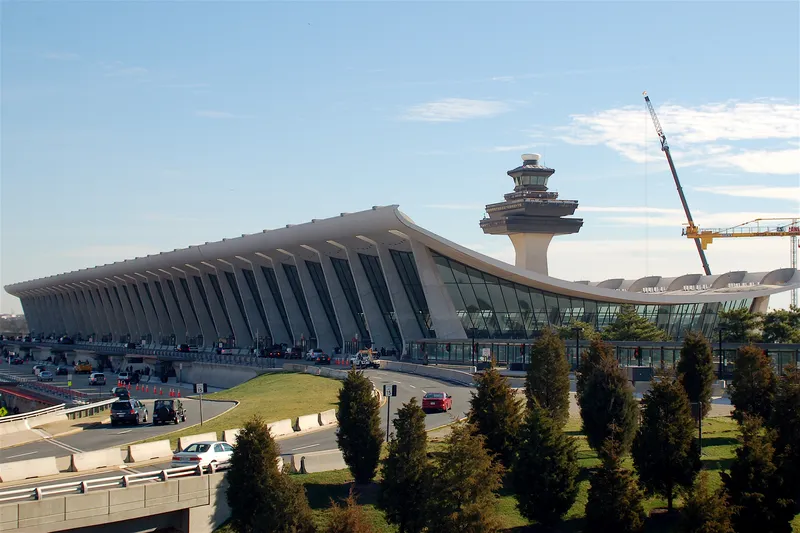
Dulles Airport to Washington, D.C.
How to get from Dulles International Airport (IAD) into Washington, D.C. — the Silver Line Metro, the Washington Flyer and 5A-style buses, taxis and rideshare, and the honest tradeoffs by time of day, budget and where your hotel sits.
Read guide
How to Get Around Washington, D.C.
A clear, realistic answer to how to get around Washington, D.C. without a car — when to simply walk, when the Metro is fastest, where buses fill the gaps, when a taxi or rideshare earns its fare, and how bikes and tour buses fit in. Plain trade-offs for a city built to be crossed on foot and by rail.
Read guide