
Low-Walking Washington, D.C. Itinerary
A gentler way to see Washington, D.C. — a low-walking itinerary built for limited mobility, seniors, hot days and anyone who wants to avoid the long, exposed Mall marches. It leans on the Metro, on drop-offs and rideshare, on the few seated and short-distance options, and on the simple truth that the museums and many monuments can be seen well without crossing two miles of lawn on foot.

Photo: Andy Feliciotti / Unsplash
- ✓The Mall is bigger than it looks — roughly two miles end to end with little shade — so the key to a low-walking trip is breaking it into short, ride-served segments rather than one long walk.
- ✓Most of the headline museums and several monuments can be seen well with minimal walking if you arrive close by and choose a few rooms, not whole buildings.
- ✓The Metro is largely step-free with elevators at stations, and a rideshare or accessible taxi can drop you near many sights — combine the two to skip the longest stretches on foot.
- ✓Plan around rest: benches, seated breaks, café stops and a single anchor per half-day keep a gentle trip enjoyable rather than exhausting.
- ✓Verify accessibility details before you go — elevator status, accessible entrances, drop-off rules and any seasonal closures change, so confirm current information for each sight.
The low-walking plan at a glance
Before the route, the facts that shape a gentler, less-walking trip to the capital:
- Distances: the National Mall runs roughly two miles from the Capitol to the Lincoln Memorial, with little shade and long gaps between sights — the single biggest source of unwanted walking, and the thing to plan around.
- Transport: the Metro is largely step-free (elevators at stations, verify the specific elevator status for your route), and rideshare or accessible taxis can drop you near many sights to cut out the longest walks.
- Cost: the museums and monuments are free, so a low-walking plan costs nothing extra beyond transport — you can take more cabs and short Metro hops without guilt.
- Pacing: plan one anchor per half-day, with seated breaks built in; a calm two-or-three-stop day beats an ambitious one that ends in exhaustion.
- Accessibility: many sights have accessible entrances, wheelchairs to borrow and ramps, but details vary — verify each sight's current accessibility information and any drop-off rules before you go.
- Heat & weather: on hot or wet days the same low-walking logic helps doubly — short outdoor segments between climate-controlled museums keep a gentle trip comfortable.

Why DC needs a low-walking strategy
Washington flatters to deceive on a map. The National Mall looks compact — a tidy green rectangle with the monuments arranged neatly along it — but on the ground it is roughly two miles from the Capitol to the Lincoln Memorial, mostly open and shadeless, with real distances between each sight. A standard 'walk the Mall' day involves several miles on hard ground in the sun, which is fine for some visitors and genuinely difficult for many others: travellers with limited mobility, seniors, anyone recovering from injury, families with very young children, and everyone on a hot summer day. The good news is that almost none of that walking is actually necessary if you plan differently.
The strategy is to stop thinking of the Mall as one long walk and start thinking of it as a string of short visits served by rides. The Metro is largely step-free, with elevators at stations, and rideshare or accessible taxis can drop you close to many sights — so instead of walking from the Lincoln Memorial to the Capitol, you take a ride between them and walk only the short final stretch at each end. The same logic applies to the museums: arrive at a station or drop-off near the building, see a few rooms, and ride to the next, rather than trudging the lawn in between. Done this way, the capital opens up to visitors who simply cannot, or would rather not, cover its full distances on foot.
The second principle is selectivity. Because the museums and monuments are free, there is no pressure to see everything, which means a low-walking trip can be unapologetically gentle: one anchor per half-day, a few rooms per museum, plenty of benches and café stops, and an early finish. A trip that sees less but stays comfortable is not a compromise here — it is the right way to experience a city that is, for all its grandeur, genuinely tiring to cross.

Before you go: rides, accessibility checks and a gentle pace
A little advance work makes a low-walking trip far smoother. First, sort your transport mix: a SmarTrip card for the largely step-free Metro, plus a rideshare app for the door-to-door hops the rail network doesn't cover, gives you the flexibility to skip the longest walks on the day. Verify the elevator status and step-free access for the stations on your likely routes before you rely on them, as outages happen. If you'll use an accessible taxi or rideshare, check the drop-off and pick-up rules near the sights you want, since vehicle access close to the Mall and around the monuments can be restricted (verify current rules).
Second, check each sight's accessibility before you commit. Many DC museums and memorials have accessible entrances, ramps, elevators and wheelchairs to borrow, but the details differ building to building and change over time — so confirm the current accessibility information, accessible-entrance locations and any wheelchair-loan or assistance services for the specific sights you care about. Finally, set the pace deliberately: plan one anchor per half-day, keep a list of where the benches and seated rest spots are, and treat café and museum-bench breaks as part of the itinerary rather than interruptions. A gentle trip is one you plan to be gentle, not one you hope turns out that way.

Day 1 — the museums, with almost no walking
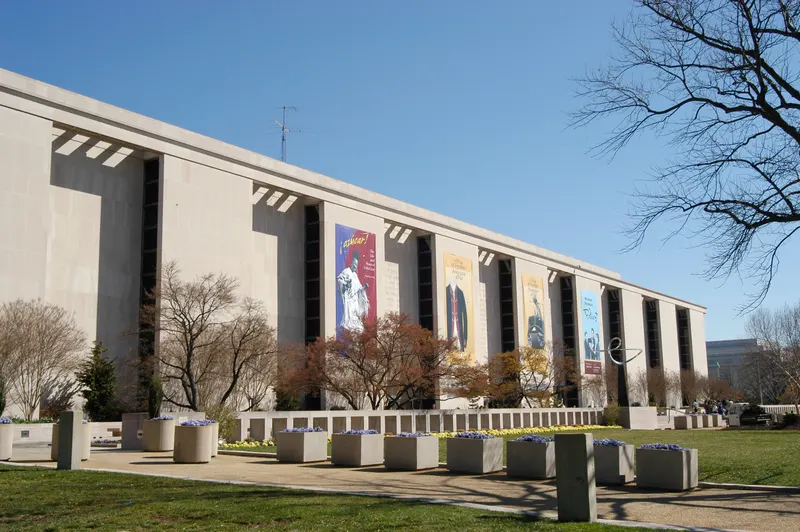
Museums are the natural backbone of a low-walking trip, because once you're inside a single building you can see a great deal without crossing any distance at all, and the buildings are climate-controlled, seated-friendly and free. Choose one or two Mall museums for the day and arrive close by — a Metro station with elevator access or a rideshare drop-off near the entrance — so the only walking is the short stretch to the door and the gentle wander inside. The National Museum of Natural History and the National Museum of American History sit next to each other, both free and both walk-in, which lets you pair them with the briefest of moves between (verify accessible-entrance locations and any wheelchair loans).
Inside, apply the same selectivity as any sensible museum day, but more so: pick a few exhibits, use the benches and seating that the galleries provide, and don't try to walk every hall. Elevators move you between floors so you never need the stairs. Break the day with a proper, seated lunch — ideally somewhere you can ride to rather than walk — and consider stopping after one substantial museum rather than pushing for a second. The whole point of Day 1 is to prove how much of DC's best can be seen with your feet barely touching the Mall: a single great museum, taken slowly and comfortably, is a full and satisfying day.

Day 2 — monuments, the short-walk way
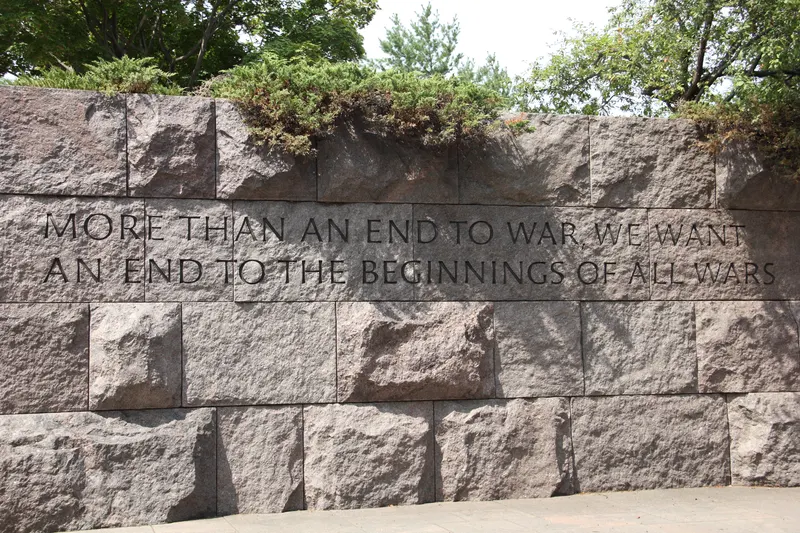
The monuments are doable with little walking if you treat them as ride-served stops rather than one long Mall loop. The trick is to arrive close to each one and walk only the short final approach. The Lincoln Memorial, for instance, can be reached by a relatively short walk or drop-off, and you can take in the view across the Reflecting Pool and the great seated statue from near the top without crossing the whole Mall to get there (note there are steps up to the Lincoln statue itself, with an accessible entrance and elevator available — verify current access). The Tidal Basin memorials — Jefferson, MLK and FDR — sit around the water with the flat, ground-level FDR Memorial being especially gentle, and they can be reached by ride and seen in short segments rather than a single long circuit.
Between monuments, ride rather than walk. A rideshare or accessible taxi between the Lincoln area and the Tidal Basin, or between the Mall's ends, removes the longest and least rewarding stretches on foot and keeps the day to a series of short, manageable visits. Bring water and a hat in warm weather, since the monument areas are exposed, and plan seated rests — there are benches near several memorials. If you'd rather not arrange the logistics yourself, a guided monument tour by vehicle or trolley can deliver the highlights with the walking kept short and the driving doing the distance (verify operators and accessibility), which for many low-walking travellers is the single easiest way to see the Mall.

Day 3 — a gentle finish: gardens, a neighborhood, a seated tour
Round off a low-walking trip with the city's gentlest pleasures, away from the exposed Mall marches. The U.S. Botanic Garden beside the Capitol is ideal: a free, flat, climate-controlled conservatory you can see in a short, level loop, with plenty to enjoy and little ground to cover. A neighborhood with cafés and benches — Georgetown's waterfront, a stroll-and-sit along Dupont Circle, or the level promenades of the Wharf — gives you the texture of the real city without the distances of the federal core, and lets you stop and rest whenever you like. The Wharf in particular is flat, seated-friendly and served by water taxi and rideshare, making it an easy, pretty finish.
If energy is short or the weather is unkind, lean on a seated, ride-based option for the day. A vehicle tour of the monuments, a sightseeing cruise on the Potomac, or simply another half-day in a single free museum keeps the experience rich while the walking stays minimal. Throughout, hold to the trip's core discipline: one anchor per half-day, breaks built in, rides for the distances, and a willingness to see less in order to enjoy it more. Verify the current accessibility and access details for whatever you choose, and the capital reveals itself to be far gentler than its grand, two-mile lawn first suggests.
A handful of small habits make the whole trip easier. Many DC museums lend wheelchairs free of charge for use inside the building, which can turn an otherwise tiring visit into a comfortable one even for travellers who walk short distances unaided — ask at the information desk on arrival, and verify availability in advance for the sights you most want. Time your outdoor segments for the cooler, quieter parts of the day, carry water on the exposed Mall, and don't hesitate to use a bench, a café or a museum's seating as a planned stop rather than a sign of defeat. If you're booking a base, choosing a hotel within a block or two of a step-free Metro station does more to reduce daily walking than any other single decision. The thread running through all of it is the same: in a city built on grand distances, the kindest itinerary is the one that lets the Metro, the rideshare and the bench do the work your feet would otherwise have to.
 U.S. Botanic Garden guide
A free, flat, climate-controlled conservatory you can enjoy with very little walking.
 The Wharf guide
Flat, seated-friendly waterfront served by water taxi and rideshare for a gentle finish.
 Where to stay in DC
Choosing a base near a step-free Metro station to keep daily walking short.

Related guides

Accessible Washington, D.C.
How to visit Washington with mobility, distance or stamina in mind — the step-free Metro, the largely flat but very long Mall, accessible museums and memorials, taxis and rideshare, and ways to build a low-walking plan that still reaches the city's best places.
Read guide
Washington, D.C. Metro Guide
A first-timer's guide to riding the Washington Metro — how to pay with SmarTrip or a contactless card, how distance-based fares work, which lines reach the airports and the Mall, the stations that put you closest to the monuments and museums, and the handful of mistakes newcomers make. Evergreen guidance with the volatile fares flagged to verify.
Read guide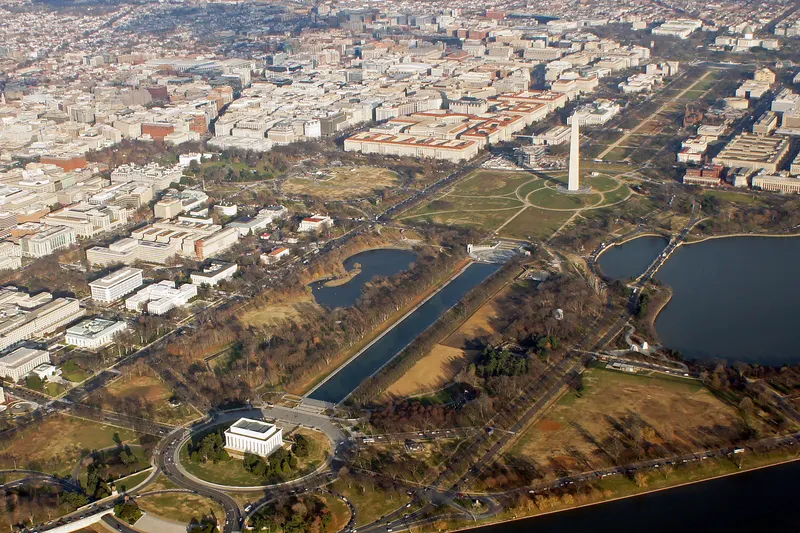
National Mall Guide, Washington, D.C.
How to plan the National Mall by section — the real walking distances, where the monuments and museum stops sit, and where to find shade, food, bathrooms, the nearest Metro and the best night routes.
Read guideMore in Itineraries
6
A Washington, D.C. Itinerary with Kids
A family-paced Washington, D.C. itinerary — short museum blocks at the free Smithsonians, the dinosaurs and the Hope Diamond, the National Zoo, the Mall carousel, plenty of food and bathroom breaks, stroller notes and fewer long walks, built so children and parents both enjoy the day.
Read guide
A Weekend in Washington, D.C.
A Friday-to-Sunday Washington, D.C. weekend — where to base yourself, an arrival-night monuments walk, a full Saturday of the Mall, museums and a Capitol tour, a Sunday of brunch, the Tidal Basin and a neighbourhood, built around Metro access and slower evenings.
Read guide
Four Days in Washington, D.C.
An unhurried four-day Washington, D.C. itinerary — the Mall monuments and free Smithsonian museums, a Capitol tour and the founding documents, the Tidal Basin and Georgetown, then deeper museums, fuller neighbourhoods and a relaxed day trip to Arlington, Old Town Alexandria or Mount Vernon, with slower evenings throughout.
Read guide
Luxury Washington, D.C. Itinerary
Washington wears luxury quietly — grand historic hotels a block from the White House, chef's-counter tasting menus, private after-hours tours and a rooftop city of monument views. This is a high-end Washington, D.C. itinerary that pairs the free, world-class sights with the polish, ease and access that make the difference: where to stay, where to dine, what to book privately and how to fold in Mount Vernon in style.
Read guide
One Day in Washington, D.C.
A realistic single-day route through the capital — the western monuments early, one Smithsonian museum at midday, the Mall's headline sights, Capitol views and the monuments lit at dusk, all walkable and free.
Read guide
Summer Washington, D.C. Itinerary
How to plan Washington, D.C. in the heat — a summer itinerary that front-loads the monuments at dawn, retreats into the free, air-conditioned Smithsonian museums through the worst of the afternoon, and saves the neighborhoods, the waterfront and the lit memorials for the long evening. Built around shade, water and timing rather than a checklist, because in a DC July the schedule matters more than the sights.
Read guide