
Food & Drink in Washington, D.C.
The complete guide to eating and drinking in Washington, D.C. — the half-smoke and mumbo sauce, the Ethiopian restaurants of Shaw, Chesapeake crab, food halls and markets, rooftop bars with monument views, brunch, coffee and food tours, all sorted by neighbourhood and mood.
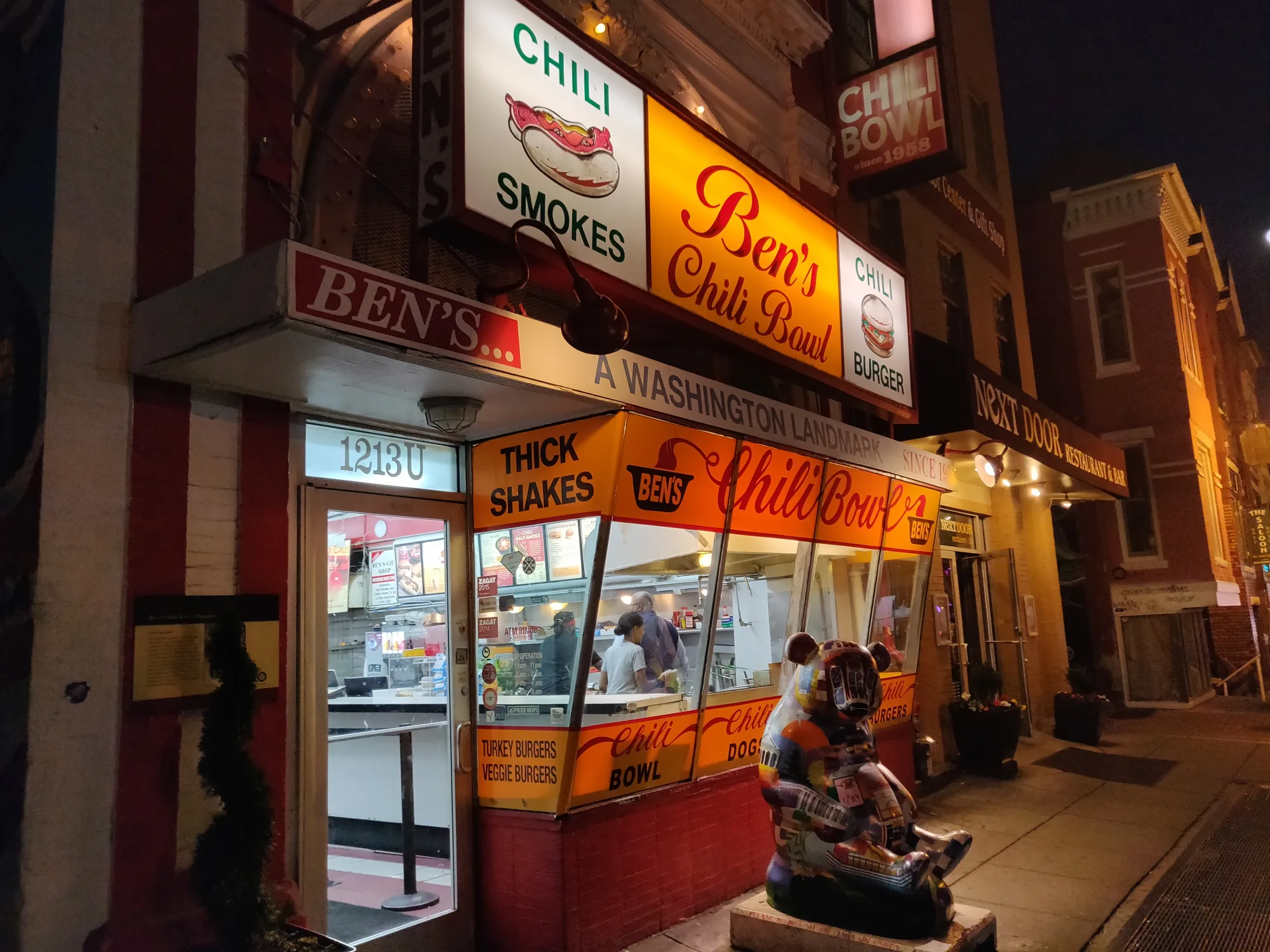
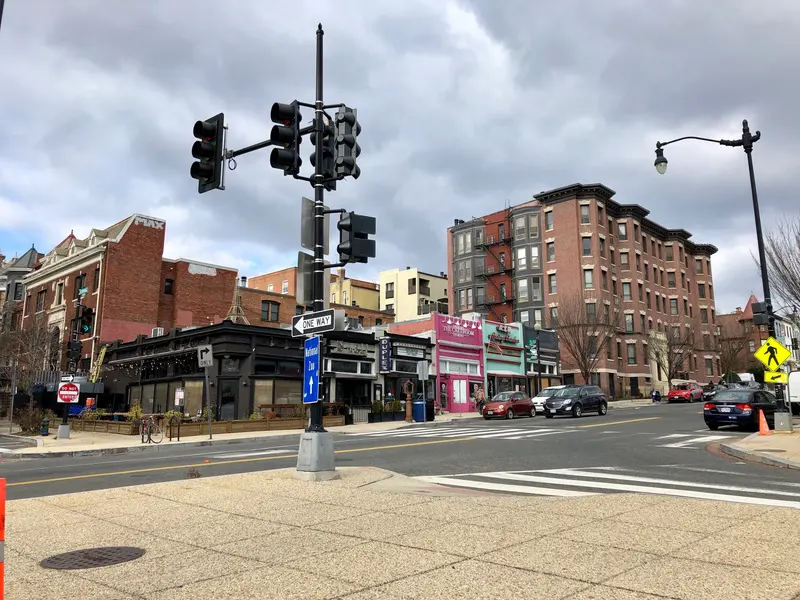
Photo: Kurt Kaiser / Wikimedia Commons · CC0
- ✓DC has its own food: the half-smoke (a coarse, smoky sausage), mumbo sauce, and a deep Chesapeake love of blue crab and Old Bay.
- ✓Shaw and the U Street corridor hold one of the largest Ethiopian dining scenes in the United States — a defining DC meal.
- ✓The food on the Mall itself is mostly museum-cafeteria fare; the city's best eating is a short Metro ride away in the neighbourhoods.
- ✓Food halls and public markets — Union Market, Eastern Market, the Wharf's Municipal Fish Market — are the easiest wins for groups, families and indecisive tables.
- ✓DC takes its drinks seriously: an award-winning cocktail-bar scene, rooftops with monument views, and a growing run of local breweries.
- ✓Reservations matter at the top end and on weekends; many of the best casual spots are walk-in. Verify hours and booking windows close to your trip.
Eat the city, not just the Mall
Here is the single most useful thing to know about eating in Washington: the food on the National Mall itself is, with a few honourable exceptions, forgettable. The museum cafés and the cart vendors exist to refuel you between exhibits, not to feed you well. So the rule that shapes a good DC food trip is simple — see the monuments and museums by day, and eat in the neighbourhoods by night. The city's best meals sit a short Metro ride from the lawn, in Shaw, on 14th Street, around Eastern Market, along U Street, in Penn Quarter and out at the riverfront.
What makes this easy is that Washington is, quietly, one of the best eating cities in the country. It is genuinely cosmopolitan — a capital of embassies and immigrants, with world-defining Ethiopian, Salvadoran, Vietnamese, Korean and West African communities, all of which cook here. It has its own native dishes that exist nowhere else. And because the museums are free, you can pour the budget you saved on admission straight into the table. This hub is the map to all of it: what to eat, where to eat it, and how to drink well along the way.
Use the deeper guides below to go further. Think of this page as the overview — the lay of the land, the local specialities, the neighbourhoods to aim for — and follow the links into the focused guides when you want a shortlist of actual restaurants for your night.

The DC food scene at a glance
Before the detail, the shape of it. Washington's food breaks into a handful of clear groups, and knowing them makes planning fast:
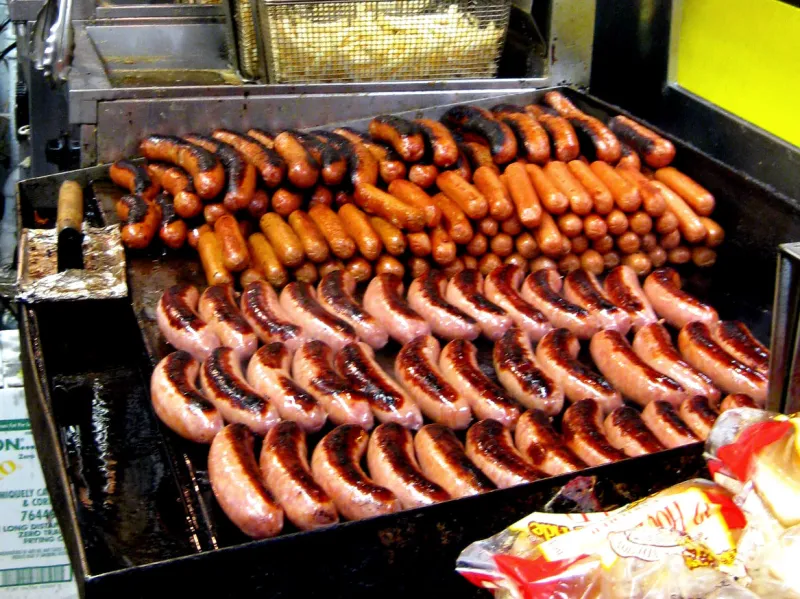
- The local classics — the half-smoke (best known at Ben's Chili Bowl on U Street), mumbo sauce on wings and fries, and the Chesapeake's blue crab and Old Bay. These are the dishes that are genuinely of this place.
- The immigrant cornerstones — Ethiopian in Shaw and on U Street, Salvadoran pupusas across the region, Vietnamese in the Eden Center over in Falls Church, and a deep bench of Korean, West African and Central American cooking.
- The food halls and markets — Union Market in NoMa, historic Eastern Market on Capitol Hill, the Municipal Fish Market at the Wharf, and newer halls downtown: the easiest group meals in the city.
- The fine-dining stage — DC is a serious restaurant town with multiple Michelin-recognised kitchens, José Andrés's ThinkFoodGroup empire, and a strong run of tasting-menu rooms for a special night.
- The drinks — an award-winning cocktail scene, rooftop bars (several with monument views), wine bars on 14th Street, and local breweries clustered in Ivy City and Navy Yard.
- Brunch and coffee — a weekend institution here, with strong third-wave coffee roasters and brunch tables across Logan Circle, Shaw, Georgetown and Capitol Hill.

Dishes that are actually from DC
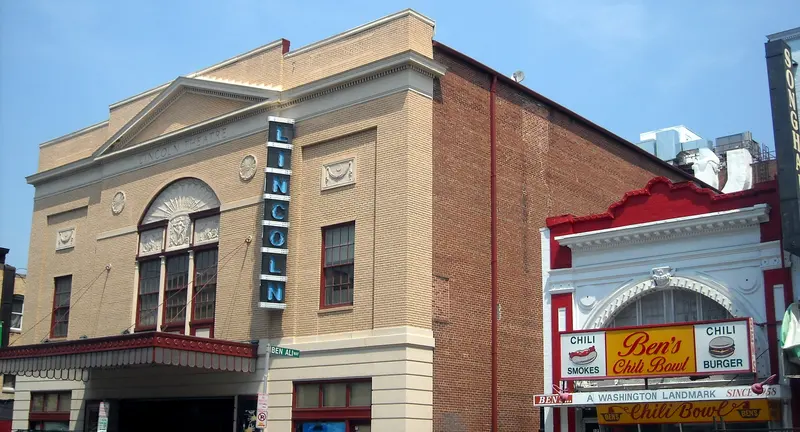
Most cities borrow their famous foods; Washington has a few of its own. The half-smoke is the headline — a coarse, half-beef, half-pork sausage, smokier and spicier than a hot dog, traditionally split, griddled and served on a bun under chilli, onions and mustard. The classic place to eat one is Ben's Chili Bowl, the U Street institution open since 1958 that fed the neighbourhood through its jazz heyday, the 1968 unrest and the years since; it remains a working diner, not a museum.
Then there is mumbo sauce (or mambo sauce), a sweet-tangy red condiment with a contested origin that locals will defend to the death, ladled over chicken wings, fried rice and french fries at carry-outs across the city. And because Washington sits at the head of the Chesapeake Bay, the regional palate runs to blue crab, steamed and dusted in Old Bay, plus crab cakes and crab dip — a flavour you will taste again on any day trip toward Annapolis or the Eastern Shore. None of these require a fancy reservation; they are the people's food of the capital.
Where to eat: a neighbourhood map
Washington eats by neighbourhood, and each corridor has a character worth matching to your mood. Knowing roughly where to point yourself saves more time than any single restaurant recommendation.
- Shaw & U Street — the Ethiopian heartland, Ben's Chili Bowl, jazz history and a young, lively dinner scene. The most 'DC' eating in the city.
- Logan Circle & 14th Street — the buzziest restaurant-and-wine-bar corridor, dense with new openings, brunch tables and date-night rooms.
- Penn Quarter & Downtown — between the museums and the arena, full of pre-theatre and pre-game tables, including several José Andrés flagships.
- Georgetown — waterfront dining, cafés, historic taverns and date-night classics, though no Metro stop of its own (factor in the walk or bus).
- The Wharf & Southwest Waterfront — a built-from-scratch riverfront of seafood, rooftops and the old Municipal Fish Market for raw crab and oysters.
- Navy Yard & Capitol Riverfront — ballpark energy, breweries, riverfront patios and modern group restaurants near Nationals Park.
- Capitol Hill & Eastern Market — neighbourhood bistros, the weekend market, and the city's oldest continuously operating public market.
- NoMa & Union Market — the design-forward food-hall district, murals, rooftops and a different, newer side of the city.
- Adams Morgan & Mount Pleasant — late-night global food, Salvadoran pupusas, brunch and a nightlife edge.
Food halls & public markets
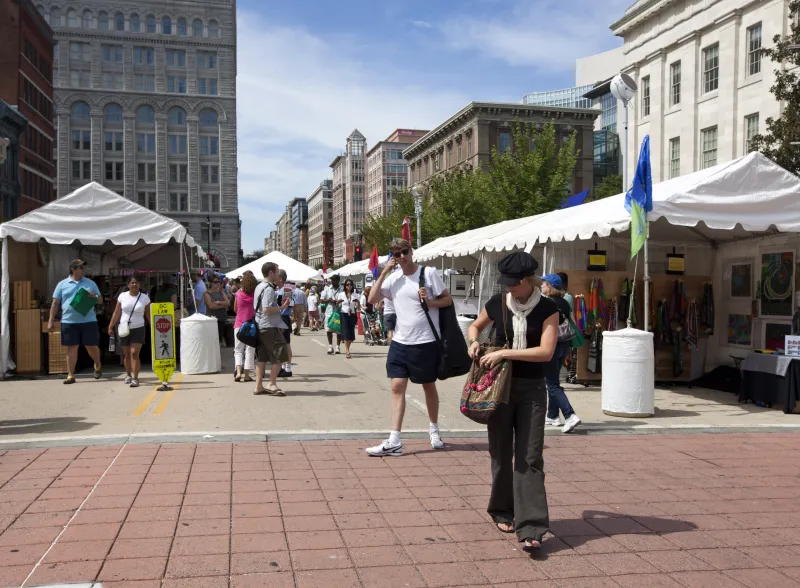
If you are travelling with a group, a family, or simply a table that can never agree, DC's food halls and markets are the easy answer — everyone orders what they want and meets at a shared table. Union Market in NoMa is the flagship: a renovated 1930s wholesale market turned design-forward food hall, surrounded by murals, rooftops and a fast-changing district. Eastern Market on Capitol Hill is the historic counterpart — the city's oldest continuously operating public market, best on weekends when the outdoor stalls, crafts and the legendary blueberry-buckwheat pancakes come out.
Down at the water, the Municipal Fish Market at the Wharf is the oldest continuously operating open-air fish market in the country, where you can buy steamed crabs and shucked oysters off the floating barges. Add the newer downtown halls and the Smithsonian-adjacent options, and you have a city where a good, cheap, crowd-pleasing meal is rarely more than a few blocks away.
 Best food halls & markets in DC
Union Market, Eastern Market, the Wharf and the group-friendly options, compared.
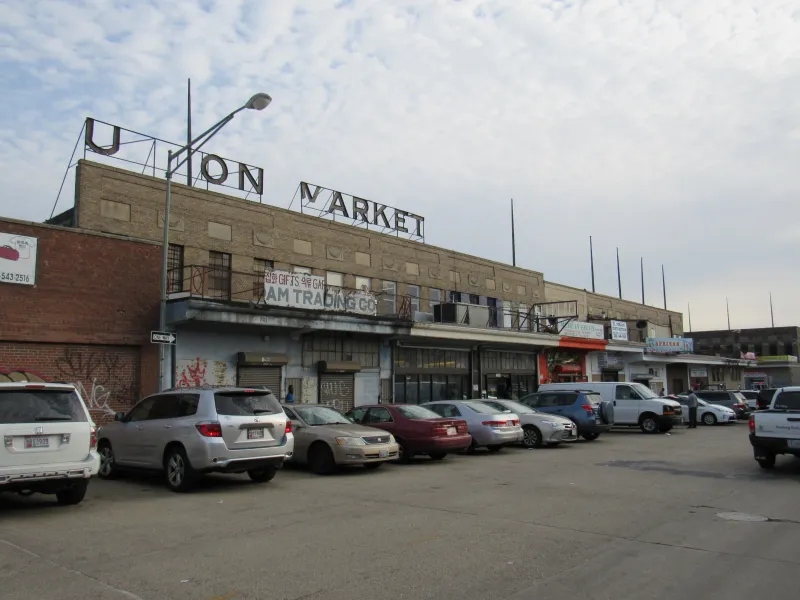 Union Market food guide
What to eat, when to go, and how to combine it with NoMa's murals and rooftops.
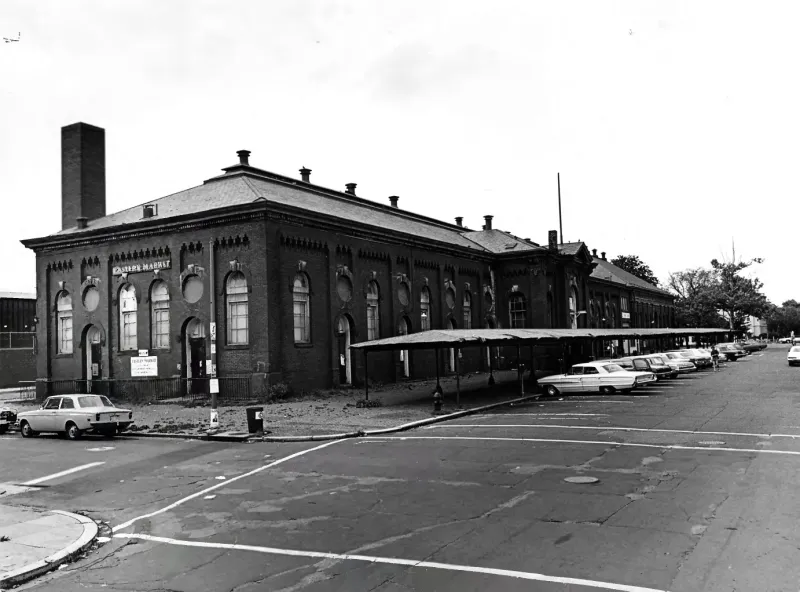 Eastern Market food guide
Weekend stalls, breakfast ideas and how to pair it with Capitol Hill.
Eating near the Mall and the museums
You will spend most days on or near the National Mall, and the honest truth is that the immediate dining there is thin — museum cafés, food trucks along the streets, and a handful of bright spots like the Mitsitam-style café at the National Museum of the American Indian, which is genuinely good and themed around Native foodways. For a real meal, the move is to walk or ride one stop off the Mall: north into Penn Quarter, south to the Wharf, or east toward Capitol Hill and Eastern Market.
We keep a dedicated guide to this exact problem — where to eat near the Mall without wasting your sightseeing hours — because it is the question almost every first-time visitor asks. The short version: pick your exit point in advance (Penn Quarter for lunch on a museum day, the Wharf for a waterfront dinner, Capitol Hill if you are at the Capitol end) so you are never standing hungry on the lawn at 2pm with no plan.
Drinks: cocktails, rooftops and beer
Washington drinks well. The cocktail scene is nationally regarded, with serious bars tucked into Shaw, the H Street corridor and downtown — the kind of rooms that win awards and treat a drink like a course. For a view with your glass, the city's rooftop bars cluster downtown and along 14th Street, and a few frame the Washington Monument over your cocktail; sunset is the moment to aim for, and arriving early beats the queue.
On the beer side, DC's breweries gather in Ivy City and around Navy Yard, with taprooms that are easy, walkable group stops — especially before or after a Nationals game. Wine bars line 14th Street and Georgetown. Whatever you are drinking, the same practical note applies: the best rooftops and cocktail rooms fill on weekend evenings, so go early or be ready to wait, and always verify current hours, as DC nightlife venues open and close often.


Brunch, coffee and something sweet
Brunch is close to a civic ritual here, especially on Sundays, when Logan Circle, Shaw, Georgetown and Capitol Hill fill with long, leisurely tables. Reservations help at the popular rooms; the trade-off for showing up at noon without one is a wait you could have spent walking the Tidal Basin. The coffee scene is strong too, with local third-wave roasters running bright, design-led cafés across the same neighbourhoods — a good morning flat white is never far.
For something sweet, Georgetown is the classic stroll, with its cupcake shops and waterfront ice cream, while the markets and food halls hide their own bakeries and dessert stalls. None of this needs much planning — it is the easy, pleasurable connective tissue between the sightseeing, and a perfect excuse to sit down and watch a neighbourhood go by.

A special night: fine dining in DC
When you want to spend the evening on the meal itself, Washington delivers. It is a Michelin-recognised city with a deep bench of tasting-menu kitchens and chef-driven rooms, and it is the home base of José Andrés, whose restaurants range from the playful (small-plates rooms and a Spanish market hall) to a flagship avant-garde tasting menu that ranks among the country's most ambitious. Beyond his group, the city's top tables run from refined New American to globe-spanning fine dining, many clustered downtown, in Penn Quarter and along 14th Street.
Two practical notes. First, these rooms book out — reserve well ahead, often the moment a booking window opens, and verify the current window on the restaurant's own site. Second, a special dinner pairs beautifully with the city's free evenings: a slow loop of the floodlit monuments before or after, a nightcap on a rooftop, and you have the rare DC night that owes nothing to politics at all.


The immigrant capital: global food in DC
It is impossible to understand eating in Washington without its immigrant communities, who do far more than supply a few specialist restaurants — they shape how the whole region eats day to day. The Ethiopian scene in Shaw is the most famous, but the bench is astonishingly deep. The Washington area is home to one of the largest Salvadoran and Central American populations in the country, which is why the pupusa — a stuffed, griddled corn cake with curtido and salsa — is a regional everyday staple you will find across Columbia Heights, Adams Morgan and the inner suburbs.
Push a little further out and the map gets richer still. The Eden Center in Falls Church, just across the river in Virginia, is one of the most important Vietnamese commercial hubs on the East Coast, a destination for pho, banh mi and bun bo Hue. Korean cooking, West African stews, Filipino and Peruvian kitchens, and Central American bakeries all thrive across the region. For a visitor, the lesson is to be adventurous: some of the most satisfying, best-value meals in greater Washington are in strip-mall restaurants well off the tourist map, cooked by communities who have made the capital their home.
When to eat well: seasons and timing
DC eating has a rhythm worth knowing. Spring and autumn are the city's most comfortable seasons, when patios open, the cherry-blossom crowds fill the cafés, and outdoor markets are at their best. Summer is hot and humid — the moment to lean on the air-conditioned food halls, raw bars and indoor dining, and to plan a long museum-and-lunch day for the worst of the heat. The crab season tilts toward the warmer months, so a summer trip is prime time for a messy, Old-Bay-dusted Chesapeake feast.
Day to day, the timing tricks are simple. Reserve the top tables and weekend brunches well ahead; walk in everywhere else, but dodge the 7–9pm weekend dinner peak by eating a little early or late. Lunch is often the best-value way to try an ambitious kitchen. And on the Mall, carry water and a snack so you can push your real meal to a better hour and a better neighbourhood rather than settling for whatever cart is closest at noon.

Food tours and how to eat smart
If you want the city explained through its plates, a food tour is one of the better-value ways to spend a half-day — a guide walks you through a neighbourhood like Shaw, Eastern Market or the U Street corridor with a string of tastings and the history behind each. It is an especially good first-day move: you arrive hungry, leave full, and come away with a mental map of where to return for a proper dinner.
A few habits make every DC food day better. Build your meals around your sightseeing exits rather than the other way round. Reserve the top tables and weekend brunches; walk in everywhere else. Save the half-smoke, the Ethiopian feast and at least one rooftop sunset as non-negotiables. And because hours, prices and even whole restaurants change fast in this city, treat every specific detail here as a starting point and verify on the official site close to your trip. Do that, and Washington will feed you far better than its reputation as a buttoned-up government town would ever suggest.


Eating on a budget, and with the kids in tow
Washington has a reputation as an expensive dining town, and at the top end it earns it — but you can eat very well here for very little if you know where to look. The food halls and public markets let a group assemble a satisfying meal cheaply and let everyone choose differently; the city's immigrant kitchens, especially the Ethiopian restaurants and the global spots along the corridors, deliver some of the best value in town; and a half-smoke from a counter or a slice of a local pizza is a proper DC lunch for a few dollars. Many ambitious kitchens are far cheaper at lunch than at dinner, and happy hours across the city turn upscale bars into genuine bargains for an early evening.
Travelling with children, the same places do double duty: food halls solve the everyone-wants-something-different problem, the markets are forgiving of mess and movement, and the museum cafés — while rarely exciting — are a reliable, air-conditioned reset on a long sightseeing day. Keep snacks and a refillable water bottle in the bag for the Mall, where good options thin out and fountains are easier to find than vendors, and you'll spend less and melt down less. Eating cheaply and eating with kids, in this city, turn out to lead to many of the same warm, unpretentious tables.
