
Tidal Basin Guide
Walk the Tidal Basin in Washington, D.C. — the Jefferson, FDR and Martin Luther King, Jr. memorials around its shore, the famous cherry blossoms, the paddle boats, the best time of day to beat the crowds, and where to stand for the sunrise reflection shot.
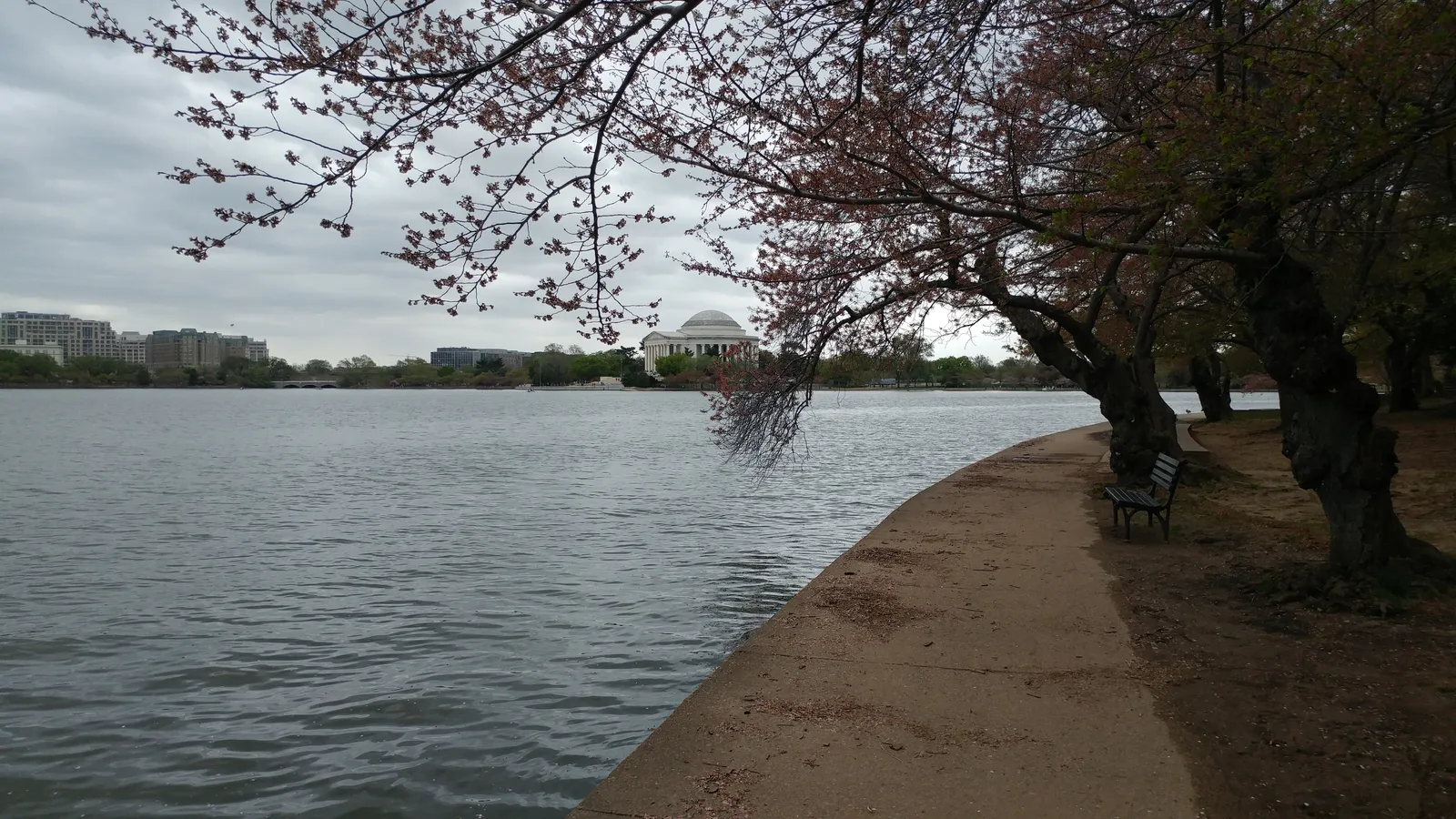
Photo: Alpacaaviator / Wikimedia Commons · CC BY-SA 4.0
- ✓A roughly two-mile loop around a man-made inlet of the Potomac, ringing three of the city's great memorials — Jefferson, FDR and Martin Luther King, Jr.
- ✓Home to the cherry trees gifted by Tokyo in 1912; the basin is the centre of the spring bloom and the National Cherry Blossom Festival.
- ✓Paddle boats run from the boathouse on the north shore in season — the classic way to see the Jefferson Memorial from the water (verify hours and price).
- ✓The Jefferson Memorial mirrored in still water at dawn or blue hour is the city's signature photograph.
- ✓Mostly flat and open, walkable year-round, and one of the most romantic corners of Washington when the crowds thin.
What the Tidal Basin is
The Tidal Basin is a man-made inlet of the Potomac River, built in the late nineteenth century to flush silt from the Washington Channel using the rise and fall of the tide — hence the name. What was once a piece of practical engineering is now one of the loveliest set pieces in the city: a roughly two-mile shoreline ringed by cherry trees and three of Washington's most affecting memorials, set just south of the National Mall and the Washington Monument.
Unlike the Mall, which is all long axes and open lawn, the Tidal Basin curves. You walk it as a loop, the water always on one side, and the memorials and views unfold one at a time rather than all at once. It is flatter and gentler than the monument core, and because it is set slightly apart from the museums it tends to feel calmer — except, famously, for the few weeks of cherry-blossom season, when it becomes one of the busiest places in the country.
Allow an unhurried ninety minutes to two hours to walk the full loop and look at the memorials properly; less if you only want the Jefferson and the blossoms, more if you stop for the paddle boats or a picnic. It is one of the best half-days in Washington and, like almost everything here, free.

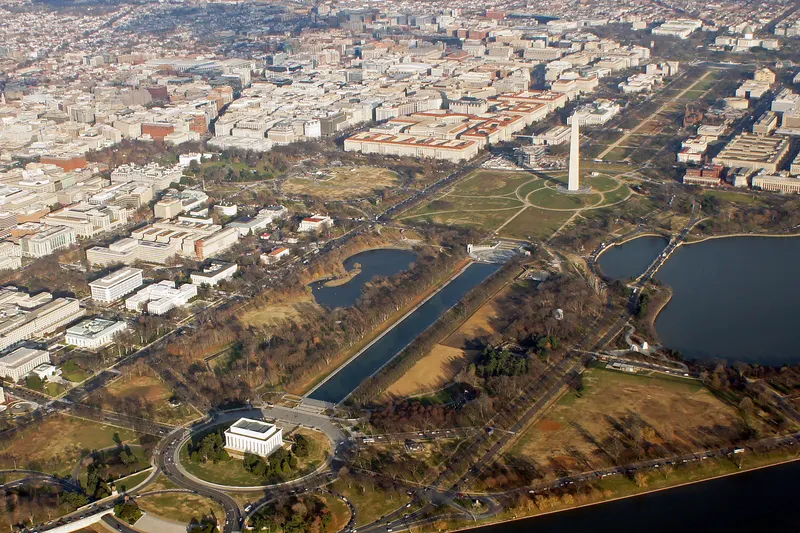


The three memorials around the shore
The Jefferson Memorial is the anchor of the basin — a domed, columned rotunda on the south shore, modelled on the Pantheon and on Jefferson's own architecture at Monticello and the University of Virginia. Inside stands a nineteen-foot bronze of Thomas Jefferson, ringed by panels of his own words, including passages from the Declaration of Independence. It faces north across the water toward the White House, and the view back across the basin to the Washington Monument from its steps is one of the finest in the city. It is open and lit through the night.
On the western shore, the Franklin Delano Roosevelt Memorial is laid out as a sequence of four open-air granite 'rooms', one for each of FDR's terms, threaded with waterfalls, quotations and bronze sculptures — a breadline, a fireside-chat listener, Eleanor Roosevelt. It is a memorial you walk through rather than up to, and it rewards slow reading. Nearby, the Martin Luther King, Jr. Memorial centres on the 'Stone of Hope', a thirty-foot figure of Dr. King carved as if emerging from a 'Mountain of Despair', with a curving inscription wall of his words. King's memorial sits on a direct sightline to the Jefferson Memorial across the water — a deliberate placement linking the two.
Taken together, the three trace an arc of American ideals from the founding to the New Deal to the civil-rights movement, all within a single walk. Each has its own detailed guide on this site; the basin is the thread that connects them.
- Jefferson Memorial — domed rotunda on the south shore, 19-foot bronze of Jefferson, open and lit at night.
- FDR Memorial — four open-air granite 'rooms' on the west shore, with waterfalls and bronze tableaux.
- Martin Luther King, Jr. Memorial — the 'Stone of Hope', on a sightline to the Jefferson across the water.
- All three are free and open daily; the memorial grounds do not close.
The cherry blossoms
The Tidal Basin is the heart of Washington's cherry-blossom season. The original trees — more than three thousand of them — were a 1912 gift from the city of Tokyo, and their descendants now ring the basin in a band of pale pink that draws well over a million visitors each spring. The National Cherry Blossom Festival builds around the bloom, and for the days of peak colour the loop around the water is genuinely crowded from dawn.
Timing is the whole game, and it moves every year with the weather. The National Park Service tracks the season through named stages and publishes a peak-bloom forecast, revised through the spring; 'peak bloom' is the day roughly seventy per cent of the Yoshino blossoms are open, and the full window lasts only about a week. It usually lands in late March or early April, but treat any date as guidance, not a guarantee. If blossoms are your reason for coming, check the latest NPS forecast before you book and keep your plans flexible.
During peak bloom the only way to enjoy the basin in peace is to arrive at first light — by sunrise the photographers already have the best spots, but the crowds proper come later in the morning. Outside the bloom, the basin is quiet and lovely year-round: green and leafy in summer, gold in autumn, stark and reflective in winter.
Paddle boats, crowd timing and the best photographs
From the boathouse on the north shore, paddle boats are available to rent in season — the classic, slightly old-fashioned way to see the Jefferson Memorial from the water, and a reliable hit with children and couples alike. Both two- and four-person boats run, and during cherry-blossom season they book up fast, so reserve ahead if you can. Hours, prices and the operating season change year to year, so verify the current details before you count on it.
On crowd timing, the rule is simple: the Tidal Basin is a sunrise place. Early morning gives you soft light, still water for reflections and room to walk; by late morning in spring and on summer weekends the loop fills up. Evening and blue hour are the other good window, when the memorials light up and the day-trippers thin out. Avoid the middle of a sunny spring day if you can.
For the signature shot — the Jefferson Memorial mirrored in the basin — stand on the north or northwest shore looking south across the water, ideally at dawn before any wind ruffles the surface. The cherry trees frame the far shore in season. For the Washington Monument reflection, look the other way from near the Jefferson steps. The FDR and MLK memorials photograph best in the soft light of early morning or late afternoon, when the low sun rakes across the carved granite.
- Paddle boats run from the north-shore boathouse in season; reserve ahead in spring (verify hours and price).
- Go at sunrise or blue hour; avoid sunny spring mid-mornings and summer weekend middays.
- Signature shot: Jefferson Memorial mirrored from the north/northwest shore at dawn, before the wind.
- Bring water and sun cover in summer — the loop is open and shadeless in stretches.
The story of the cherry trees
The trees that made the Tidal Basin famous arrived as an act of friendship. In 1912 the city of Tokyo gave Washington more than three thousand cherry trees, and First Lady Helen Taft and the wife of the Japanese ambassador planted the first two on the north bank of the basin — those original two still stand, marked with a plaque. An earlier shipment in 1910 had to be burned because it arrived diseased, so the 1912 gift was a careful second attempt, and it took. In the decades since, the United States has sent gifts of flowering dogwoods back to Japan, and the relationship between the two cities' trees has become a small, living diplomacy.
The dominant variety around the basin is the Yoshino, whose pale, almost white blossoms open first and create the famous early-spring cloud; the deeper-pink Kwanzan cherries, concentrated more in East Potomac Park, bloom a week or two later, extending the season. It is the Yoshinos that the National Park Service watches to call 'peak bloom'. The blossoms last only a fragile week or so at full colour, and a hard frost or a windy rainstorm can shorten that further — which is part of what gives the season its bittersweet, much-photographed intensity.
All of this means the basin carries more meaning than a pretty waterside walk. When you loop it in spring, you are walking through a century-old gesture of goodwill between two nations, renewed every time the trees flower.
Practicalities and how to pair it
The Tidal Basin loop is mostly flat and paved, though some stretches near the water can be uneven or, at very high tides, briefly flooded — a known issue the Park Service is working to address. It is broadly accessible, but check current conditions in wet seasons. There is no admission and no closing time for the grounds; the memorials themselves are open daily, generally staffed by rangers during the day.
The nearest Metro station is Smithsonian, a short walk to the northeast corner of the basin near the Washington Monument; the FDR and MLK memorials are closer to the west side. There is limited paid parking nearby that fills early in blossom season. Restrooms and refreshment kiosks sit near the boathouse and the memorials, though they can be overwhelmed at peak times.
Pair the basin with the western Mall: it is a short walk from the Washington Monument and the World War II Memorial, so you can combine the monument core and the basin loop into one long, satisfying day on foot. For a romantic version, save the loop for the end of the day, time it for blue hour, and finish on the Jefferson steps as the lights come on across the water.

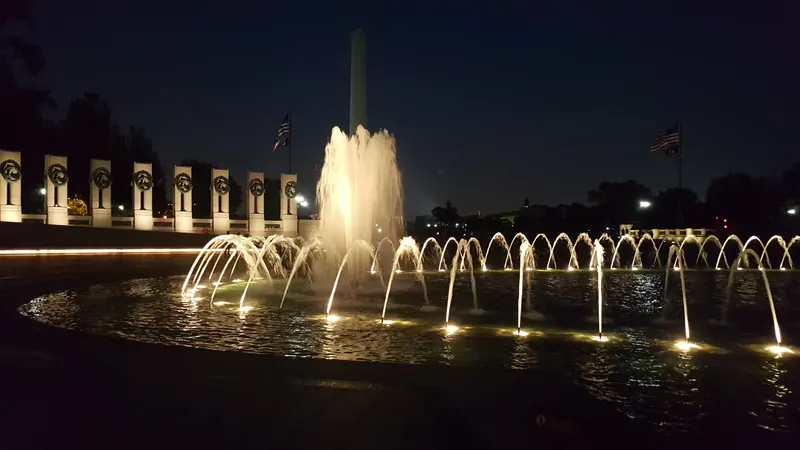
A romantic loop, and the basin through the year
Outside the spring frenzy, the Tidal Basin is one of the quietest, most romantic corners of central Washington — a fact that gets lost in all the cherry-blossom coverage. Time a loop for blue hour, when the day-trippers have gone and the memorials light up one by one across the water, and the basin becomes a different place entirely. Finish on the Jefferson Memorial's steps with the Washington Monument reflected in the still water and the city's lights coming on, and you have one of the loveliest free evenings the capital offers.
The basin also rewards repeat visits across the seasons. Summer brings full green canopy, the paddle boats and warm, humid evenings; bring water and expect crowds on weekends. Autumn turns the trees gold and the light long and soft, with far fewer people. Winter strips the basin bare and reflective, the memorials stark against grey water — bleak in the best sense, and almost empty. Each has its own mood, and none of them charges admission.
However you come, the basin pairs well with a slow pace. This is not a place to rush a checklist of three memorials; it is a place to walk, sit on a bench by the water, and let the views arrive one at a time. Bring a coffee, or a picnic in good weather, and give it longer than you planned.
At a glance
Location: a man-made Potomac inlet just south of the National Mall and the Washington Monument.
Loop: roughly 2 miles, mostly flat and paved; allow 1.5–2 hours to walk it with the memorials.
Cost: free. Memorials open daily and lit at night; paddle boats and parking are paid and seasonal (verify).
Around the shore: the Jefferson, FDR and Martin Luther King, Jr. memorials, ringed by the 1912 cherry trees.
Nearest Metro: Smithsonian. Best at sunrise and blue hour; busiest at cherry-blossom peak.

Related guides
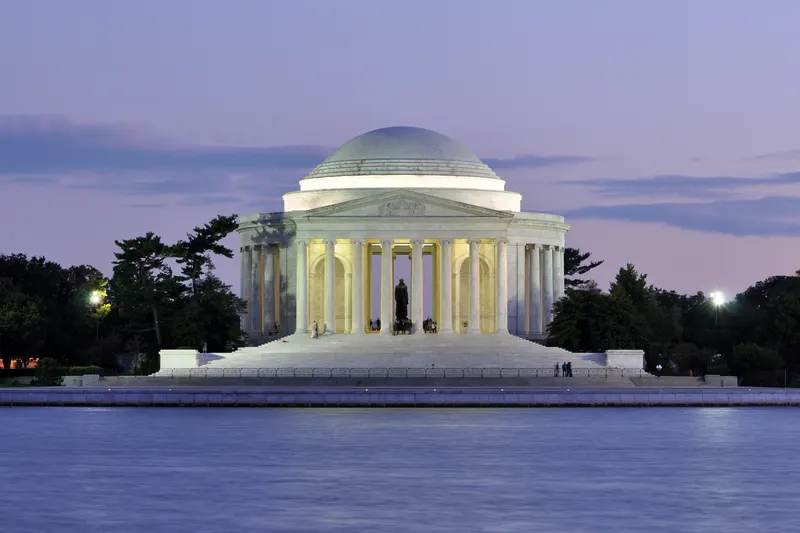
Jefferson Memorial Guide
How to visit the Jefferson Memorial — the domed rotunda on the Tidal Basin, the cherry-blossom and sunset views, the bronze statue inside, and how to walk it without over-walking.
Read guide
Washington, D.C. Cherry Blossoms Guide
When the Tidal Basin turns pink — how peak bloom works, the best routes and viewpoints, when to beat the crowds, the festival events, where to stay and the alternate bloom spots beyond the Tidal Basin. The complete guide to the DC cherry blossoms.
Read guide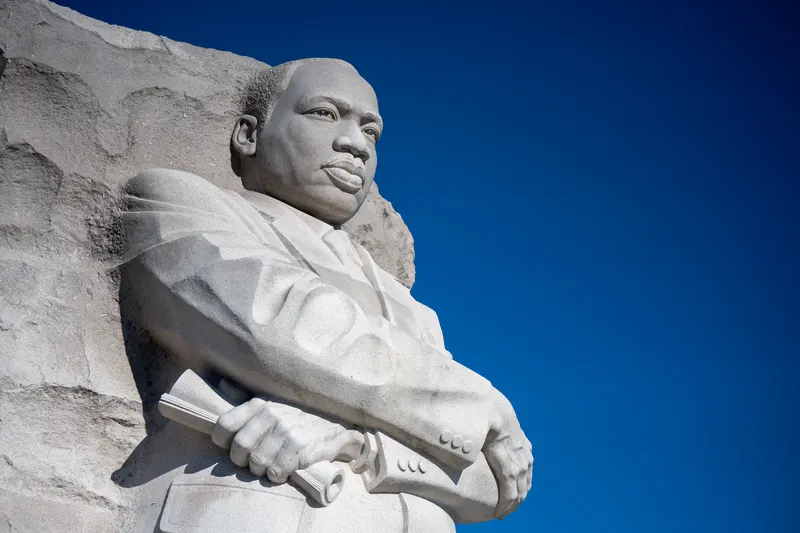
Martin Luther King Jr. Memorial Guide
A respectful guide to the Martin Luther King Jr. Memorial on the Tidal Basin — the Stone of Hope, the inscription wall, what to read, and how to visit it as part of a memorial walk.
Read guideMore in Things to Do
6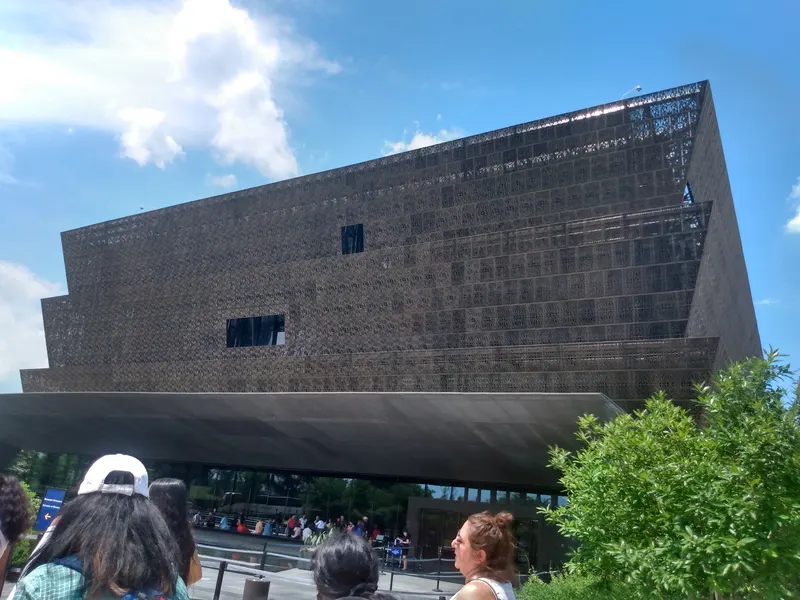
African American History Museum Guide
How to visit the National Museum of African American History & Culture on the Mall — the free timed-entry passes and how to get one, the deep underground history galleries, Sweet Home Café, the lines, how to pace an emotionally heavy visit, and the walk along the Mall.
Read guide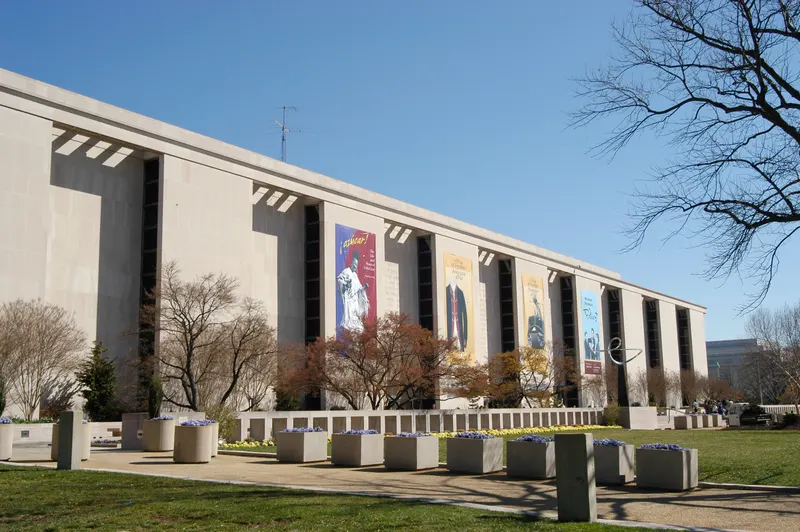
American History Museum Guide
How to visit the National Museum of American History on the Mall — the original Star-Spangled Banner, the First Ladies' gowns, the American presidency, the pop-culture icons, the food-court logistics, and how to time a visit around the school groups.
Read guide
Best Museums in Washington, D.C.
Washington has more world-class museums than any sane trip can hold, and almost all of them are free. This is a guide to the best museums in DC sorted by topic, age, ticket needs, location and rainy-day value — so you can choose two or three with confidence instead of trying to see them all.
Read guide
Best Photography Spots in Washington, D.C.
Where to make great photographs in Washington — the monument reflections, the Tidal Basin blossoms, the Capitol and Lincoln axis, Georgetown's waterfront, hidden rooftops and the golden-hour and blue-hour routes that tie them together.
Read guide
Best Things to Do in Washington, D.C.
A ranked first-trip shortlist of the best things to do in Washington, D.C. — from the National Mall and the free Smithsonian museums to a Capitol tour, the Tidal Basin and Georgetown — built so you can pick a handful and still feel you saw the city.
Read guide
Best Viewpoints in Washington, D.C.
Where to find the best views in Washington — the high monuments and free towers, the rooftop bars and cultural terraces, and the river and hilltop overlooks across the Potomac, ranked by how much effort each one asks.
Read guide