
Smithsonian Museums Guide
How to plan a sane day across Washington's free Smithsonian museums — which to prioritise by interest and age, which need free timed-entry passes, how long each really takes, where to eat, and how the buildings line up along the National Mall.
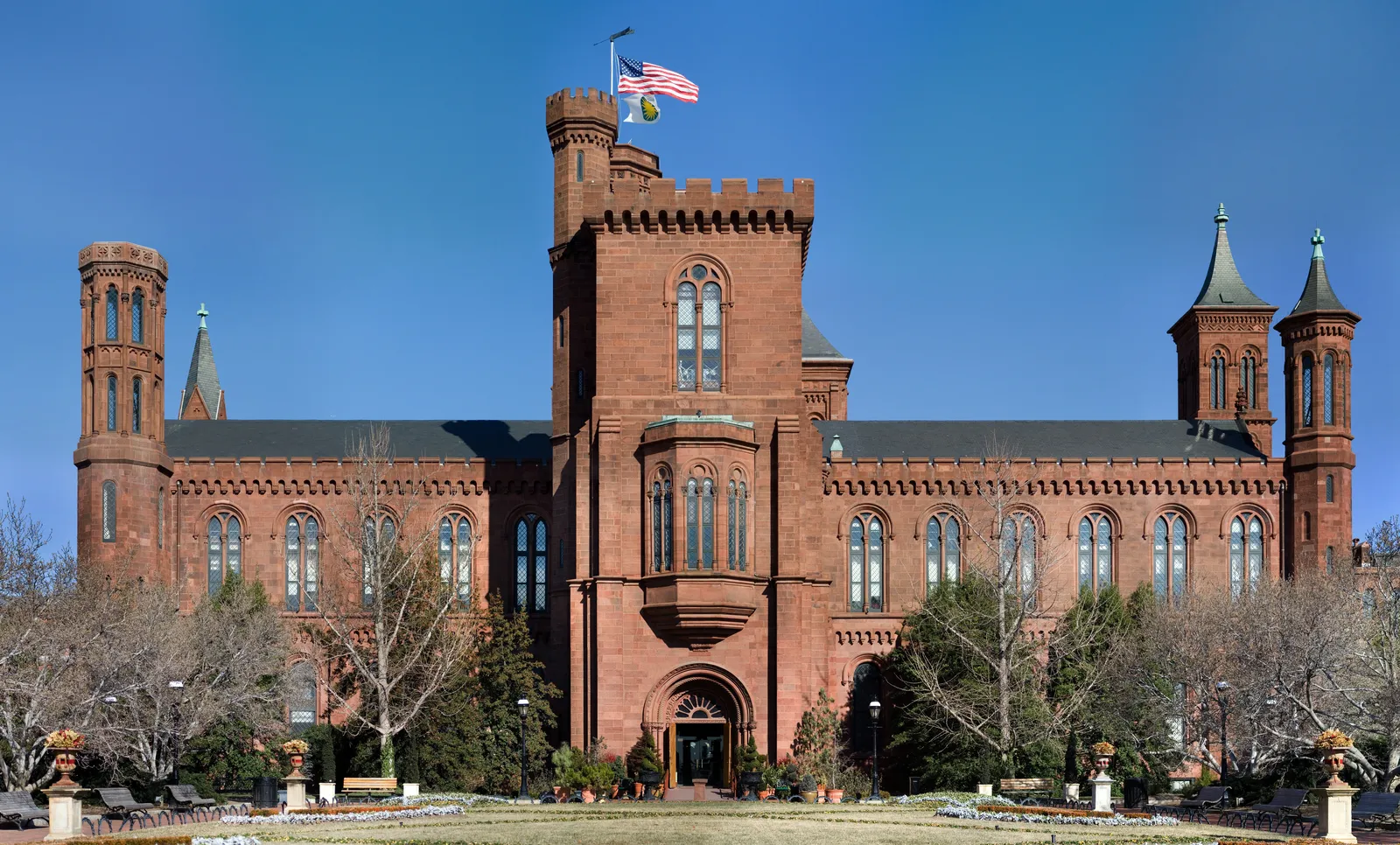
Photo: Noclip / Wikimedia Commons · Public domain
- ✓Every Smithsonian museum is free, every day — there is no admission charge, and most need no ticket at all.
- ✓Two big draws use free timed-entry passes: the National Museum of African American History & Culture and, in busy periods, Air & Space — reserve online before you go.
- ✓Most Smithsonian museums on the Mall sit within a ten-minute walk of one another, lined up either side of the central lawn.
- ✓These are vast buildings — plan to see a few rooms well, not whole museums, and pair just two in a day to avoid burning out.
- ✓The red-sandstone Smithsonian Castle is the visitor hub for the whole institution, with maps, advice and a place to get your bearings.
- ✓Hours, closures and which galleries are open under renovation change — confirm each museum on si.edu before you build a tight plan.
The largest free museum complex on earth
No other capital gives away its museums quite like Washington. The Smithsonian Institution runs a sprawling family of museums and a zoo, the great majority clustered on or beside the National Mall, and entry to all of them is free — not discounted, not free on certain days, simply free, all year round. It is one of the genuine wonders of a DC trip: you can walk in off the lawn, stand in front of the Wright brothers' aeroplane or the Hope Diamond or the original Star-Spangled Banner, and walk back out without paying a cent.
That generosity comes with a catch, and it is the single most useful thing to understand before you start. These museums are enormous. Trying to 'do' one in full — to see every gallery in the Natural History Museum, say — is the fastest way to ruin both the museum and the rest of your day. The buildings are designed to be sampled and returned to, not consumed whole. Because they cost nothing, there is no pressure to extract your money's worth in a single visit, and the visitors who enjoy them most are the ones who pick a handful of things, see them properly, and leave with energy to spare.
This guide is a planning tool rather than a gallery-by-gallery catalogue. It covers which museums to prioritise depending on who you are travelling with, which ones need a free pass booked ahead, how long each really takes, where the food is, and how the buildings line up so you can string two together without a long trek. The detailed walk-throughs live on the individual museum pages linked throughout.



Free entry — and the few things that still need a pass
Start from the headline: admission to every Smithsonian museum is free and most are walk-in. You do not need to book, queue for a box office, or print anything to enter the great majority of them. You will, however, pass through airport-style security at the door of each building — bags are screened — so travel light and allow a few minutes for the line at the busiest sites.
Two museums are the exceptions worth planning around. The National Museum of African American History & Culture uses free timed-entry passes, and they are released online in advance and can go quickly in peak season; turning up without one in spring or summer often means being turned away or waiting for limited same-day passes. The National Air and Space Museum has also used free timed-entry passes during its long renovation and busy periods. Both passes cost nothing — they simply guarantee you a slot — but they are the difference between a smooth visit and a wasted morning, so sort them before you arrive.
Because the pass requirements are adjusted from season to season, treat any rule you read in advance as a prompt to verify, not gospel. Check the official page for each museum close to your visit and book whatever passes are on offer the moment your dates are firm.
- All Smithsonian museums: free admission, every day, no ticket needed for most.
- African American History & Culture: free timed-entry passes, released online ahead — book early in peak season.
- Air & Space: free timed-entry passes used in busy periods and during renovation — reserve ahead.
- Airport-style security at every entrance — pack light and allow time for the bag line.
- Pass rules change by season — verify on si.edu before locking in a plan.

Which museums to prioritise
If you only have a day or two, choose by interest rather than trying to tick off a list. The Smithsonian's strength is breadth — there is a museum here for almost any curiosity — and the happiest visits start from 'what do we actually love' rather than 'what are we supposed to see'. Below are the headline choices, roughly in the order most first-time visitors reach for them.
The crowd favourites are the National Air and Space Museum, the National Museum of Natural History and the National Museum of American History, all on the Mall and all bottomless on a rainy day. The National Museum of African American History & Culture is the newest and one of the most powerful, telling the American story from the slave trade to the present across several deep underground history galleries. Beyond those, the National Gallery of Art (not a Smithsonian, but free and right on the Mall) holds the only Leonardo da Vinci painting in the Americas; the National Museum of the American Indian has the best food court on the Mall; and the Hirshhorn is the modern-art museum in the round drum beside the lawn.
- Families with children: Natural History (dinosaurs, gems, the elephant) and Air & Space (rockets, planes to walk under).
- First-time, broad sweep: American History for the Star-Spangled Banner, First Ladies' gowns and pop-culture icons.
- History and reflection: African American History & Culture — moving, essential, and pass-controlled.
- Art lovers: the National Gallery of Art (free, with the Americas' only Leonardo) and the Hirshhorn for modern work.
- Rainy-day stamina: any of the big three on the Mall will absorb a half-day on their own.
How long each really takes
The honest answer is 'as long as you let it', but rough budgets help you build a realistic day. Treat these as the time to see the highlights well, not the time to walk every gallery — and remember that two crowded big museums in a single day is the upper limit for most people before fatigue sets in.
A useful rule: give the morning to one big museum, break for a real lunch off-site or in a good museum café, and give the afternoon to a second, lighter one. Then stop. The monuments are best at the edges of the day anyway, so you lose nothing by leaving the museums in the early evening when your legs have had enough.
- Air & Space: about 2–3 hours for the headline galleries; longer if your children fixate on the planes.
- Natural History: 2–3 hours for dinosaurs, gems and the ocean hall — easily a half-day with kids.
- American History: about 2 hours for the Star-Spangled Banner, First Ladies and the icons floor.
- African American History & Culture: budget 3 hours or more — the history galleries alone are vast and deliberately slow.
- Smaller museums (Hirshhorn, American Indian): 1–1.5 hours is plenty for a focused look.
Where to eat between galleries
Museum food on the Mall ranges from forgettable to genuinely good, and knowing the difference saves a tired, overpriced lunch. The standout is the Mitsitam Café inside the National Museum of the American Indian, which serves regional Native American–inspired dishes and is widely considered the best food court on the Mall — worth a detour even if you skip the galleries above it. Sweet Home Café in the African American History museum is the other destination café, with regional dishes drawn from the food traditions in the museum's story.
Beyond those two, expect standard cafeteria fare at fair-not-cheap prices in most museum cafés. A better play for a proper meal is to step off the Mall entirely — Penn Quarter and the area around the National Portrait Gallery sit just to the north and are full of restaurants — or to time your visit so you eat before or after rather than in the thick of the lunch rush, when every museum café is mobbed. Water fountains are plentiful; bring a refillable bottle and you will save both money and queue time.
- Mitsitam Café (American Indian Museum): the best food on the Mall — regional Native dishes, worth a special trip.
- Sweet Home Café (African American History): regional cooking tied to the museum's narrative.
- Most other museum cafés: serviceable cafeteria food, fair-not-cheap — fine in a pinch.
- For a real meal, walk north to Penn Quarter, a few minutes off the Mall.
- Bring a refillable water bottle — fountains are everywhere and the lunch lines are long.
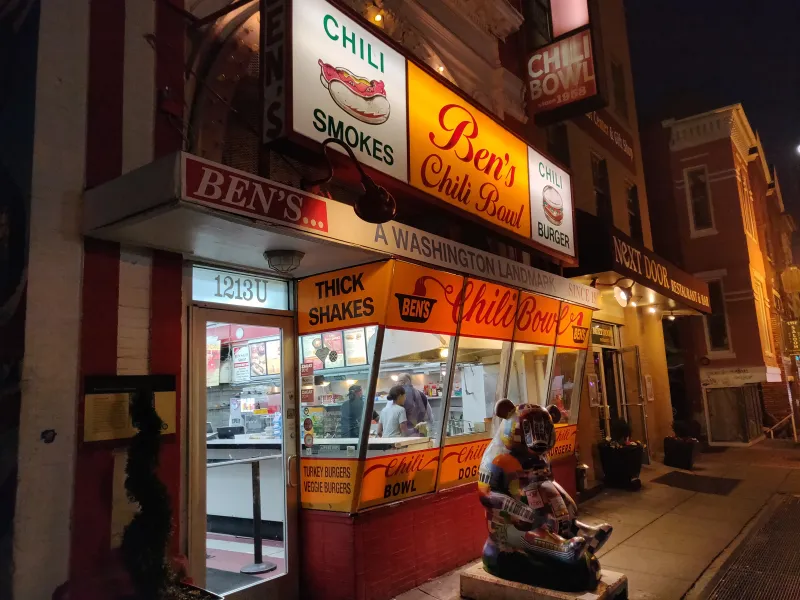
How the buildings line up on the Mall
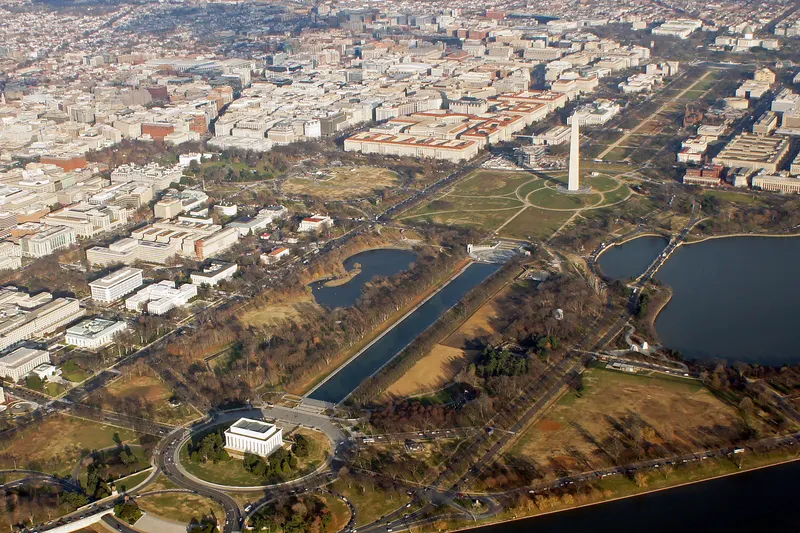
The geography is friendlier than it looks. Most of the Smithsonian museums face the central lawn of the National Mall between the Capitol and the Washington Monument, lined up along Madison Drive on the north side and Jefferson Drive on the south. From the steps of one you can usually see the next, and the longest walk between neighbouring museums is only a few minutes. That makes pairing two in a day genuinely easy — you are not crossing the city, just stepping over the grass.
The red-sandstone Smithsonian Castle, the institution's oldest building, sits on the south side and works as the visitor hub: information desks, orientation, and a sensible first stop if you want a map and a recommendation. The big crowd-pullers — Natural History, American History and the National Gallery — line the north side; Air & Space, the Hirshhorn, the American Indian Museum and the Castle sit along the south. The African American History museum stands a little apart, at the Mall's western end near the Washington Monument. Knowing that layout lets you cluster your day: do the north-side museums together, or the south-side ones, and you will barely walk.
One practical note on closures and renovation: the Smithsonian is a living institution, and at any given time a wing or a whole museum may be partly closed for refurbishment — Air & Space has spent years under a major renovation that has rotated its galleries. Check each museum's current status on the official site before you build a tight plan around a specific exhibit, so you are not let down at the door.
Visiting with children
Washington is unusually kind to families: the museums are free, indoors, air-conditioned in summer and full of things children actually want to see. The two reliable winners are Natural History — for the dinosaur hall, the Hope Diamond, the giant elephant in the rotunda and the live insect zoo — and Air & Space, for the rockets, the planes hung overhead and the things you can walk beneath. Both reward a focused two-hour visit far more than a forced march through every gallery.
The trick with kids is the same as with adults, only more so: pick a few highlights, build in a snack and a sit-down, and stop before the meltdown rather than after it. Strollers are welcome, family restrooms are common, and the Mall's open lawn outside is the perfect place to let small legs run between museums. Save one outdoor break — the carousel on the Mall, or simply the grass — for when the indoor stamina runs out.

The smaller museums worth knowing
Beyond the big three, the Smithsonian's Mall family includes several smaller museums that are often quieter, easier to see in full, and rewarding precisely because the crowds thin out. The National Museum of the American Indian, on the south side near the Capitol end, is as notable for its curving, honey-coloured architecture and its Mitsitam Café as for its galleries on the living cultures and histories of Native peoples across the Americas. The Hirshhorn Museum and Sculpture Garden, the distinctive concrete drum beside the lawn, is the Smithsonian's home for modern and contemporary art, with a sunken sculpture garden across the road that is free to wander.
Two more sit along the south side and are easy to fold in. The National Museum of Asian Art — the Freer and Sackler galleries — holds Asian and American art in a pair of connected buildings, and the African Art museum focuses on the visual arts of the African continent. None of these will swallow a half-day; an hour or so is plenty for a focused look, which makes them ideal as the lighter second stop after a big morning museum. If your tastes run to art rather than dinosaurs and rockets, a day built from the Hirshhorn, the American Indian Museum and the National Gallery is a quieter, more contemplative way to spend the Mall.
- National Museum of the American Indian: striking architecture, living-culture galleries and the best café on the Mall.
- Hirshhorn Museum and Sculpture Garden: modern and contemporary art in the round, with a free sculpture garden.
- National Museum of Asian Art (Freer | Sackler): Asian and American art in two linked buildings.
- National Museum of African Art: the visual arts of the African continent, on the south side.
- These smaller museums are quieter and quicker — ideal as a lighter second stop after a big morning.
Beyond the Mall: the rest of the Smithsonian
Not every Smithsonian museum sits on the Mall, and a couple are worth the short hop. The National Portrait Gallery and the Smithsonian American Art Museum share a grand old building in Penn Quarter, a few minutes' walk north of the Mall, with a glass-roofed courtyard that is one of the loveliest free interiors in the city and a famous hall of presidential portraits. The National Zoo, also part of the Smithsonian and also free, sits up in Rock Creek Park, a Metro ride from the centre — a good change of register if you have a third day or restless children.
The point of mentioning them is to widen the field beyond the obvious. A first-time visitor will rightly spend most of their museum time on the Mall, but if you are returning, or you simply want to escape the crowds, the Penn Quarter museums and the zoo offer the same free admission with a fraction of the foot traffic. They also pair naturally with a meal — Penn Quarter is the best-fed corner of the museum district — so a portrait-gallery morning and a long lunch make an easy, civilised day.
- National Portrait Gallery & American Art Museum: a shared Penn Quarter building with a glorious glass-roofed courtyard.
- The National Zoo: free, in Rock Creek Park, a Metro ride from the centre — good for a third day or for children.
- These off-Mall sites are quieter, with the same free admission — ideal for return visitors.
- Penn Quarter is the best-fed corner of the district — pair a museum morning with a real lunch.
Planning a one-day or two-day museum visit
If you have a single day, be ruthless. Pick two museums — one in the morning, one in the early afternoon — and accept that you will see highlights, not everything. A classic first-timer's day is Natural History for the dinosaurs and gems in the morning, a real lunch off the Mall, then American History next door for the Star-Spangled Banner and the icons in the afternoon, all on the calmer north side with barely any walking between them. Reserve the African American History pass only if you are willing to give it the three-plus hours it deserves, in which case make it the whole half-day on its own.
With two days you can relax the pace and add range. Give one day to the science-and-history pairing above, and the other to the things that need a pass or a special mood — Air & Space with its reserved slot, or the African American History museum, balanced with a lighter art museum and the Mitsitam Café for lunch. Either way, the golden rule holds: separate the marble from the museums. Do museums in the middle of the day when it's hot or wet, and save the monuments for dawn and dusk when the light is good and the crowds are gone. That rhythm, more than any single museum, is what makes a DC trip feel unhurried.
- One day: two museums, highlights only — e.g. Natural History then American History on the north side.
- Two days: add a pass-controlled or art museum on the second day, at a gentler pace.
- Reserve the African American History pass only if you'll give it the half-day it needs.
- Separate the marble from the museums — museums midday, monuments at dawn and dusk.

Practical tips for a museum day
A few small habits make the difference between a smooth museum day and a frazzled one. Travel light — every Smithsonian building screens bags at the door, so the fewer you carry, the faster you're in. Wear comfortable shoes; you'll cover more ground inside a single museum than you expect, and the marble floors are unforgiving. Bring a refillable water bottle for the fountains, and a light layer, because the museums run cool with air conditioning even when the Mall outside is sweltering.
On timing: arrive near opening at whichever museum you most want to see, before the crowds and school groups build through the morning. Check coat-and-bag policies if you're carrying anything large, since some museums limit big bags and backpacks. And keep the day flexible — the museums are free, so there is no penalty for leaving one early and wandering into another, or for cutting a visit short when the legs give out. The visitors who love the Smithsonian are the ones who treat it as a buffet to graze, not a checklist to clear.
- Travel light — every building screens bags, so less to carry means a faster entry.
- Comfortable shoes and a light layer — marble floors and strong air conditioning indoors.
- Bring a refillable water bottle for the plentiful fountains.
- Arrive near opening at your top-priority museum to beat the crowds and school groups.
- Keep the day flexible — free entry means no penalty for leaving early or switching museums.

Common questions
Are the Smithsonian museums really free? Yes — admission to every Smithsonian museum is free, every day, with no charge at all. Most need no ticket to enter.
Which Smithsonian museums need a ticket? The National Museum of African American History & Culture uses free timed-entry passes, and Air & Space has used them in busy periods and during renovation. Both passes are free; reserve online ahead and verify the current requirement.
How many museums can I see in a day? Two big ones is a realistic limit for most people — one in the morning, one in the afternoon, with a proper break between. Add a small museum only if you have energy left.
Which is best for families with children? Natural History and Air & Space are the reliable favourites, both on the Mall and both bottomless on a rainy day.
Where is the best museum food? The Mitsitam Café in the National Museum of the American Indian is widely rated the best food on the Mall; Sweet Home Café in the African American History museum is the other destination.
Do I need to book anything in advance? Only the timed-entry passes for the African American History museum and, when required, Air & Space. Everything else is walk-in — just clear security at the door.
Sources

Related guides

National Air and Space Museum Guide
How to visit the National Air and Space Museum on the Mall — the free timed-entry passes, the best galleries to prioritise, what the long renovation means for what's open, a family strategy, and how the downtown museum compares to the Udvar-Hazy Center near Dulles.
Read guide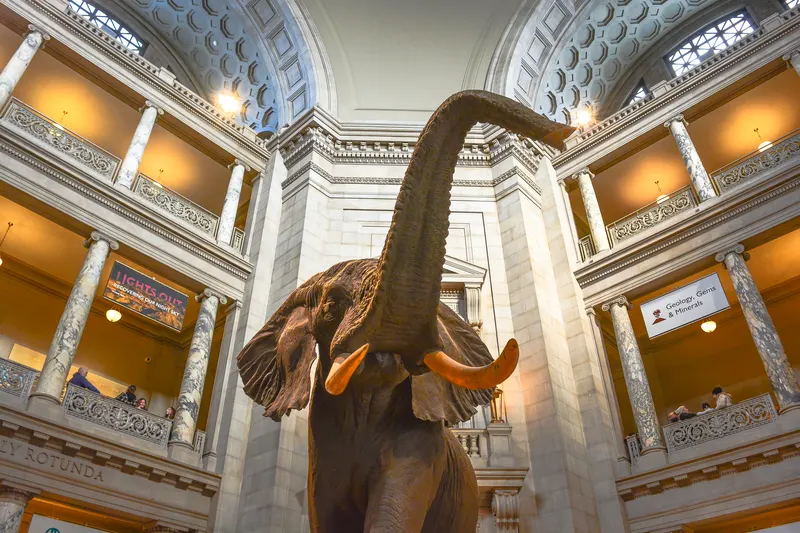
Natural History Museum Guide
How to visit the National Museum of Natural History on the Mall — the dinosaur hall, the Hope Diamond and the gem collection, the mammals and ocean halls, a family-pacing plan, where to eat, and how to see the highlights without museum fatigue.
Read guide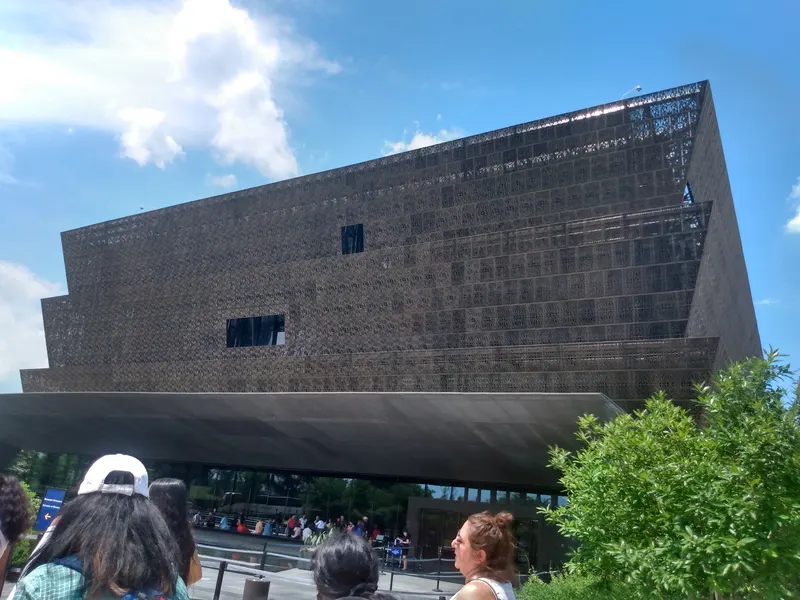
African American History Museum Guide
How to visit the National Museum of African American History & Culture on the Mall — the free timed-entry passes and how to get one, the deep underground history galleries, Sweet Home Café, the lines, how to pace an emotionally heavy visit, and the walk along the Mall.
Read guideMore in Things to Do
6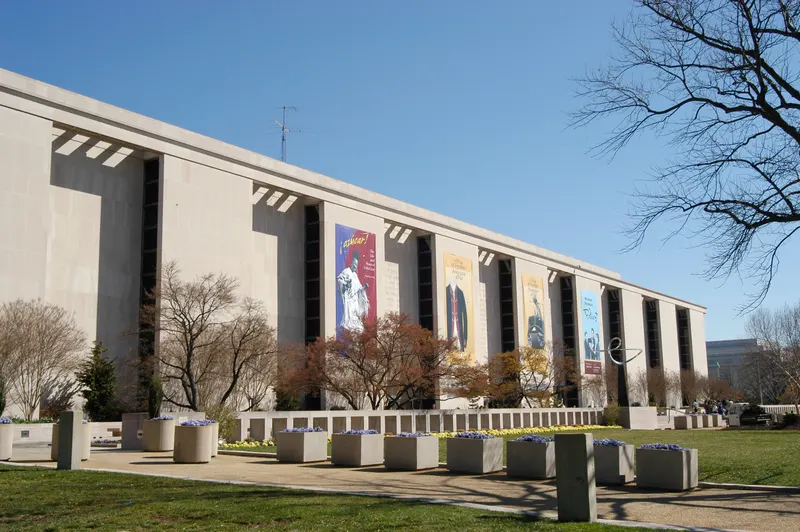
American History Museum Guide
How to visit the National Museum of American History on the Mall — the original Star-Spangled Banner, the First Ladies' gowns, the American presidency, the pop-culture icons, the food-court logistics, and how to time a visit around the school groups.
Read guide
Best Museums in Washington, D.C.
Washington has more world-class museums than any sane trip can hold, and almost all of them are free. This is a guide to the best museums in DC sorted by topic, age, ticket needs, location and rainy-day value — so you can choose two or three with confidence instead of trying to see them all.
Read guide
Best Photography Spots in Washington, D.C.
Where to make great photographs in Washington — the monument reflections, the Tidal Basin blossoms, the Capitol and Lincoln axis, Georgetown's waterfront, hidden rooftops and the golden-hour and blue-hour routes that tie them together.
Read guide
Best Things to Do in Washington, D.C.
A ranked first-trip shortlist of the best things to do in Washington, D.C. — from the National Mall and the free Smithsonian museums to a Capitol tour, the Tidal Basin and Georgetown — built so you can pick a handful and still feel you saw the city.
Read guide
Best Viewpoints in Washington, D.C.
Where to find the best views in Washington — the high monuments and free towers, the rooftop bars and cultural terraces, and the river and hilltop overlooks across the Potomac, ranked by how much effort each one asks.
Read guide
Best Washington, D.C. Tours
When a tour is genuinely worth it in Washington and when the city is better free and self-guided — monument night tours, bike and Segway loops, food and neighbourhood walks, official Capitol and government-building tours, and the day trips that need a coach.
Read guide