
Jefferson Memorial Guide
How to visit the Jefferson Memorial — the domed rotunda on the Tidal Basin, the cherry-blossom and sunset views, the bronze statue inside, and how to walk it without over-walking.
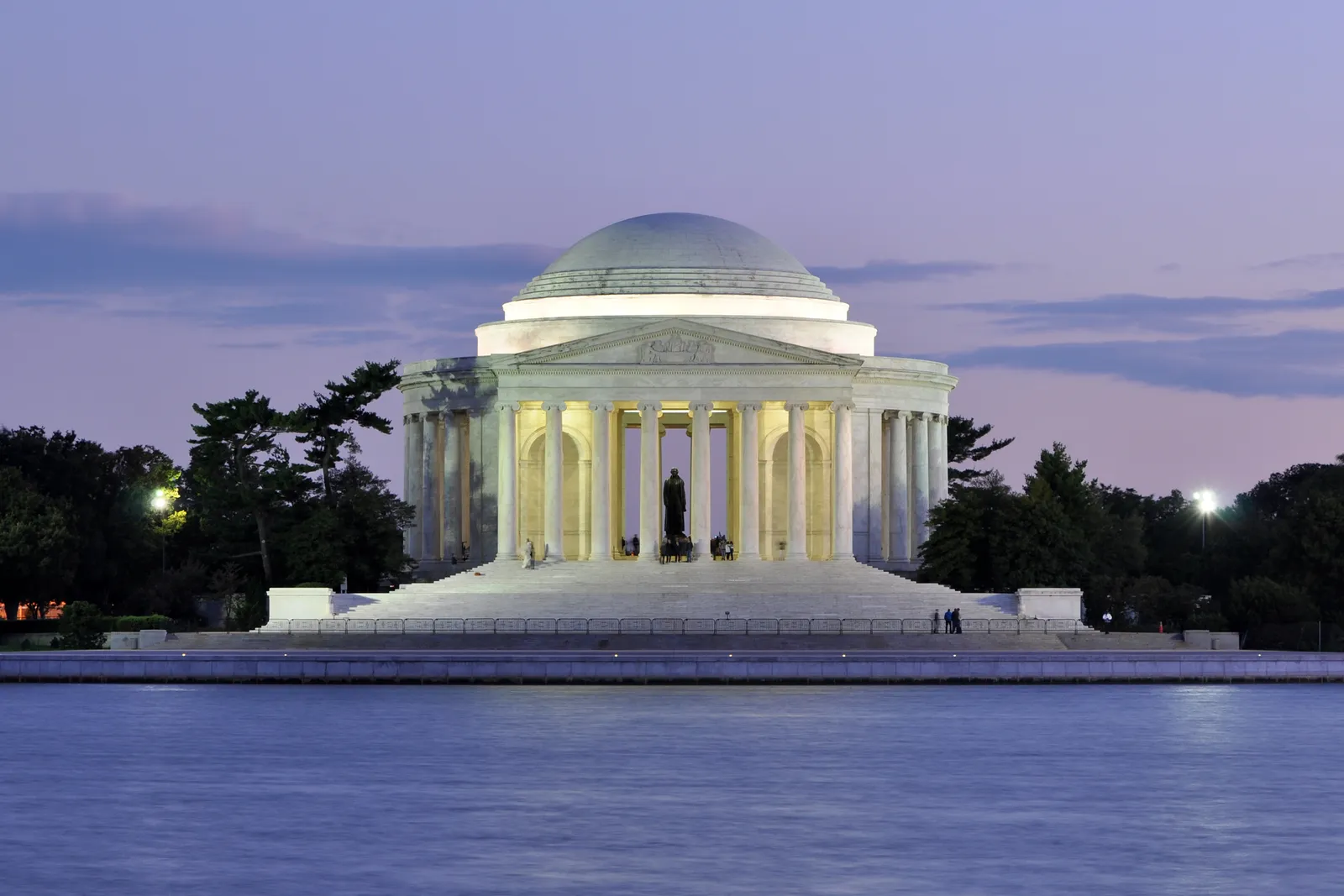
Photo: Joe Ravi / Wikimedia Commons · CC BY-SA 3.0
- ✓A white-domed, open-columned rotunda on the south shore of the Tidal Basin — modelled on the Roman Pantheon, and on Jefferson's own architecture.
- ✓Inside stands a 19-foot bronze statue of Thomas Jefferson, ringed by his own words carved into the marble walls, including lines from the Declaration of Independence.
- ✓It's open and free around the clock, with rangers and a small bookstore on site during the day — verify staffed hours on the NPS page.
- ✓In cherry-blossom season the memorial sits in the middle of the bloom; the rest of the year it gives the best sunset reflection in the city.
- ✓It's the farthest memorial from a Metro station — most people reach it on foot around the Tidal Basin rather than by rail.
The Pantheon on the water
The Jefferson Memorial is the one that floats. Set on the south shore of the Tidal Basin, slightly apart from the main run of the Mall, it is a white marble rotunda — a shallow dome carried on a ring of columns, open to the air on every side — and from across the water it appears to hover above its own reflection. The design nods both to the Roman Pantheon and to the neoclassical buildings Thomas Jefferson designed himself, which makes the architecture a kind of portrait of the man.
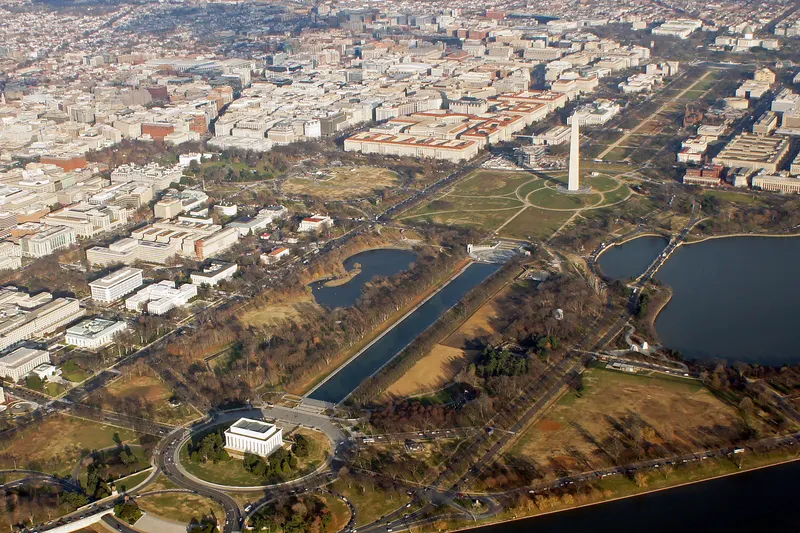
It honours the third president and principal author of the Declaration of Independence, and the choice of an open, airy temple over a closed hall feels right for him. Dedicated in 1943, it completed the great cross-axis of the Mall: stand on the steps and the line runs straight north, across the water, past the Washington Monument, to the White House. That sightline is deliberate, and it's one of the quiet thrills of standing at the top of the steps.
Because it sits off to the side, the Jefferson is usually calmer than the Lincoln or the Washington Monument — fewer tour groups, more breathing room. It rewards a slow visit: walk the colonnade, read the walls, look back across the basin, and let it be the unhurried stop in a day that's otherwise full of marble.


At a glance
A quick orientation before you walk out to it. Treat staffed hours and ranger-program times as things to confirm on the National Park Service page close to your visit; the memorial structure itself stays open and free at all hours.
- What it is: an open, domed neoclassical rotunda honouring Thomas Jefferson, third U.S. president and author of the Declaration of Independence.
- Where: the south shore of the Tidal Basin, slightly off the main Mall axis.
- Cost: free, open 24 hours; rangers and a small bookstore during staffed daytime hours (verify on the NPS page).
- Inside: a 19-foot bronze Jefferson, four panels of his words, and a lower-level exhibit and bookstore.
- Getting there: no Metro at the door — most people walk in around the Tidal Basin (about 15–20 minutes from the nearest stations).
- Best for: the city's finest sunset reflection, cherry blossoms in season, and a calmer pace than the main Mall.
What to see inside
Climb the steps and the centre of the rotunda holds a 19-foot bronze statue of Jefferson, standing, looking out toward the White House. Around him, carved into the marble walls in four panels, are passages drawn from his own writing — including the famous opening of the Declaration of Independence and his thoughts on liberty, law and the need for institutions to evolve with the times. Take a minute to actually read them; the memorial is built around his words as much as his likeness.
The chamber is open to the weather, so the light changes through the day and the sound of the basin carries in. During staffed daytime hours there are park rangers on hand to answer questions and a small bookstore at the lower level; a downstairs exhibit area covers Jefferson's life and the building of the memorial. Hours for the staffed services vary by season, so check the NPS page if a ranger talk or the bookstore matters to your timing — but the memorial itself is open and free at any hour.
- The 19-foot bronze Jefferson at the centre, facing the White House across the water.
- Four wall panels of Jefferson's own words, including lines from the Declaration of Independence.
- A lower-level exhibit and small bookstore, staffed during daytime hours (verify on the NPS page).
- The view back north from the top step — straight across the Tidal Basin to the Washington Monument.
Why it stands where it does
The memorial's placement was a piece of city planning as much as commemoration. By the 1930s the great north-south axis of the Mall — the line running from the White House south through the grounds — had no terminating monument, and Jefferson, oddly, had no major memorial in the capital at all. President Franklin Roosevelt championed the project, the site on the new Tidal Basin shore was chosen to close that axis, and the architect John Russell Pope produced the open Pantheon-style rotunda you see today. It was dedicated in 1943, on the 200th anniversary of Jefferson's birth, in the middle of the Second World War.
The design drew criticism at the time from modernists who thought the classical temple old-fashioned, but it has aged into one of the best-loved buildings on the Mall — partly because of the setting. Sitting it on the water was the masterstroke: the basin gives the rotunda its reflection, its breathing room, and its frame of cherry trees, and turns what could have been a stiff monument into the most photographed view in Washington after the Mall's central axis itself.
When to go — blossoms, sunset and the light
If you can only see the Jefferson Memorial once, make it golden hour. Late in the day the low sun lights the dome and the columns warm to honey, and the Tidal Basin goes still enough to mirror the whole thing — this is the single best reflection shot in Washington, taken from the path on the far north shore looking back across the water. Linger until dusk and the memorial is floodlit, the crowds thin, and the basin turns to glass. It is one of the most romantic free half-hours the city offers.
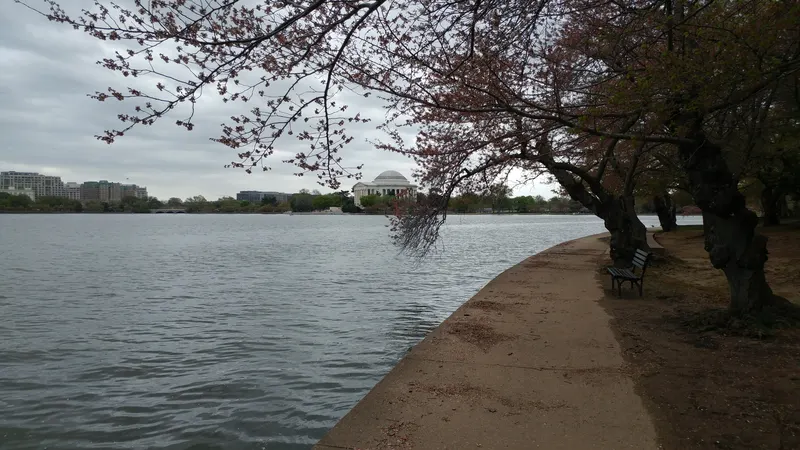
In cherry-blossom season — usually late March into early April, though it shifts every year — the memorial stands in the thick of the bloom, ringed by pink, and the dawn crowds gather here for good reason. That week it is anything but quiet, so come at first light if you want the photograph without the wall of people. Outside blossom season the memorial is one of the calmer corners of the Mall, lovely on a clear autumn afternoon or a crisp winter morning.
Whenever you come, think of the Jefferson as part of the Tidal Basin loop rather than a stop you drive to. It is the farthest memorial from any Metro station, so most visitors reach it on foot — a flat, scenic walk around the water from the Washington Monument or from the Smithsonian-side of the Mall.
Getting there and pairing it well
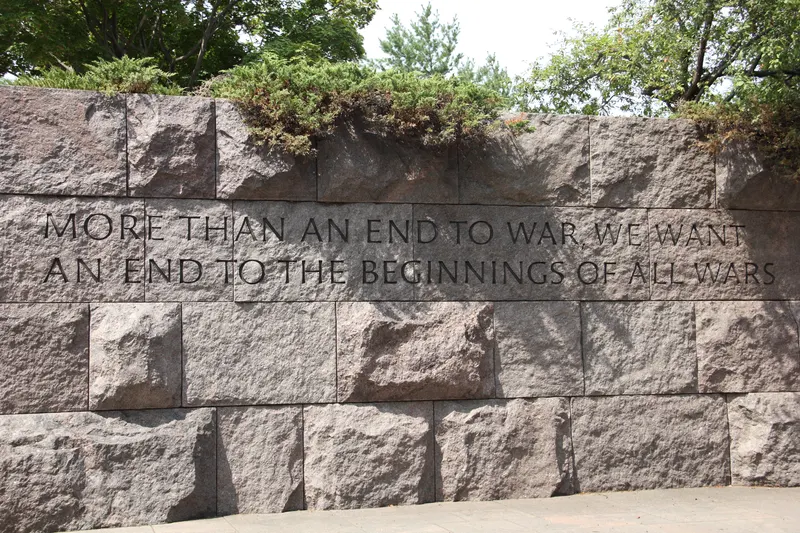
There's no Metro station at the Jefferson's doorstep — the nearest stops leave you a fifteen-to-twenty-minute walk away, and the most pleasant approach is on foot around the Tidal Basin. From the Washington Monument it's a flat stroll south and around the water; the route passes the FDR Memorial and the Martin Luther King Jr. Memorial on the way, which is exactly how you should plan it. Walk the basin loop and you'll collect all three memorials, plus the best blossom and sunset views, in a single unhurried circuit of about two miles.
If you'd rather not walk far, the seasonal Tidal Basin paddle boats launch from a boathouse on the north shore and give a different, low-effort angle on the memorial from the water. However you arrive, the Jefferson rewards being the slow, scenic anchor of a Tidal Basin afternoon rather than a quick tick on a longer list — so build your route around it, and save it for the end of the day if you can.
Practical notes and a few cautions
A handful of small practicalities make the Jefferson visit smoother. There is no food or drink for sale at the memorial itself and very little nearby, so carry water — the Tidal Basin walk is exposed and there's almost no shade on the open shore, which matters a great deal on a hot, humid Washington summer afternoon. Public restrooms are limited around the basin, so it's worth using the facilities at a Smithsonian museum before you set out on the loop.
The paddle-boat boathouse on the north shore is seasonal and weather-dependent, so don't build a plan around it without checking it's running. And while the cherry blossoms are the headline draw, be realistic about the crowds in that window: the path narrows in places, the dawn photographers arrive early, and on a peak-bloom weekend the loop can be shoulder-to-shoulder. If you want the memorial at its serene best, an ordinary clear evening outside blossom season — or first light on any day — delivers far more of the magic the photographs promise.
Finally, give yourself permission to simply sit. The steps of the Jefferson, facing back across the water to the Washington Monument, are one of the great free benches in the city. Many visitors rush the memorials as a checklist; the Jefferson is the one to slow down for, watch the light change on the basin, and let the day settle.

Related guides
Tidal Basin Guide
Walk the Tidal Basin in Washington, D.C. — the Jefferson, FDR and Martin Luther King, Jr. memorials around its shore, the famous cherry blossoms, the paddle boats, the best time of day to beat the crowds, and where to stand for the sunrise reflection shot.
Read guide
Washington, D.C. Cherry Blossoms Guide
When the Tidal Basin turns pink — how peak bloom works, the best routes and viewpoints, when to beat the crowds, the festival events, where to stay and the alternate bloom spots beyond the Tidal Basin. The complete guide to the DC cherry blossoms.
Read guide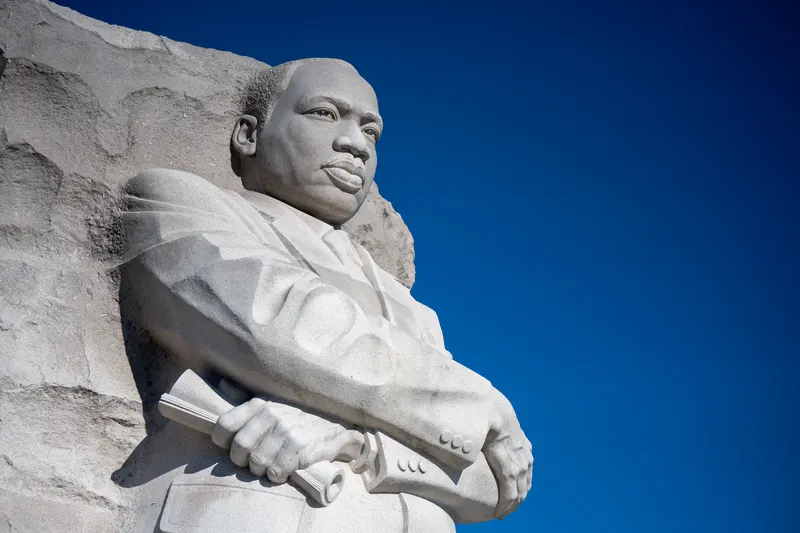
Martin Luther King Jr. Memorial Guide
A respectful guide to the Martin Luther King Jr. Memorial on the Tidal Basin — the Stone of Hope, the inscription wall, what to read, and how to visit it as part of a memorial walk.
Read guideMore in Things to Do
6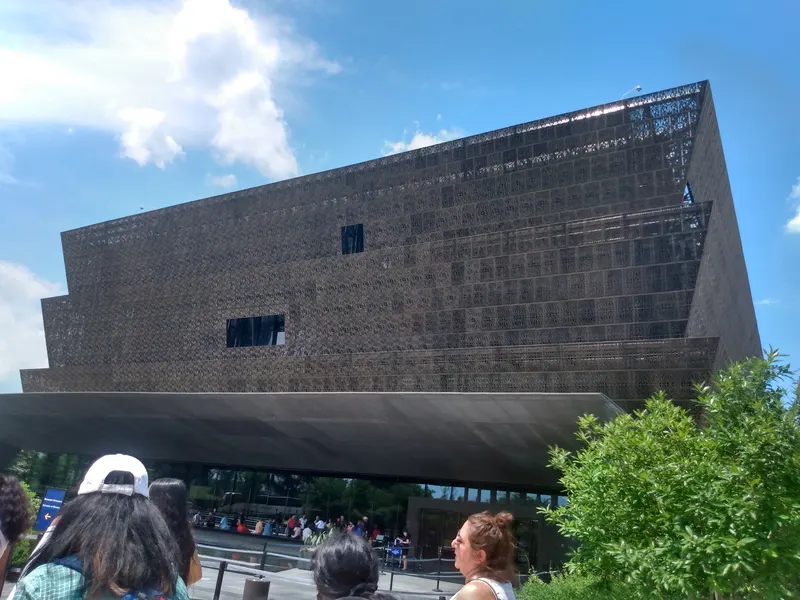
African American History Museum Guide
How to visit the National Museum of African American History & Culture on the Mall — the free timed-entry passes and how to get one, the deep underground history galleries, Sweet Home Café, the lines, how to pace an emotionally heavy visit, and the walk along the Mall.
Read guide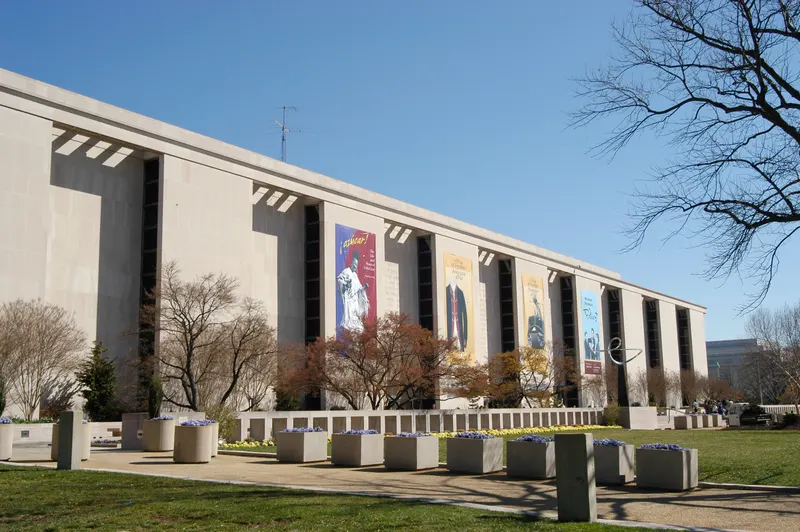
American History Museum Guide
How to visit the National Museum of American History on the Mall — the original Star-Spangled Banner, the First Ladies' gowns, the American presidency, the pop-culture icons, the food-court logistics, and how to time a visit around the school groups.
Read guide
Best Museums in Washington, D.C.
Washington has more world-class museums than any sane trip can hold, and almost all of them are free. This is a guide to the best museums in DC sorted by topic, age, ticket needs, location and rainy-day value — so you can choose two or three with confidence instead of trying to see them all.
Read guide
Best Photography Spots in Washington, D.C.
Where to make great photographs in Washington — the monument reflections, the Tidal Basin blossoms, the Capitol and Lincoln axis, Georgetown's waterfront, hidden rooftops and the golden-hour and blue-hour routes that tie them together.
Read guide
Best Things to Do in Washington, D.C.
A ranked first-trip shortlist of the best things to do in Washington, D.C. — from the National Mall and the free Smithsonian museums to a Capitol tour, the Tidal Basin and Georgetown — built so you can pick a handful and still feel you saw the city.
Read guide
Best Viewpoints in Washington, D.C.
Where to find the best views in Washington — the high monuments and free towers, the rooftop bars and cultural terraces, and the river and hilltop overlooks across the Potomac, ranked by how much effort each one asks.
Read guide