
World War II Memorial Guide
How to visit the National World War II Memorial on the National Mall — the Rainbow Pool fountains, the two arches and fifty-six state pillars, the Freedom Wall of gold stars, the Honor Flight veterans who still come, and why the memorial is at its best after dark.
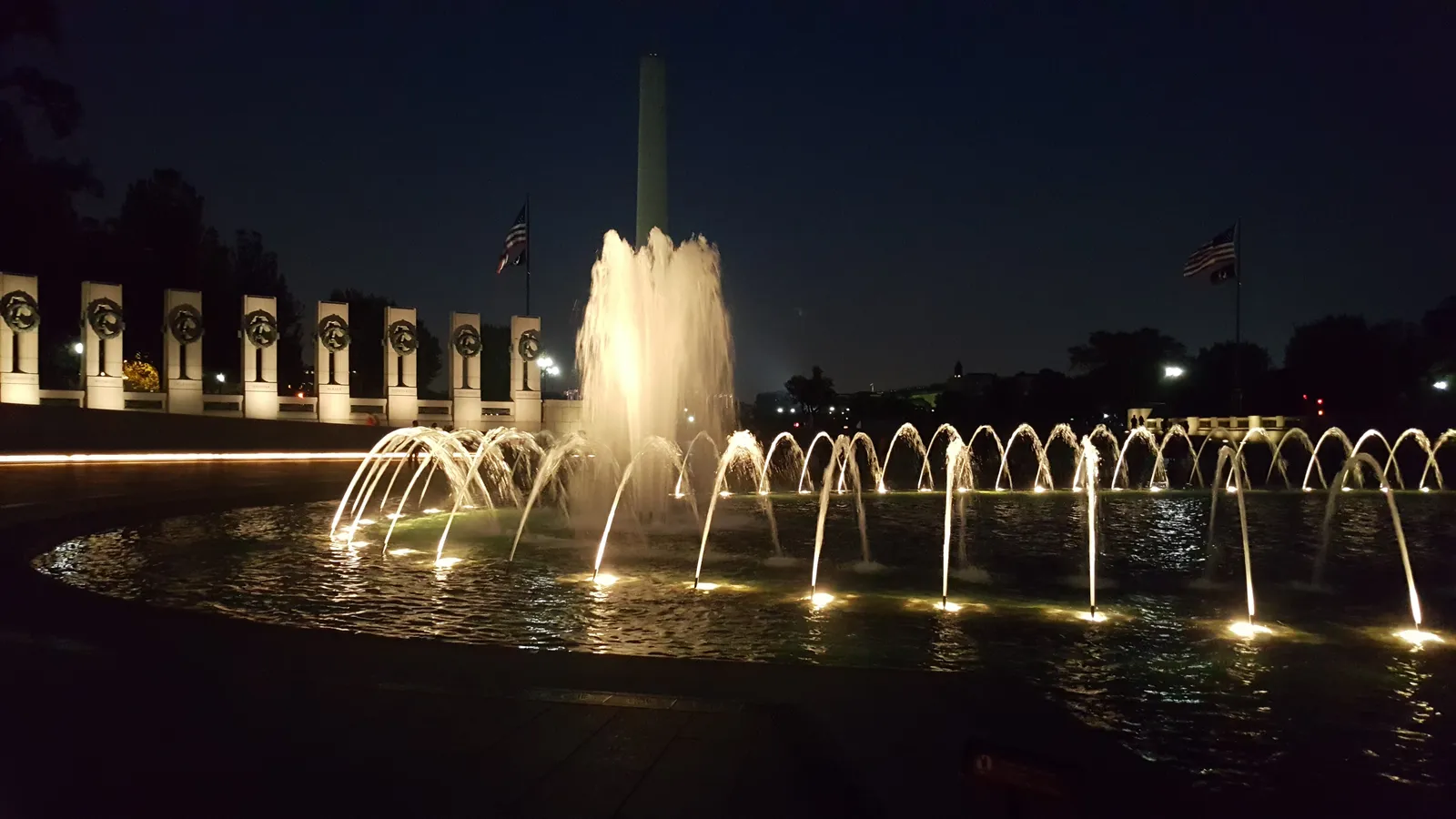
Photo: Victoria Mejia-Gewe / Wikimedia Commons · CC BY-SA 4.0
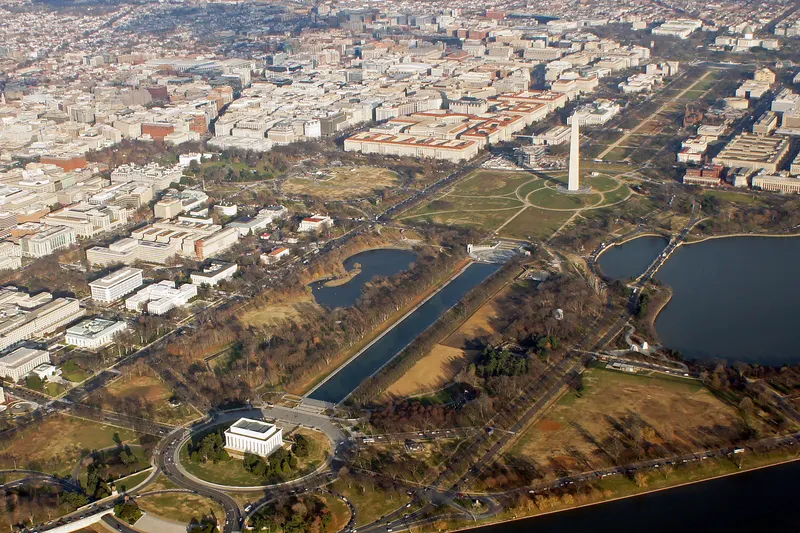
- ✓The memorial sits at the east end of the Reflecting Pool, on the Mall's main axis between the Washington Monument and the Lincoln Memorial — you pass it almost by default.
- ✓Fifty-six granite pillars ring the plaza, one for each U.S. state and territory of the wartime years, split between an 'Atlantic' and a 'Pacific' arch.
- ✓The Freedom Wall holds 4,048 gold stars, each representing roughly a hundred American war dead — about 405,000 in all.
- ✓It is open and free 24 hours a day, lit through the night; the fountains and floodlights make it one of the Mall's best after-dark stops.
- ✓Honor Flight groups bring WWII and later veterans here most days in the warmer months — a quietly moving thing to witness, and a reason to keep the volume down.
Where it sits, and why you'll pass it anyway
The National World War II Memorial occupies the single most central spot on the National Mall: the east end of the Lincoln Memorial Reflecting Pool, directly on the great sightline that runs from the Washington Monument down to the Lincoln Memorial. That location was hard-won and controversial when the memorial was built — critics argued it interrupted the open vista L'Enfant intended — but in practice it means you walk through it whether you plan to or not. Anyone crossing from the Monument toward Lincoln passes the fountains, and most people stop without quite deciding to.
Dedicated in 2004 and designed by Friedrich St.Florian, the memorial is a sunken oval plaza built around the restored Rainbow Pool. Two forty-three-foot arches stand at the north and south ends — one inscribed 'Atlantic', one 'Pacific' — and a curving colonnade of granite pillars links them. The whole thing is lower than the surrounding lawn, so it reads as a clearing rather than a wall: you descend a gentle ramp into it, and the city's noise drops away as the fountains take over.
Because it is open ground rather than a building, there is no admission, no ticket and no queue. It is one of the easiest monuments on the Mall to fold into a longer walk — five unhurried minutes if you are passing, half an hour if you read the inscriptions and find the right pillar.

What to look for: pillars, arches and the Rainbow Pool
The fifty-six granite pillars are the part most visitors want to find a personal connection to. There is one for each of the forty-eight states of the 1940s, plus the District of Columbia and the era's territories — Alaska, Hawai'i, the Philippines, Puerto Rico, Guam, American Samoa and the U.S. Virgin Islands. They are arranged in the order the states entered the Union, alternating north and south of the plaza, each topped with two bronze wreaths — one of oak for industrial strength, one of wheat for agricultural strength. Walk the colonnade and you can usually find your own state quickly; staff and volunteers will point you the right way if not.
The two arches anchor the theatres of the war. The 'Atlantic' arch to the north and the 'Pacific' arch to the south each shelter a bronze baldacchino — a canopy held up by four American eagles bearing a victory laurel. Around the plaza, twenty-four bronze bas-relief panels run along the entrance balustrades, telling the war's story in pictures from enlistment and the home front through combat to the homecoming. They reward slow looking; most people miss them entirely on a first pass.
At the centre, the restored Rainbow Pool sends up its fountains, and on a hot day the spray drifts across the plaza. It is a working fountain, not a reflecting pool to stay out of, and on summer afternoons you will see children at its edge and veterans resting in the shade of the colonnade. The combination — water, granite, the open sky and the Monument rising beyond — is what makes the memorial photograph so well at the edges of the day.
- 56 pillars — 48 states, DC and the wartime territories, in order of entry to the Union, ringed with oak and wheat bronze wreaths.
- Two 43-foot arches inscribed 'Atlantic' and 'Pacific', each with a bronze eagle baldacchino.
- 24 bronze bas-relief panels along the entrances, telling the war's story from home front to homecoming.
- The restored Rainbow Pool fountains at the centre, on the Mall's main axis.

The Freedom Wall, and a quieter inscription to find
The most affecting part of the memorial is the easiest to walk past. On the western side, facing the Reflecting Pool and the distant Lincoln Memorial, the Freedom Wall carries a field of 4,048 gold stars. Each star stands for roughly a hundred American military deaths in the war — some 405,000 in all. The gold star was the symbol a family displayed when they had lost someone in service, and the wall translates an unimaginable number into something you can stand in front of. The inscription below reads simply, 'Here we mark the price of freedom.' Give it a minute on its own.
There is a smaller thing worth hunting for, too. Tucked low on the memorial, near the bronze wreaths and out of the main eyeline, is a 'Kilroy was here' engraving — the cartoon long-nosed face that GIs scrawled wherever they went during the war. There are in fact two of them, deliberately hidden by the builders as a nod to the soldiers' own humour. Finding them is a small, human counterweight to the grandeur, and a good thing to send children looking for while you read the wall.
Around the plaza, carved quotations from Roosevelt, Eisenhower, Truman and others frame the war's meaning without overstating it. Read a couple — they are short — and the memorial does its quiet work: a national monument that still leaves room for the individual stars on the wall.
Honor Flight, and why you keep your voice down
If you visit on a weekday morning in the warmer months, you may see groups of older veterans arriving in wheelchairs, each accompanied by a volunteer 'guardian', often greeted with applause. These are Honor Flight visits — a national network of hubs that flies veterans to Washington at no cost to see the memorials built for their service. The World War II Memorial was the program's original reason for being, and although the last WWII veterans are now very few, the flights now carry Korea and Vietnam veterans too.
It is one of the genuinely moving things you can witness on the Mall, and it shapes how a considerate visitor behaves here. Keep the volume down near veteran groups, give them space and a clear path to the pillars and the wall, and if a moment of applause starts, it is entirely in order to join it. If you have a relative who served, this is a place where telling them you visited carries real weight — many people leave a note or a small token at their state pillar.
None of this is staged for tourists; it is the memorial doing exactly what it was built to do. Treating it with that in mind costs nothing and is the difference between visiting a monument and understanding one.
How it came to be built, and where it sits in time
For a war that ended in 1945, the national memorial took a remarkably long time to arrive. The campaign to build it gathered force in the late twentieth century, driven partly by the awareness that the generation who had fought the war was passing, and it was dedicated in 2004 with many veterans present — some of the last public occasions on which large numbers of them gathered. That timing is part of the memorial's emotional charge: it was built as a thank-you that was nearly too late, and the Honor Flight program grew up around the urgency of getting surviving veterans here while they still could.
The location at the heart of the Mall was the most contested element of the whole project. Placing a memorial on the central axis between the Washington Monument and the Lincoln Memorial meant building in the one open corridor the Mall's designers had always kept clear, and critics fought it hard. The compromise was to sink the memorial below the surrounding grade so that, from a distance, the long sightline still reads as open — you can see straight over it from the Monument to Lincoln. Whether the compromise succeeds is a matter of taste, but in practice the memorial neither blocks the view nor hides from it.
Set against the older monuments around it, the World War II Memorial is grander and more ceremonial — closer in spirit to the triumphal architecture of an earlier age than to the introspective war memorials of Vietnam and Korea just across the Reflecting Pool. Read it alongside them and you get a small lesson in how a country chooses to remember different wars in different ways.

When to go, and how to pair it
Like most of the Mall's open-air monuments, the World War II Memorial is best at the cool edges of the day. Early morning gives you the fountains lit by low gold light with hardly anyone about, and the plaza to yourself for photographs back toward the Monument. After dark is the memorial's other great hour: it is lit through the night, the fountains glow, and the gold stars of the Freedom Wall catch the light against the dark water beyond. Summer middays are hot, exposed and busy — pleasant only for the spray of the fountains. The fountains are typically switched on in the warmer months and drained for winter, so the plaza changes character with the season.
It pairs naturally with everything around it because it sits at the hinge of the Mall. Walk west along the Reflecting Pool to the Lincoln Memorial, with the Vietnam Veterans Memorial just to the north and the Korean War Veterans Memorial to the south, and you have the heart of the Mall's memorial cluster in one unhurried loop. Walk east and you are at the Washington Monument within minutes, with the Smithsonian museum row beyond.
Practical notes: it is fully step-free, with ramps into the plaza, and is one of the more accessible monuments on the Mall. The nearest Metro stations are Smithsonian and Federal Triangle, both a flat walk away; restrooms and a small National Park Service information kiosk sit near the southwest corner. As always with the Mall, treat any specific hours of staffed services as things to verify on the National Park Service site close to your visit — the memorial grounds themselves never close.

Getting there and around
The memorial sits at the dead centre of the National Mall, at the east end of the Reflecting Pool, just west of the Washington Monument. The nearest Metro stations are Smithsonian and Federal Triangle, both on the Orange, Blue and Silver lines and both a flat, easy walk away across the Mall — Smithsonian is generally the handiest. There is no rail stop on the western Mall itself, so plan to walk the last stretch on foot, as everyone does.
Because the memorial is on the main axis, it is the natural pivot point of a Mall walk: arrive from the museum row and the Monument to the east, or from the Lincoln Memorial and the war memorials to the west, and you pass through it either way. The DC Circulator's Mall route and Capital Bikeshare both serve the area for those who would rather not walk the whole two miles, though routes and operators change — verify what is currently running.
Facilities are good for an open-air monument: there are restrooms, a refreshment kiosk and a small National Park Service information desk near the southwest corner, and rangers can answer questions and help veterans and families find a state pillar. Bring water in summer, when the plaza is hot and largely shadeless apart from the colonnade.

At a glance
Location: east end of the Reflecting Pool, on the National Mall, between the Washington Monument and the Lincoln Memorial.
Cost: free. Open 24 hours; lit at night; rangers typically on duty daytime (verify seasonal hours with NPS).
Time needed: 5–10 minutes passing through, 30–45 minutes to read the pillars, panels and Freedom Wall.
Designed by Friedrich St.Florian; dedicated 2004. 56 pillars, two arches, the Rainbow Pool, and a Freedom Wall of 4,048 gold stars.
Nearest Metro: Smithsonian or Federal Triangle. Step-free access throughout.
Related guides
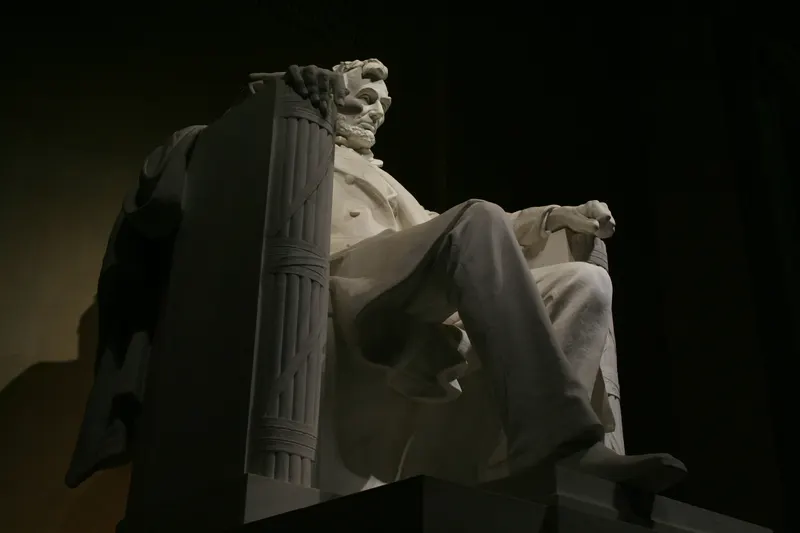
Lincoln Memorial Guide, Washington, D.C.
When to visit the Lincoln Memorial, the views from its steps, how to reach it by Metro, the Reflecting Pool route and what to notice inside — the marble statue, the Gettysburg Address and the history made on these steps.
Read guide
Washington, D.C. Monuments & Memorials Guide
Which of Washington's monuments and memorials to prioritise, the most efficient way to walk them, and when to come for fewer crowds — from the Lincoln and Jefferson to the war memorials and the Tidal Basin.
Read guide
Washington, D.C. Monuments by Night
An atmospheric, sensible evening route through Washington's floodlit memorials — the Lincoln, the war memorials, the Tidal Basin loop and the Washington Monument — with self-guided and guided-tour options, and honest safety advice.
Read guideMore in Washington, D.C. Monuments & Memorials Guide
2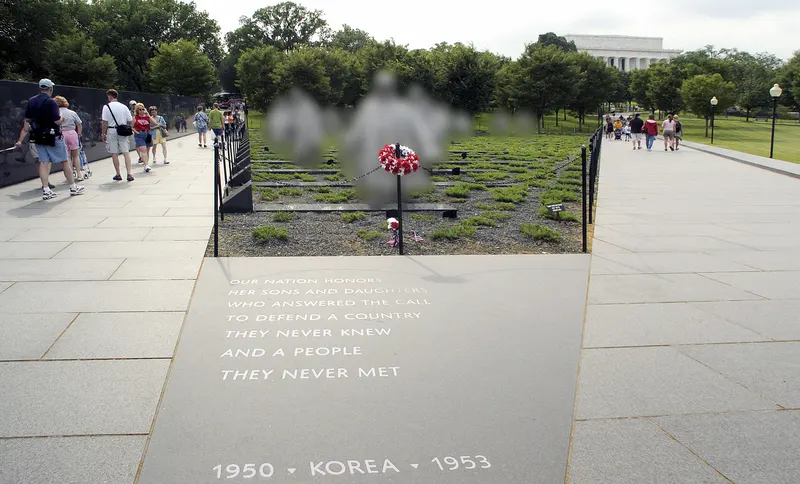
Korean War Veterans Memorial Guide
What to see at the Korean War Veterans Memorial on the National Mall — the column of nineteen stainless-steel soldiers, the etched granite mural wall, the Pool of Remembrance and the new Wall of Remembrance, why it is unforgettable after dark, and how to pair it with Lincoln and the Vietnam Wall.
Read guide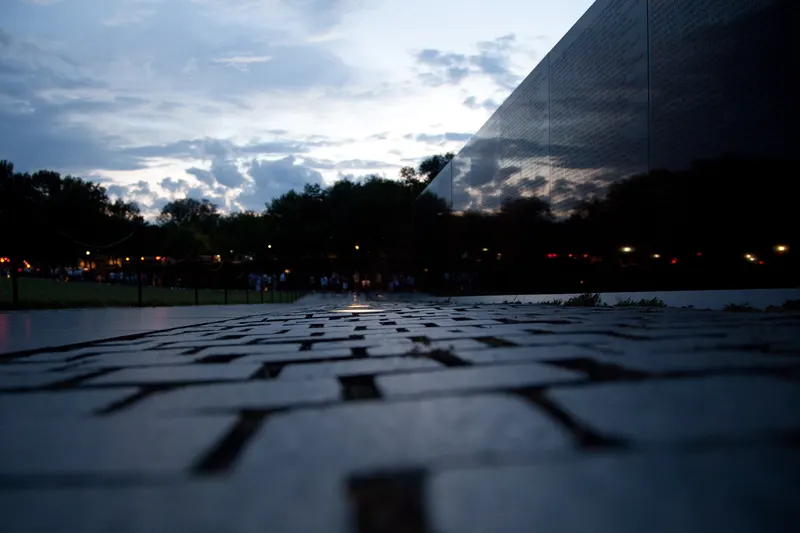
Vietnam Veterans Memorial Guide
A respectful guide to the Vietnam Veterans Memorial on the National Mall — Maya Lin's black-granite Wall, how to find a name, the Three Servicemen and Vietnam Women's Memorial statues, the etiquette of visiting, and how to pair it with the Lincoln and Korean War memorials.
Read guide