
Martin Luther King Jr. Memorial Guide
A respectful guide to the Martin Luther King Jr. Memorial on the Tidal Basin — the Stone of Hope, the inscription wall, what to read, and how to visit it as part of a memorial walk.
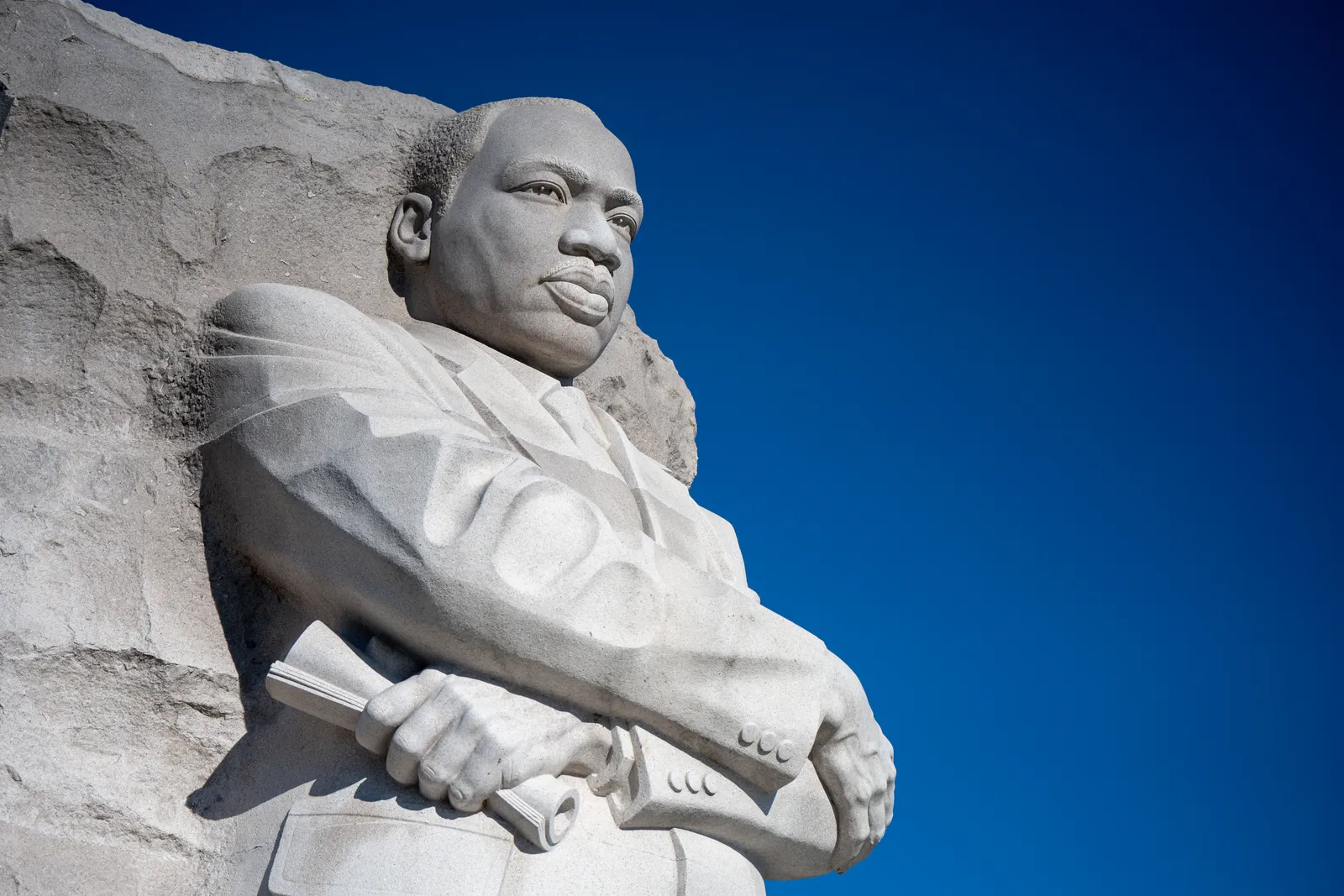
- ✓The centrepiece is the 30-foot 'Stone of Hope' — Dr. King's figure emerging from the granite, drawn from his line 'Out of a mountain of despair, a stone of hope.'
- ✓You enter by passing through a split boulder, the 'Mountain of Despair' — the missing piece is the Stone of Hope pushed forward toward the water.
- ✓A long inscription wall carries excerpts from his speeches and sermons — not the 'I Have a Dream' speech itself, but words from across his life's work.
- ✓It opened in 2011, the first memorial on the Mall to honour a Black American and a man who held no public office.
- ✓It sits on the northwest rim of the Tidal Basin, in direct sightline to the Jefferson Memorial across the water — a deliberate conversation between the two.
A stone of hope on the Tidal Basin
The Martin Luther King Jr. Memorial does something no other memorial on the Mall does: it puts the visitor inside a metaphor. You approach a single great boulder of granite, the 'Mountain of Despair,' and walk through a gap split clean down its centre. The piece that's missing has been pushed forward to the water's edge as the 'Stone of Hope' — and carved into its face, gazing out across the Tidal Basin, is the 30-foot figure of Dr. King, arms folded, expression resolute. The whole design grows from a single line of his 1963 speech: 'Out of a mountain of despair, a stone of hope.'
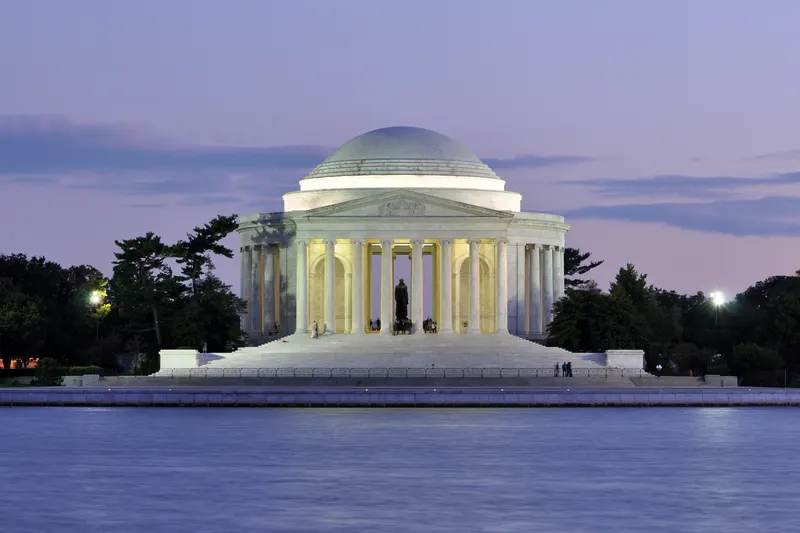
Dedicated in 2011, it was the first memorial on the National Mall devoted to a Black American and to a man who held no elected or military office — honoured instead for moral leadership in the civil-rights movement. Its placement is pointed: it sits on the northwest shore of the Tidal Basin in a line that runs across the water to the Jefferson Memorial, so the author of the Declaration's promise of equality and the man who held the nation to it face each other across the basin.
This is a place to slow down. People come here to think, to read, sometimes to grieve and remember, and the memorial works best when given that quiet. It is moving without being heavy, and it belongs on any first visit to Washington.


At a glance
A quick orientation before you visit. Treat staffed hours as something to confirm on the National Park Service page near your trip; the memorial grounds stay open and free at all hours.
- What it is: a memorial to Dr. Martin Luther King Jr., civil-rights leader, built around the carved 'Stone of Hope.'
- Where: the northwest shore of the Tidal Basin, in sightline to the Jefferson Memorial across the water.
- Opened: 2011 — the first Mall memorial to a Black American and to someone who held no public office.
- Cost: free, open 24 hours; rangers and a bookstore during staffed daytime hours (verify on the NPS page).
- Access: fully step-free on level paved paths — easy for wheelchairs and strollers.
- Getting there: no Metro at the door; reach it on foot around the Tidal Basin from the Mall.
- Visit style: quietly — this is a place for reading and reflection, not a quick photo stop.
What to read and notice
Take the time to read the inscription wall — a long curved sweep of granite behind the Stone of Hope, carved with more than a dozen excerpts from Dr. King's speeches, sermons and writings, drawn from across his life rather than any single moment. They reach far past the most-quoted lines, into his thinking on justice, poverty, peace and the work that was never finished, and reading them slowly is the real heart of the visit.
One detail worth knowing: a paraphrased quote once carved on the side of the statue was later removed after it was judged to misrepresent his words, and the surface was re-dressed with grooves to match the texture of the stone. It's a small, honest mark of how carefully the memorial has been tended. Look, too, at the figure's gaze — set toward the Jefferson Memorial across the water — and at how the rough, unfinished granite of the Stone of Hope deliberately contrasts with the polished memorials elsewhere on the Mall.
- The Stone of Hope — the carved figure of Dr. King emerging from the granite, facing the water.
- The Mountain of Despair — the split boulder you walk through to reach it.
- The inscription wall — over a dozen passages from his speeches and sermons; read them unhurried.
- The sightline across the Tidal Basin to the Jefferson Memorial — a deliberate placement.
The address and the design
There's a detail of the memorial that rewards knowing: its official street address is 1964 Independence Avenue SW, a number chosen to mark the Civil Rights Act of 1964. The whole site is laid out as a passage from struggle to hope — you enter between the halves of the split mountain and emerge at the stone that was carried out of it, a sequence meant to be felt underfoot rather than just read.
The Stone of Hope was carved by the sculptor Lei Yixin from granite, and at 30 feet the figure is deliberately monumental in scale, larger than the presidential statues elsewhere on the Mall — a choice that drew some debate when it opened, alongside discussion of its style. Whatever one makes of those choices, the effect on the ground is undeniable: King's figure stands forward of its own backdrop, gazing out over the water, unfinished granite below his waist as if still emerging from the rock. It is a memorial that means to be walked into, not merely looked at.
Visiting respectfully — hours, access and timing
The memorial is outdoors, free and open around the clock, with park rangers and a small bookstore on site during staffed daytime hours (check the NPS page for current times). It is fully step-free — paved, level paths lead from the Tidal Basin walk right up to the Stone of Hope — which makes it one of the more accessible memorials in the city for wheelchairs and strollers.
It is a memorial, not a photo backdrop, so the kindest way to visit is quietly: keep voices low, give people room to read and reflect, and be patient if someone is having a private moment at the wall. Early morning and the hour around dusk are both lovely and calm; the granite takes on a soft glow at sunset, and after dark the memorial is gently lit. In cherry-blossom season the surrounding trees bloom and the crowds swell, so come at first light if you want stillness.
- Outdoors, free and open 24 hours; rangers and a bookstore during staffed daytime hours (verify on the NPS page).
- Step-free and stroller- and wheelchair-friendly, on level paved paths from the Tidal Basin loop.
- Visit quietly — this is a place of reflection. Dawn and dusk are the calmest, most atmospheric times.
Pairing it with the rest of the basin
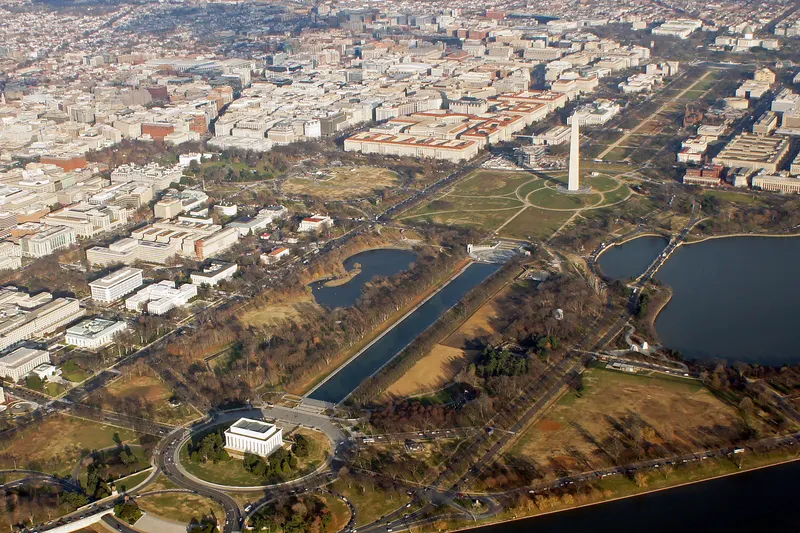
The MLK Memorial sits on the same Tidal Basin loop as the FDR and Jefferson memorials, and the natural way to see it is on foot as part of that walk. The FDR Memorial is just a few minutes south along the shore, and the Jefferson is a little farther around the water — together they make a flat, scenic circuit of roughly two miles that takes in three memorials, the best cherry-blossom stretch and the city's finest sunset reflections. There's no Metro stop at the door, so plan to arrive on foot from the Mall or the Washington Monument.
For the fuller context behind the memorial, pair it with the National Museum of African American History and Culture back on the main Mall, which tells the long story the memorial distils into a single stone. But even on its own, an unhurried half-hour here — walking through the mountain, standing before the stone, reading the wall — is one of the more affecting things you can do in Washington, and it costs nothing.
Practical notes for the visit
A few practicalities help the visit go well. There's no food or drink sold at the memorial, and the Tidal Basin path is open and largely shadeless, so carry water in warm weather — Washington summers are genuinely hot and humid, and the basin loop offers little relief. Restrooms around the basin are limited, so it's wise to use the facilities at a Smithsonian museum before you start the walk out.
The memorial is one of the easier ones to reach without stairs, and its level approach makes it a natural stop for visitors with mobility needs, with strollers, or simply tired feet at the end of a long Mall day. Because it sits on the same loop as the FDR and Jefferson memorials, the smart move is to fold it into that walk rather than treating it as a separate errand — you'll see all three, plus the blossoms in season, in a single circuit.
If you're travelling with children or as a school group, the memorial is a good place to talk through what they're seeing: the split mountain, the figure in the stone, the words on the wall all invite a question or two, and a few minutes of context turns a quick stop into something they remember. Just keep the conversation low and give other visitors the quiet the place is built for.

Related guides
FDR Memorial Guide
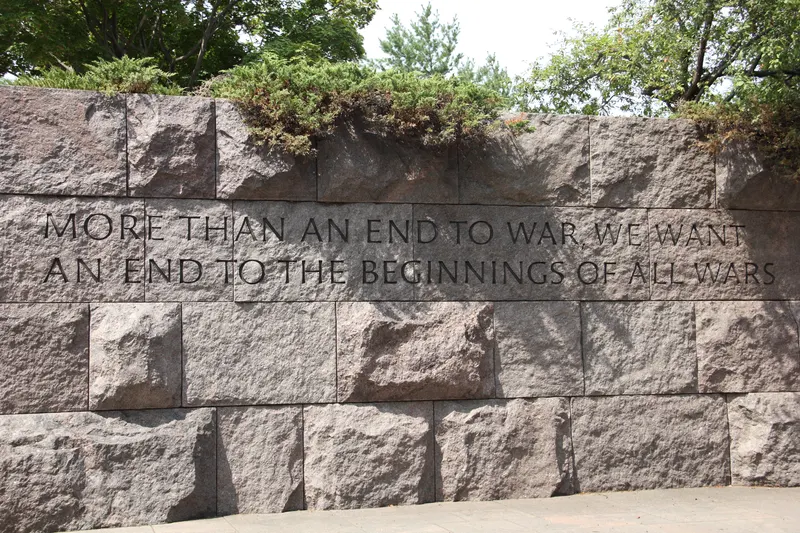
How to visit the Franklin Delano Roosevelt Memorial — four open-air granite rooms of waterfalls, statues and carved quotes along the Tidal Basin, and how to walk it in order.
Read guide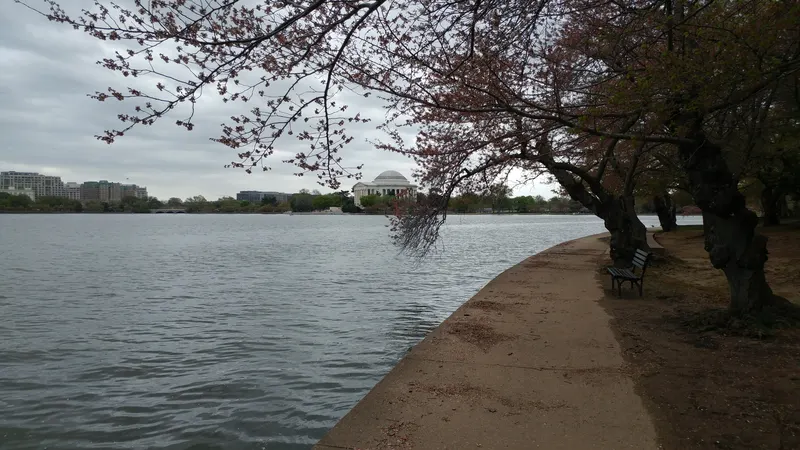
Tidal Basin Guide
Walk the Tidal Basin in Washington, D.C. — the Jefferson, FDR and Martin Luther King, Jr. memorials around its shore, the famous cherry blossoms, the paddle boats, the best time of day to beat the crowds, and where to stand for the sunrise reflection shot.
Read guide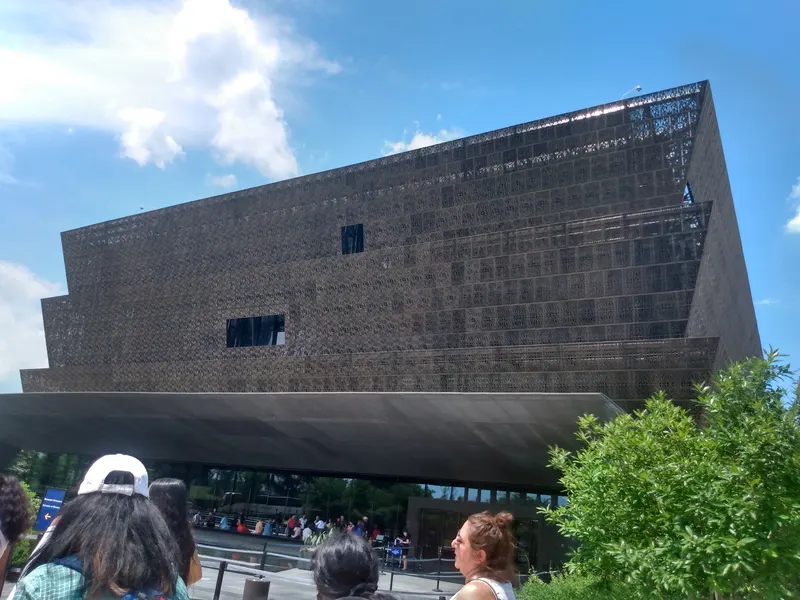
African American History Museum Guide
How to visit the National Museum of African American History & Culture on the Mall — the free timed-entry passes and how to get one, the deep underground history galleries, Sweet Home Café, the lines, how to pace an emotionally heavy visit, and the walk along the Mall.
Read guideMore in Things to Do
6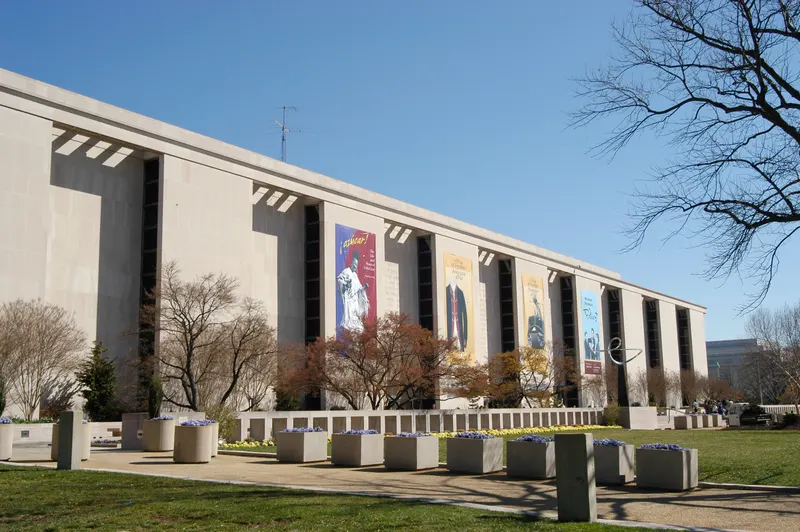
American History Museum Guide
How to visit the National Museum of American History on the Mall — the original Star-Spangled Banner, the First Ladies' gowns, the American presidency, the pop-culture icons, the food-court logistics, and how to time a visit around the school groups.
Read guide
Best Museums in Washington, D.C.
Washington has more world-class museums than any sane trip can hold, and almost all of them are free. This is a guide to the best museums in DC sorted by topic, age, ticket needs, location and rainy-day value — so you can choose two or three with confidence instead of trying to see them all.
Read guide
Best Photography Spots in Washington, D.C.
Where to make great photographs in Washington — the monument reflections, the Tidal Basin blossoms, the Capitol and Lincoln axis, Georgetown's waterfront, hidden rooftops and the golden-hour and blue-hour routes that tie them together.
Read guide
Best Things to Do in Washington, D.C.
A ranked first-trip shortlist of the best things to do in Washington, D.C. — from the National Mall and the free Smithsonian museums to a Capitol tour, the Tidal Basin and Georgetown — built so you can pick a handful and still feel you saw the city.
Read guide
Best Viewpoints in Washington, D.C.
Where to find the best views in Washington — the high monuments and free towers, the rooftop bars and cultural terraces, and the river and hilltop overlooks across the Potomac, ranked by how much effort each one asks.
Read guide
Best Washington, D.C. Tours
When a tour is genuinely worth it in Washington and when the city is better free and self-guided — monument night tours, bike and Segway loops, food and neighbourhood walks, official Capitol and government-building tours, and the day trips that need a coach.
Read guide