
Best Hotels in Washington, D.C.
How to choose the right hotel in Washington, D.C. — sorted the way travellers actually decide: by area and Metro access, by what you're here for, and by season. We cover the grand historic landmarks, the central all-rounders, the romantic boutiques, the family-friendly suites and the smartest budget picks, with the trade-offs spelled out so you book once and book well.

Photo: Oswald Elsaboath / Unsplash
- ✓In DC, the best hotel is mostly the best-located one — pick the area and the Metro access first, then the property.
- ✓Grand historic hotels (the Willard, the Mayflower, the Hay-Adams) put you steps from the White House with real Washington history.
- ✓Central all-rounders in Penn Quarter and downtown give you restaurants, Metro lines and a walk to the Mall in one address.
- ✓Cherry-blossom season (late March to mid-April) is the city's peak — book months ahead and expect premium rates; verify nightly prices.
- ✓Because the museums and monuments are free, a central, Metro-close room is the single best use of your trip budget.
How to read 'best' in a city like Washington
Ask ten seasoned visitors for the best hotel in Washington and you'll get ten different answers, because 'best' here is almost always shorthand for 'best located for me'. DC is a spread-out city of monuments at one end, neighbourhoods at the other and free museums in the middle, and the property that delights a monument-loving couple can frustrate a family chasing the zoo. So this guide is organised the way the decision actually gets made: choose your area and Metro access first, decide what the trip is for, then let the right kind of hotel fall out of that.
Three quiet truths shape every recommendation below. First, location beats luxury — a Metro-close room in the right area returns more pleasure each day than a grander one out of reach. Second, the city's headline sights are free, which means the smart move is to spend on proximity rather than on a discounted room an hour out, because there are no admission fees competing for your budget. Third, season is the wild card: DC's hotel market swings hard with cherry-blossom crowds, school-trip waves, summer conventions and the federal calendar, so what's a bargain one week is a scramble the next. We'll keep prices evergreen and flag what to verify, because rates here move too fast to quote.
Below, we sort the field into the categories travellers really shop by: grand historic landmarks, central all-rounders, romantic boutiques, family stays, riverfront and modern picks, and value. Each has its moment. Read the one or two that match your trip, ignore the rest, and use the linked deep-dives — luxury, family and budget each have their own page — when you're ready to narrow to a property.

Start with the area and the Metro, not the property
Before a single hotel name, settle the geography. Washington's six-line Metrorail system is the backbone of a car-free trip, and the most useful filter you can apply to any listing is the walk to the nearest station — aim for a few minutes, not fifteen. A modest hotel a block from a station will out-perform a smarter one stranded between lines, because in this city you are really buying access.
From there, match area to purpose. Downtown and Penn Quarter sit central, on multiple lines, walkable to the Mall and thick with restaurants — the safe all-rounder. Foggy Bottom and the western Mall edge put the monuments closest on foot. Dupont Circle and the 14th Street corridor trade a little distance for the best dining and nightlife. Capitol Hill is handsome and calm near the big federal buildings. The Wharf, Navy Yard and NoMa bring newer, riverfront and modern stays. And across the river, Arlington or Old Town Alexandria on the Metro can save money. Pick the area that fits your days, and the shortlist of 'best hotels' shrinks to something manageable.
One DC-specific wrinkle is worth knowing before you book: the city's address system repeats across four quadrants — NW, NE, SW and SE — radiating from the Capitol, so a street number alone can land in very different parts of town. When you check a hotel's location, read the quadrant suffix and confirm the actual neighbourhood and station, not just the street name. It's a small habit that saves the occasional nasty surprise about how far you really are from the Mall.


Grand historic hotels — Washington with a capital W
DC does grand, history-soaked hotels better than almost any American city, and if you want your stay to feel like part of the story, this is the category to shop. A few names carry genuine weight. The Willard InterContinental, steps from the White House on Pennsylvania Avenue, has hosted presidents and dignitaries for generations and is woven into the city's political lore. The Hay-Adams overlooks Lafayette Square with one of the most famous White House views in town. The Mayflower, a Beaux-Arts landmark near Connecticut Avenue, has been a fixture of Washington social and political life since the 1920s. The Watergate, on the Foggy Bottom riverfront, turned its notoriety into a sleek modern reinvention with a rooftop bar over the Potomac.
What you're paying for here is location plus legend: most of these sit in the federal core, an easy walk to the White House, the monuments and Metro, with the kind of lobbies and bars where Washington has long done its talking. They are not cheap, and rates climb sharply in cherry-blossom season and around major civic events, so book early and verify the night's price before you commit. But for a milestone trip, an anniversary or simply the romance of staying where history happened, a grand historic hotel is the most distinctly Washington choice you can make.
A word on expectations: 'historic' in DC usually means a beautifully maintained early-twentieth-century building, not a quirky one — these are polished, full-service hotels with the grandeur intact and the plumbing modernised. If that formality isn't your style, the boutique and modern categories below offer the city's character in a more relaxed register. And if the rooms at the famous names are beyond your budget, you can still drink in the history for the price of a cocktail at their bars, then sleep somewhere more practical nearby.

Central all-rounders — the reliable middle
Most travellers don't want a landmark or a splurge; they want a comfortable, well-run hotel that's central, walkable and connected, at a sane price. That's the deep, deep bench of full-service and upper-midscale hotels across Downtown, Penn Quarter and the blocks toward Dupont — the practical heart of where most visitors actually stay. The appeal is consistency: you're on or near multiple Metro lines, you can walk to the Mall and to dinner, and there's a backup café, pharmacy and rideshare on every corner.
When you shop this category, let three things decide between near-identical options: the exact walk to the nearest Metro station, whether breakfast and a fitness room are included if you value them, and how the room rate moves across your specific dates (the same hotel can swing widely week to week). Brand loyalty points can tip the choice, but don't let them drag you to a worse location — in DC, the address does more for your trip than the logo over the door. This is the category to book when you want the trip to simply work.
It's also the category where it pays to read recent reviews for the specifics that listings hide: how noisy the street is at night, whether the lower-priced rooms face a wall, how the air conditioning copes in a DC summer, and whether the 'short walk to Metro' is genuinely short. None of these are dealbreakers, but they separate a comfortable few nights from a merely adequate one, and they're easy to check before you commit to a property that otherwise looks identical to three others.


Romantic & boutique hotels — character over scale
For couples and anyone who'd rather a hotel with personality than a chain's predictability, DC has a strong run of design-led and boutique properties, clustered especially around Dupont Circle, Logan Circle and the 14th Street corridor. These trade ballrooms and big lobbies for intimate bars, thoughtful rooms and a sense of place, and they sit in exactly the neighbourhoods where you'll want to walk to dinner and a cocktail rather than ride to them.
The romance of DC is partly the city itself — the floodlit monuments at night, the Tidal Basin at blue hour, a Georgetown canal walk — and a boutique base in a lively, walkable area lets you lean into that. If a milestone is the point, pair a characterful room with a monuments-by-night stroll and a quiet dinner, and you have the kind of evening DC does beautifully. For the full set of couple-focused stays and the most atmospheric corners of the city, the romantic-hotels guide goes deeper.


Family hotels — space, breakfast and a short walk to rail
Travelling with kids changes the brief entirely: what matters is space to spread out, an included breakfast to start the day without a queue, ideally a pool to burn off energy, and above all a short walk to a Metro station so small legs aren't asked to cover DC's long distances. The good news is the city is unusually kind to families, because the dinosaurs, rockets, monuments and the zoo are all free — so the budget you save on tickets can go toward a roomier suite.
Suite-style hotels and aparthotels shine here, and a few areas make especially good family bases: anywhere central and Metro-close keeps the museums in reach, while Woodley Park and Cleveland Park trade a little distance for the zoo, leafy streets and a calmer evening. The detailed family-hotels guide breaks down the features to look for and the areas that suit different ages; pair it with the kids' things-to-do page to plan days that won't end in a meltdown.
Riverfront & modern — the Wharf, Navy Yard and NoMa
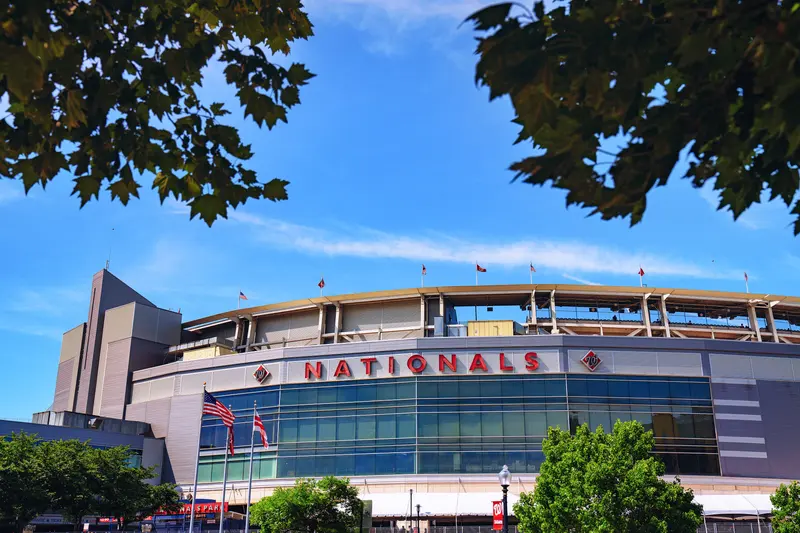
If you'd rather a newer, waterfront or design-forward base than a historic core, DC's recently transformed districts deliver. The Wharf, on the Southwest waterfront, lines the Potomac with hotels, restaurants, a fish market and live-music venues, and puts you a short walk from the International Spy Museum and a water-taxi from Georgetown. Navy Yard and the Capitol Riverfront bring ballpark energy, riverfront parks and modern hotels on the eastern side. NoMa, around Union Market north of Union Station, offers newer rooms, food halls, murals and rooftop views at often friendlier rates than the centre.
These areas suit travellers who want a livelier, more contemporary feel and don't mind being slightly off the classic monument axis — all sit on or near the Metro, so the Mall is still an easy ride. They're particularly good for a second DC trip, for sports fans, and for anyone who likes a buzzy waterfront dinner at the end of a sightseeing day. Just check the specific walk to rail, as these districts can be larger than they look.

Smart value — the best of the budget end
You can do DC affordably without exiling yourself, and the trick is the same as everywhere in this city: trade a little walking or one extra rail stop for a much better rate, but don't trade away Metro access. Solid value clusters around the edges of the central areas and along well-connected corridors, and staying just across the river in Arlington, Rosslyn or Old Town Alexandria — all on the Metro — can cut costs meaningfully while keeping you a quick ride from the Mall.
There are also genuine hostels and budget chains for travellers who prioritise price, and the city's free attractions mean a budget room here stretches remarkably far. The dedicated budget-hotels guide lays out the value areas, the hostel options and the Metro trade-offs in detail, and pairs naturally with the on-a-budget planning page to keep the whole trip lean. The rule to remember: cheap-and-connected beats cheap-and-stranded every time in Washington.
Booking tactics that actually save money or stress
A handful of habits consistently produce a better DC stay. Book the area and a Metro-close property as early as you reasonably can, especially for spring travel, because the good locations are what sell out first. Compare your specific dates rather than a generic 'average' rate, since DC's prices move with the federal and convention calendar in ways that defy the seasons. And weigh the true cost of a cheaper outlying room against the daily rideshare or extra rail time it commits you to — a slightly pricier central base often comes out ahead once you count the trips you'll actually make.
Two more practical notes. Many DC hotels add resort-style or destination fees and charge steeply for parking, so read the full nightly total, not just the headline rate, and skip the car entirely if you can — you won't need it. And think about your arrival: if you're flying into Reagan National you're one easy Metro ride from the central areas, while a train into Union Station drops you beside Capitol Hill and the rail network, both of which can quietly tip your area choice. Get these basics right and the 'best hotel' question mostly answers itself.


When you go changes what you pay
Timing is the most underrated variable in DC hotel shopping. Cherry-blossom season — typically late March into mid-April, though the National Park Service revises the peak-bloom forecast every spring — is the single busiest, priciest stretch of the year, and rooms in the good areas sell out and climb steeply. If you're coming for the blossoms, book months ahead and accept premium rates, or stay slightly out on the Metro to soften the cost. Verify any nightly price you see, as blossom-week rates move daily.
Beyond spring, watch for the spring school-trip wave (when downtown fills with student groups), summer conventions and the heat-and-humidity low that can soften some rates, and the federal calendar's occasional spikes around major civic events and inaugurations. Autumn is a quietly excellent time — comfortable weather, thinner crowds, often better value. Whenever you come, the same discipline applies: lock in an area and a Metro-close property early, and treat the listed price as a moving target to verify rather than a fixed quote.
- Grand historic: the Willard, Hay-Adams, Mayflower, Watergate — federal-core location plus genuine Washington history.
- Central all-rounder: Downtown/Penn Quarter full-service hotels — multiple Metro lines, walkable Mall and dinner.
- Romantic/boutique: Dupont, Logan Circle and 14th Street — character, intimate bars, walkable nights.
- Family: suite-style stays, central or Woodley Park/Cleveland Park — space, breakfast, pools, short Metro walk.
- Riverfront/modern: the Wharf, Navy Yard, NoMa — newer rooms, waterfront dining, often better rates.
- Value: central edges and across-the-river Metro stops — cheap-and-connected over cheap-and-stranded.
- Always verify: nightly rates swing hard by season; cherry-blossom week is the peak.

The small print that separates good stays from bad
Once you've chosen an area and a season, a handful of practical details decide whether a hotel actually serves your trip. Resort or destination fees are the big one — many DC hotels add a mandatory daily charge on top of the advertised rate, sometimes bundling Wi-Fi, gym access or a credit, so always read the total before you book and compare like for like rather than headline rate for headline rate. Parking is the second trap: downtown self- or valet parking can run a striking amount per night, which is reason enough to skip the car and rely on the Metro and the airports' rail links instead.
Then check the things that quietly shape a day. How far is the property really from the nearest Metro entrance, not just the station name on the map? Does breakfast matter to your mornings, and is it included or extra? For families, can the room actually fit everyone — a true suite or a room with two real beds, rather than a sofa bed squeezed into a standard? For couples, is the hotel bar or rooftop somewhere you'd actually want to spend an evening? None of this shows in a star rating, but all of it shows up in how the stay feels.
- Read the all-in price: mandatory resort or destination fees often sit on top of the advertised rate.
- Skip the car if you can — downtown parking is expensive; the Metro and airport rail are cheaper and faster.
- Check the real walk to the Metro entrance, not just the nearest station's name on the map.
- Confirm whether breakfast is included, and that the room genuinely fits your whole group.
- Look at the bar, rooftop or lobby — on a short trip, a hotel you want to linger in earns its rate.

Related guides

Where to Stay in Washington, D.C.
A complete, area-by-area guide to where to stay in Washington, D.C. — how to choose a base by Metro access and walkability, the best neighbourhoods for first-timers, families, couples, budgets and luxury, plus when staying across the river makes sense.
Read guide
Best Area to Stay in Washington, D.C. for First-Timers
The simplest way to pick where to stay in Washington, D.C. on a first visit. We compare the five areas that actually work — Downtown and Penn Quarter, Foggy Bottom and the Mall edge, Dupont Circle, Capitol Hill and the lively 14th Street corridor — by walking distance to the monuments, Metro access, evening life and price, so you can book one neighbourhood with confidence and stop second-guessing.
Read guide
Luxury Hotels in Washington, D.C.
Where to splurge in Washington, D.C. — sorted by the kind of luxury you actually want. We cover the grand historic landmarks near the White House, the discreet power hotels, the spa-and-wellness stays, the design-led boutiques and the riverfront splurge, with the trade-offs and the views spelled out so a milestone trip lands exactly as you imagine it.
Read guideMore in Where to Stay in Washington, D.C.
6
Budget Hotels in Washington, D.C.
How to stay in Washington, D.C. affordably without exiling yourself from the city. We cover the value areas, the Metro trade-offs that actually save money, hostels and budget chains, the across-the-river options, and the seasons to avoid — plus the one rule that keeps a cheap room from quietly costing you more than it saves.
Read guide
Family Hotels in Washington, D.C.
Washington is one of the best-value family trips in America, and the right hotel makes it effortless. This is a practical guide to family-friendly hotels in DC — the features that actually matter (space, breakfast, a pool, a short walk to Metro), the areas that suit families with kids of different ages, and how to turn a free-museum city into an easy, well-paced trip.
Read guide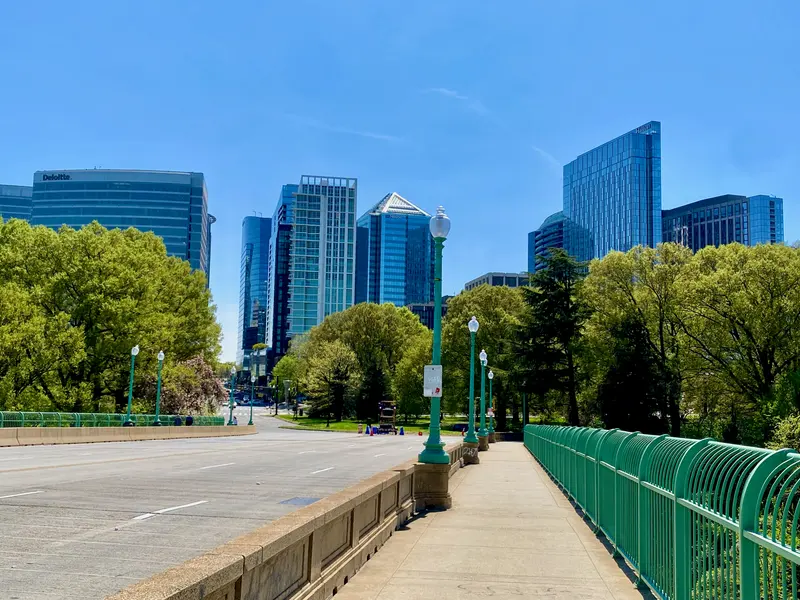
Staying in Arlington & Rosslyn for DC
When it makes sense to base across the Potomac in Arlington, Virginia — how the Metro links Rosslyn and the Orange/Silver/Blue line corridor to the National Mall, why hotel rates can run lower than in the District, and which Arlington areas actually suit tourists.
Read guide
Staying in Old Town Alexandria for DC
Why some travellers base in Old Town Alexandria, Virginia for a Washington trip — cobbled eighteenth-century streets, a romantic Potomac waterfront, Metro and water-taxi links into DC, and how to weigh the charm against the commute.
Read guide
Union Market & NoMa Guide
A traveller's guide to Union Market and NoMa — the fast-changing district north of Union Station where a historic food hall, big street murals, newer hotels and a quick Red Line link to the Mall add up to a different, more contemporary side of Washington, D.C.
Read guide
Washington, D.C. Neighbourhoods Guide
A traveller's map of Washington beyond the Mall — which neighbourhoods suit hotels, museums, dining, nightlife, families and romance, how the quadrant grid and the Metro tie them together, and where to base yourself for the trip you actually want.
Read guide