
Budget Hotels in Washington, D.C.
How to stay in Washington, D.C. affordably without exiling yourself from the city. We cover the value areas, the Metro trade-offs that actually save money, hostels and budget chains, the across-the-river options, and the seasons to avoid — plus the one rule that keeps a cheap room from quietly costing you more than it saves.

Photo: Vojtech Bruzek / Unsplash
- ✓DC's headline sights — every Smithsonian, the National Gallery, all the monuments — are free, so a budget room stretches remarkably far.
- ✓The golden rule: cheap-and-connected beats cheap-and-stranded — never trade away a short Metro walk to save a little.
- ✓Across the river in Arlington, Rosslyn or Old Town Alexandria, Metro-served hotels often cost less while staying a quick ride from the Mall.
- ✓Hostels and budget chains exist in and around the city for travellers who put price first.
- ✓Avoid cherry-blossom season for the lowest rates; summer's heat and the quieter shoulders are friendlier to a budget.
Why DC is kinder to a budget than it looks
Washington has a reputation as an expensive city, and hotel rates can certainly bite — but the trip itself is one of the best-value city breaks in America, because the things you've come to see are free. Every Smithsonian museum, the National Gallery of Art, and every monument on the National Mall cost nothing to enter. That single fact transforms a budget trip: with no admission fees eating your money, a modest room and a Metro card can carry you through days of world-class sightseeing for very little.
So budgeting DC is mostly about one line item — where you sleep — and one discipline around it. The aim is to find the cheapest room that's still genuinely connected to the Metro, because the city's long distances mean a stranded bargain quietly costs you in rideshares, time and tired legs. Get the trade-off right and you can do DC well on a lean budget; get it wrong and the 'saving' evaporates by the second morning. This guide is about getting it right.


The one rule: cheap-and-connected, never cheap-and-stranded
If you take one thing from this page, take this: a budget room is only a bargain if it's a short walk from a Metro station. DC is too spread out to walk everywhere, and rideshares add up fast, so a cheap hotel marooned between rail lines can end up costing more than a slightly pricier one on the network. Before you book anything for its rate, find the nearest station and the walk to it — aim for a few minutes — and confirm a line that reaches the Mall and your arrival airport or station.
This rule reframes the whole search. Instead of hunting for the lowest headline price anywhere in the metro area, you're hunting for the lowest price on a good rail connection. Often that means the edges of the central neighbourhoods, a stop or two out along a line, or across the river — places where the rate drops but the access doesn't. The free sights are the same whether you paid top dollar or budget for your bed, so spend the savings on a connected room, not a stranded one.


Value areas inside the city
You don't have to leave DC to find a sane rate. Value tends to cluster at the edges of the central areas and along well-connected corridors rather than in the federal core. NoMa, around Union Market just north of Union Station, has newer hotels, food halls and rooftop views at often friendlier prices than downtown, with the Red Line and Union Station's hub on hand. The blocks around the upper Red Line — toward Woodley Park, Cleveland Park and beyond — can be gentler on the wallet while keeping you on a direct ride to the Mall, with the zoo and Rock Creek Park as a bonus.
Other corridors worth scanning are the areas a stop or two out from the centre on any line, where the same chain or independent hotel charges less simply for not being in the thick of it. The trick is to widen your map to 'anywhere within a short walk of a station' and let the price sort itself, rather than fixating on the few famous blocks where everyone competes. Within the city, that approach reliably turns up rooms that are both affordable and easy to get around from.
Across the river: Arlington, Rosslyn & Old Town Alexandria
The most reliable way to cut hotel costs for a DC trip is to cross the Potomac — without leaving the Metro. Arlington and Rosslyn in Virginia sit directly on the rail network, a few minutes from the Mall by train, and their hotels frequently cost noticeably less than equivalent rooms in the District. Rosslyn in particular puts you one stop from Foggy Bottom and the monuments, while wider Arlington corridors trade a slightly longer ride for lower rates.
Old Town Alexandria, a little farther down the line, adds charm to the value: a cobbled, eighteenth-century riverfront with its own restaurants and a relaxed evening, still Metro-connected back to the city. The trade-off across the river is the small daily friction of commuting into DC and the slightly longer rides, which is why first-timers often prefer to stay inside the city. But for budget-minded and repeat visitors, these Metro-served Virginia bases are among the best value-for-access deals around Washington — cheaper beds, same easy rail to the sights.
Hostels, budget chains and other low-cost options
For travellers who put price above all, DC has genuine hostels and budget-chain hotels in and around the city, offering dorm beds and basic private rooms at the lowest end of the market — a good fit for solo travellers, students and anyone happy to trade frills for savings. As with any hotel here, judge them first on their walk to a Metro station; a well-located hostel can be the best-value base in the whole city for a lone traveller.
Beyond traditional accommodation, the usual budget levers apply: short-stay apartments and aparthotels can work out cheaper for groups or longer trips and add a kitchen for cheap breakfasts, while booking early and avoiding the peak weeks does more for your rate than any single property choice. Whatever the type, read the full nightly total — destination fees and parking charges can inflate a tempting headline price — and remember you won't need a car near the Metro, so skip parking entirely.

Timing your trip to pay less
When you go moves the price as much as where you stay. Cherry-blossom season — typically late March into mid-April, though the National Park Service revises its peak-bloom forecast each spring — is the busiest and priciest stretch of the year, and budget rooms in good locations sell out and climb. If you can be flexible, give the blossom weeks a miss; if you can't, book far ahead and lean on the across-the-river options to soften the cost.
The friendlier windows for a budget are the heat of summer, when humidity softens some rates and the free indoor museums become a refuge, and the quieter shoulders of late autumn and winter, when crowds thin and prices ease. Autumn weather is genuinely pleasant and often the sweet spot of comfort and value. Whenever you come, hold the golden rule and the timing together: a connected room, booked early, outside the peak weeks, is how you do Washington well without overspending — and with the sights all free, the rest of the trip looks after itself.
- Inside the city: NoMa/Union Market and the upper Red Line (Woodley Park, Cleveland Park) for connected value.
- Across the river: Arlington, Rosslyn and Old Town Alexandria — Metro-served, cheaper, a quick ride to the Mall.
- Lowest end: hostels, budget chains and short-stay apartments — judge each on its walk to Metro first.
- Timing: skip cherry-blossom weeks; summer and the autumn/winter shoulders are kinder to a budget.
- Read the full total: destination fees and parking inflate headline rates — and you won't need a car.


Related guides

Washington, D.C. on a Budget: Itinerary
Washington is the great free capital — the memorials, the Smithsonian museums and the National Gallery all cost nothing to enter, so a low-cost trip here is genuinely good, not a compromise. This is a budget Washington, D.C. itinerary that leans on free sights, public markets, the Metro and smart hotel-area tradeoffs, with the few things worth paying for marked clearly.
Read guide
Washington, D.C. on a Budget
How to do Washington, D.C. cheaply without missing the point — free museums and monuments, where to save on hotels and Metro, smart ways to eat well for less, low-cost tours, and day trips that don't blow the budget. A practical, area-by-area money plan for a city whose best sights are already free.
Read guide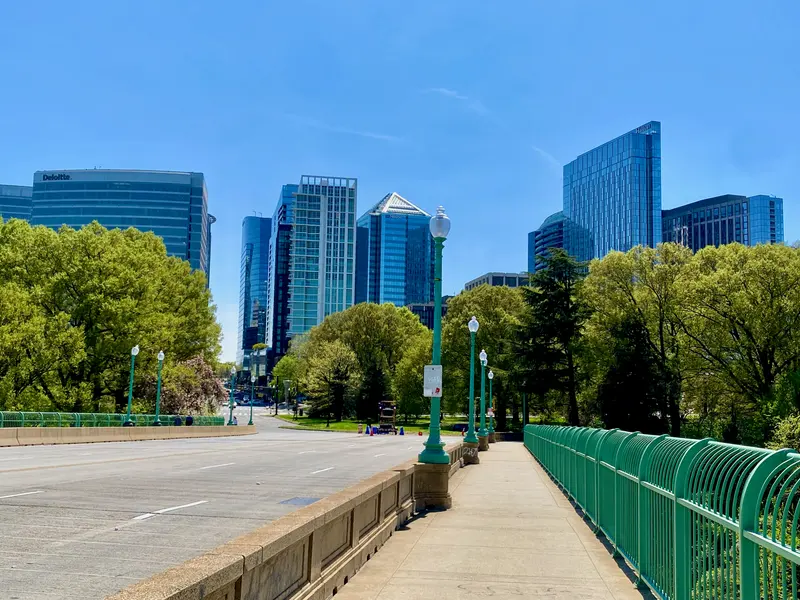
Staying in Arlington & Rosslyn for DC
When it makes sense to base across the Potomac in Arlington, Virginia — how the Metro links Rosslyn and the Orange/Silver/Blue line corridor to the National Mall, why hotel rates can run lower than in the District, and which Arlington areas actually suit tourists.
Read guideMore in Where to Stay in Washington, D.C.
6
Best Area to Stay in Washington, D.C. for First-Timers
The simplest way to pick where to stay in Washington, D.C. on a first visit. We compare the five areas that actually work — Downtown and Penn Quarter, Foggy Bottom and the Mall edge, Dupont Circle, Capitol Hill and the lively 14th Street corridor — by walking distance to the monuments, Metro access, evening life and price, so you can book one neighbourhood with confidence and stop second-guessing.
Read guide
Best Hotels in Washington, D.C.
How to choose the right hotel in Washington, D.C. — sorted the way travellers actually decide: by area and Metro access, by what you're here for, and by season. We cover the grand historic landmarks, the central all-rounders, the romantic boutiques, the family-friendly suites and the smartest budget picks, with the trade-offs spelled out so you book once and book well.
Read guide
Family Hotels in Washington, D.C.
Washington is one of the best-value family trips in America, and the right hotel makes it effortless. This is a practical guide to family-friendly hotels in DC — the features that actually matter (space, breakfast, a pool, a short walk to Metro), the areas that suit families with kids of different ages, and how to turn a free-museum city into an easy, well-paced trip.
Read guide
Luxury Hotels in Washington, D.C.
Where to splurge in Washington, D.C. — sorted by the kind of luxury you actually want. We cover the grand historic landmarks near the White House, the discreet power hotels, the spa-and-wellness stays, the design-led boutiques and the riverfront splurge, with the trade-offs and the views spelled out so a milestone trip lands exactly as you imagine it.
Read guide
Staying in Old Town Alexandria for DC
Why some travellers base in Old Town Alexandria, Virginia for a Washington trip — cobbled eighteenth-century streets, a romantic Potomac waterfront, Metro and water-taxi links into DC, and how to weigh the charm against the commute.
Read guide
Union Market & NoMa Guide
A traveller's guide to Union Market and NoMa — the fast-changing district north of Union Station where a historic food hall, big street murals, newer hotels and a quick Red Line link to the Mall add up to a different, more contemporary side of Washington, D.C.
Read guide