
Washington, D.C. Neighbourhoods Guide
A traveller's map of Washington beyond the Mall — which neighbourhoods suit hotels, museums, dining, nightlife, families and romance, how the quadrant grid and the Metro tie them together, and where to base yourself for the trip you actually want.

Photo: Andrea García / Unsplash
- ✓Washington is divided into four quadrants — NW, NE, SW, SE — all numbered from the Capitol, so the same address can exist four times; always read the suffix.
- ✓Most of what a visitor wants is in the Northwest quadrant, where the Mall, the museums, the dining and the leafy residential neighbourhoods all sit.
- ✓The single most useful rule for choosing a base is proximity to a Metro station — DC is too spread out to walk everywhere, and a good rail link beats the perfect neighbourhood.
- ✓Foggy Bottom and the Penn Quarter / Downtown core put you closest to the monuments and museums on foot; Dupont, Logan Circle and U Street trade some walking distance for a livelier evening.
- ✓Georgetown is the prettiest neighbourhood but has no Metro stop of its own — a genuine tradeoff to weigh against its charm.
- ✓The newer waterfronts — The Wharf in the Southwest and Navy Yard in the Southeast — plus NoMa near Union Station offer fresh hotels, strong dining and better value than the historic core.
- ✓Across the Potomac in Virginia, Arlington, Rosslyn and Old Town Alexandria sit on the Metro and often cost noticeably less — a smart move for families and longer stays.
How Washington is put together
To choose a neighbourhood in Washington, it helps to understand the logic the city was built on, because it is unusually rational. Pierre L'Enfant's 1791 plan set the Capitol as the zero point of the whole city and divided everything into four quadrants — Northwest, Northeast, Southwest and Southeast — radiating from it. Numbered streets run north–south, lettered streets run east–west, and the grand state-named avenues cut diagonally across both, meeting at circles and squares. The famous catch is that addresses repeat in all four quadrants, so '7th Street NW' and '7th Street SE' are far apart; always read the quadrant suffix.
For a traveller, the practical upshot is simple: the overwhelming majority of what you'll want is in the Northwest quadrant. The National Mall straddles the centre, the museums and monuments line it, and the residential neighbourhoods that hold the hotels, restaurants and nightlife — Foggy Bottom, Dupont, Georgetown, Logan Circle, U Street, Adams Morgan — fan out to the north and west of it. The newer waterfront districts (The Wharf in the Southwest, Navy Yard in the Southeast) are the main reasons a visitor ventures south of the Mall. Get the quadrant and the nearest Metro line straight, and the city becomes very easy to read.


The Metro is the thread that ties it together
More than in most American cities, where you stay in Washington should be decided by the Metro before the neighbourhood. Six colour-coded Metrorail lines fan out from the centre, and a single SmarTrip card covers rail and bus. A hotel two blocks from a station, in a slightly less glamorous area, will almost always serve you better than a prettier address with a long walk or a bus to the nearest line. The Mall itself is ringed by stations, so monument-and-museum days are easy from anywhere on the system.
The one famous exception proves the rule. Georgetown — arguably the most charming neighbourhood in the city — has no Metro station of its own, a quirk of nineteenth-century history. You reach it on foot from Foggy Bottom or Dupont, by Metrobus, or by rideshare. That single fact reshapes the where-to-stay calculus more than any review score: Georgetown is wonderful to visit and a real commitment to base in. Keep the Metro map open as you read the neighbourhoods below, and weigh every choice against how easily you'll actually move around.
- Six Metrorail lines, one SmarTrip card for rail and bus — stay within a short walk of a station.
- The Mall is ringed by stations: Smithsonian, Federal Triangle, L'Enfant Plaza, Federal Center SW, Archives.
- Georgetown has no Metro stop — reach it on foot, by Metrobus or by rideshare.
- Reagan National (DCA) is on the Metro; Dulles (IAD) and BWI are farther out — factor airport transfers in.
- Verify current fares and any line/service changes on WMATA before relying on a specific route.
The federal core: National Mall area & Foggy Bottom
Closest to the monuments and museums is the western Mall edge around Foggy Bottom — home to George Washington University, the Kennedy Center, the State Department and the back door to the western memorials. It is calm, walkable to the Lincoln Memorial and the Mall, and on the Metro, which makes it a favourite first-time base for travellers who want to wake up beside the marble. The trade is that it's quiet in the evening, with the dining and nightlife elsewhere. Just east, the Penn Quarter and Downtown core puts you among theatres, the Portrait Gallery, the arena and a dense restaurant scene — central, lively and supremely well-connected.
These two adjoining areas cover most first-time itineraries between them: Foggy Bottom and the Mall edge for walkable proximity and a quieter night, Penn Quarter and Downtown for energy, dining and the shortest Metro hops to everything. If your priority is seeing the headline Washington on foot with the least friction, you'll be choosing between them — and you can read each in depth in its own guide.
- National Mall area / Foggy Bottom — closest to the monuments on foot, on the Metro, calm in the evening.
- Penn Quarter & Downtown — central, lively, dense with theatres and restaurants, superbly connected.
- Both suit first-timers who want the Mall, the museums and the monuments with minimal travel.
- Foggy Bottom is the quieter night; Penn Quarter is the livelier one.


Character and nightlife: Dupont, Logan Circle, U Street, Adams Morgan
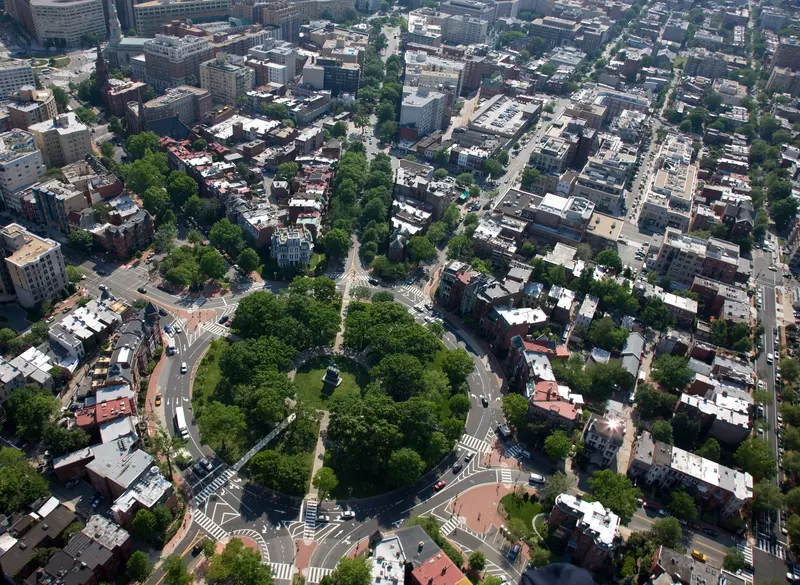
North of the Mall sits the band of neighbourhoods where Washington actually socialises. Dupont Circle is the elegant, bookish heart of it — Embassy Row, independent bookshops, a famous weekend farmers' market, a long LGBTQ+ history and easy Metro access make it one of the most rewarding bases in the city for a traveller who wants character and dining without straying far from the core. Just east, Logan Circle and the 14th Street corridor have become DC's restaurant-and-nightlife showcase: design shops, theatres, cocktail bars and some of the city's best eating along a single walkable strip.
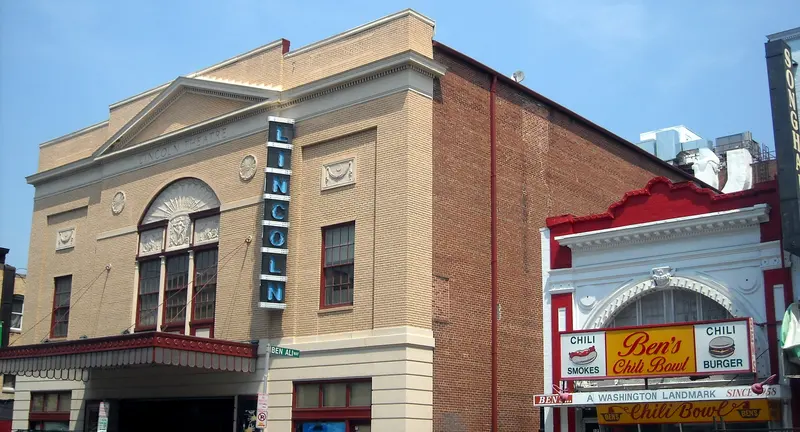
Push a little further and the energy rises. Shaw and the U Street corridor — the historic 'Black Broadway,' birthplace of the half-smoke and a centre of jazz and civil-rights history — hold music venues, Ethiopian restaurants and a buzzing night scene, all on the Metro. Adams Morgan, up the hill, is the city's most boisterous nightlife quarter, with global food, late bars and a famous brunch culture. These neighbourhoods trade a few minutes of Metro time to the Mall for a far better evening; they suit couples, food-lovers and anyone who wants the living city as well as the federal one.
- Dupont Circle — Embassy Row, bookshops, the farmers' market, LGBTQ+ history; elegant and Metro-friendly.
- Logan Circle & 14th Street — the city's restaurant-and-nightlife showcase on one walkable corridor.
- Shaw & U Street — 'Black Broadway,' jazz, Ethiopian food, music venues; lively and on the Metro.
- Adams Morgan — DC's loudest nightlife and global-food quarter, plus a famous brunch scene.
- All trade a short Metro hop to the Mall for a much livelier evening.

Historic charm: Georgetown and Capitol Hill
Two neighbourhoods carry the deepest historic character in the city, and both reward a visit even if you don't stay. Georgetown predates the federal city: a riverside port town of cobbled streets, Federal-era row houses, the C&O Canal towpath and a lively waterfront, layered today with high-end shopping and a famous student energy from Georgetown University. It is the prettiest place in Washington and one of the most romantic — and the only major neighbourhood with no Metro stop, so basing here means committing to the walk, the Metrobus or rideshares. Many visitors love it as a destination and stay somewhere better-connected.
Capitol Hill, behind the Capitol, is the other great historic quarter — and a far easier base. Its pastel rowhouse streets, the red-brick bustle of Eastern Market (the city's oldest public market), the Library of Congress and the Supreme Court give it a village-within-the-capital feel, and it's well served by Metro. It's a favourite of families and of travellers who want a residential, walkable neighbourhood with real local life and the Capitol-side sights on the doorstep. Between them, Georgetown and Capitol Hill bookend the historic city east and west.
- Georgetown — cobbles, row houses, the canal and the waterfront; the prettiest and most romantic, but no Metro stop.
- Capitol Hill — pastel rowhouses, Eastern Market, the Library of Congress; village feel, family-friendly, on the Metro.
- Both reward a visit even if you stay elsewhere; Capitol Hill is the easier base of the two.
The new waterfronts: The Wharf, Navy Yard and NoMa
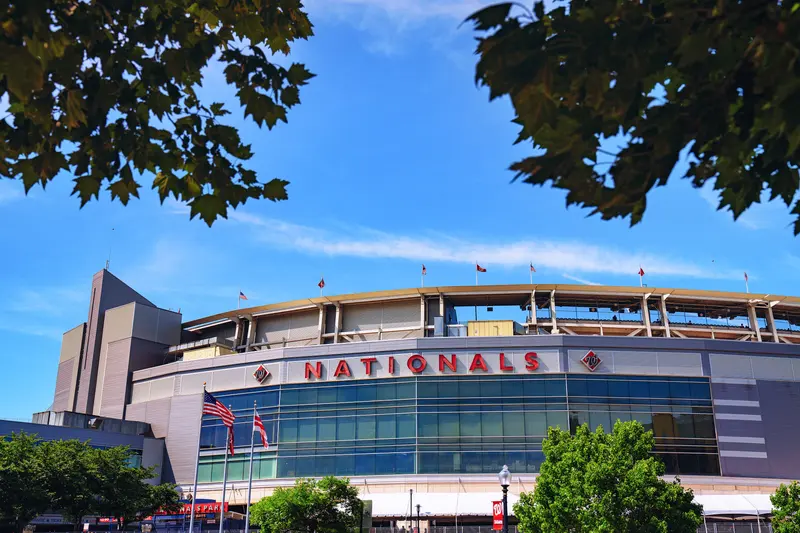
The fastest-changing parts of visitor Washington are its reinvented waterfronts and rail yards, all built or rebuilt in the last decade or so. The Wharf, on the Southwest waterfront, is a mile of restaurants, hotels, music venues, piers and boardwalk along the Potomac — a polished, lively district that's become a favourite for date nights, group dinners and sunset cruises, with the Spy Museum nearby. Across the river side of the city, Navy Yard / Capitol Riverfront pairs the Nationals' ballpark with riverfront parks, modern hotels and a relaxed, family-friendly buzz on game nights.
Inland, NoMa (North of Massachusetts Avenue) and Union Market have transformed a former industrial belt near Union Station into a district of food halls, murals, rooftop bars and newer, often better-value hotels — a genuinely different, modern side of the city, well connected by rail. These newer neighbourhoods don't have the historic patina of Georgetown or the Mall-side convenience of Foggy Bottom, but they offer fresh hotels, strong dining and waterfront or food-hall energy, often at better prices. They suit travellers on a second visit, families, and anyone who wants a more contemporary base.
- The Wharf (SW waterfront) — restaurants, hotels, music, piers and cruises; great for date nights and groups.
- Navy Yard / Capitol Riverfront — ballpark energy, riverfront parks and modern, family-friendly stays.
- NoMa & Union Market — food halls, murals, rooftops and newer, often better-value hotels near Union Station.
- Newer, fresher and frequently cheaper than the historic core; ideal for second visits and families.

Leafy and outlying: Woodley Park, and staying across the river
Up in the green upper Northwest, Woodley Park and Cleveland Park offer a calmer, residential alternative: tree-lined streets, family hotels, easy access to the National Zoo and Rock Creek Park, and a Metro ride down to the Mall. It's a favourite for families who want space and quiet at the end of a museum day, and it's the natural base for reaching the National Cathedral. The trade is distance from the action — you commute in to the sights rather than walking out into them — but for travellers who value a peaceful evening and a bit of room, it's a strong, often better-value choice.
Finally, you don't have to stay in the District at all. Just across the Potomac in Virginia, Arlington and Rosslyn sit directly on the Metro, a few minutes from the Mall, and often cost noticeably less — a smart value move, especially for families and longer stays. Old Town Alexandria, a little farther out but on the Metro, trades convenience for genuine eighteenth-century charm and a lovely waterfront, making a romantic, characterful base for those happy to commute in. Both put a Washington trip within easy reach while sidestepping the District's higher hotel prices.
- Woodley Park & Cleveland Park — leafy, residential, family-friendly; the Zoo, Rock Creek and the Cathedral nearby.
- Arlington & Rosslyn (VA) — on the Metro, minutes from the Mall, often cheaper; smart value, especially for families.
- Old Town Alexandria (VA) — eighteenth-century charm and a waterfront, on the Metro; romantic but a longer commute.
- All trade walkable proximity for quiet, space or value — good for families and longer or repeat visits.
Match the neighbourhood to your trip
Because every visitor's days are spent largely on the same Mall, the neighbourhood you choose really decides your mornings and your evenings — how far you walk to the marble at dawn, and what kind of city you return to at night. It helps to map the areas onto the traveller you actually are rather than onto a single 'best' answer. A first-timer on a tight three-day trip is best served by maximum convenience and minimum friction: the National Mall area, Foggy Bottom or Penn Quarter, all close to the sights and the Metro, so no day is lost to logistics.
Couples and romantics lean a different way. The most atmospheric Washington — monuments at dusk, the Tidal Basin at blue hour, a canal walk and a candlelit dinner — is best reached from Georgetown, Dupont Circle or the Logan Circle / 14th Street corridor, or from Old Town Alexandria across the river for old-world charm. Families weigh space, calm and value: Woodley Park near the Zoo, the Capitol Hill rowhouse streets, the modern hotels of Navy Yard and NoMa, or cheaper Arlington across the river all work better than a cramped central room. Food-lovers and night-owls should follow the eating and the music to U Street, Shaw, 14th Street and Adams Morgan. Budget travellers do best a short Metro ride out — Arlington, NoMa or the District's outer edges — trading a few minutes of travel for a markedly lower rate.
- First-timers, short trips — National Mall area, Foggy Bottom, Penn Quarter: convenience and easy Metro.
- Couples & romance — Georgetown, Dupont, 14th Street, or Old Town Alexandria for charm and atmosphere.
- Families — Woodley Park, Capitol Hill, Navy Yard, NoMa or Arlington for space, calm and value.
- Food & nightlife — U Street, Shaw, 14th Street, Adams Morgan for the city's best evenings.
- Budget — Arlington, NoMa or outer DC: a short ride out for a noticeably lower rate.

Where the city eats and drinks, by area
One of the surest ways to read Washington's neighbourhoods is by what they put on the table, because the food map and the social map are the same map. The federal core around the Mall is, frankly, the weakest for eating — it's museum cafeterias and tourist lunch spots — which is exactly why the rule of thumb is to see the monuments by day and eat in the neighbourhoods by night. A short Metro ride is all that separates a flat Mall lunch from some of the best dining in the country.
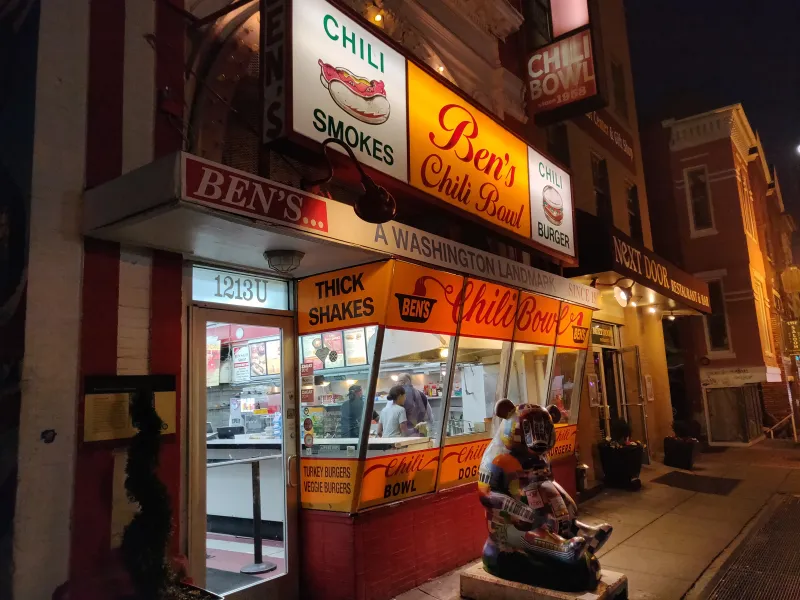
Each quarter has a signature. The 14th Street and Logan Circle corridor is the city's restaurant showcase, dense with acclaimed kitchens, cocktail bars and brunch. Shaw and U Street carry the deepest food history — the half-smoke at its original home, and one of the largest Ethiopian dining scenes in America. Penn Quarter packs pre-theatre and chef-driven restaurants around the arena and the museums. Georgetown does waterfront dining, date nights and a famous cupcake-and-coffee culture. The Wharf delivers seafood and lively waterfront tables; Capitol Hill has Eastern Market's weekend stalls and neighbourhood bistros; NoMa's Union Market and the city's other food halls are the friendliest option for groups and families who can't agree. Adams Morgan, finally, is late-night global food and the city's most boisterous bar strip. Choose your base partly by which of these you most want at walking distance.
- Mall / federal core — weak for eating; plan to dine elsewhere after the monuments.
- 14th Street & Logan Circle — the restaurant-and-cocktail showcase, plus strong brunch.
- Shaw & U Street — the half-smoke's home and a vast Ethiopian dining scene.
- Penn Quarter — pre-theatre and chef-driven restaurants by the arena and museums.
- Georgetown & The Wharf — waterfront dining and date nights; Adams Morgan for late, global food.
- Food halls (Union Market, Eastern Market) — the easiest, most family-friendly group option.

Safety, seasons and the quadrant quirks to know
A few practical truths help you read the neighbourhood map with clear eyes. The visitor-facing areas covered above — the Mall, Foggy Bottom, Penn Quarter, Dupont, Georgetown, Capitol Hill, the waterfronts and the upper Northwest — are well-trafficked and broadly comfortable, including the monument core after dark, which stays busy and lit. As in any large city, stay aware late at night, keep to populated streets, and use normal common sense; the simplest safeguard is to base near a Metro station so you're never far from a well-used route home.
Season shapes the experience as much as geography. Washington summers are hot and humid, which makes a walkable, shaded or waterfront base more valuable and the Mall harder going at midday. Spring (cherry-blossom season especially) and autumn are the comfortable, crowded, higher-priced windows; winter is quiet and often the best value. And remember the quadrant quirk: addresses repeat across NW, NE, SW and SE, so when you book a hotel or set a meeting point, confirm the suffix — a Southwest waterfront address and a Northwest one can be miles apart. Get the quadrant, the Metro and the season right, and any of these neighbourhoods becomes an easy place to call home for a few days.
- The visitor areas above are well-trafficked and broadly comfortable; the lit monument core stays busy after dark.
- Base near a Metro station — the simplest safeguard and the single biggest convenience.
- Summers are hot and humid; spring and autumn are the prime (and priciest) seasons; winter is quiet value.
- Always confirm the quadrant suffix (NW/NE/SW/SE) on any address — they repeat across the city.
So which neighbourhood is right for you?
Cut through it all and the choice comes down to what you want from your evenings, because every visitor's days are spent largely on the same Mall. If you want to walk out of your hotel into the monuments and don't mind a quiet night, base in the National Mall area or Foggy Bottom. If you want energy, dining and the shortest hops to everything, choose Penn Quarter and Downtown. If you want character and a great evening over absolute proximity, Dupont Circle, Logan Circle / 14th Street and U Street are the sweet spot — lively, characterful and still on the Metro.
For historic charm, Georgetown is the most beautiful but the least connected, and Capitol Hill gives you the village feel with better transport. For something newer, the waterfronts — The Wharf and Navy Yard — and NoMa offer fresh hotels and waterfront or food-hall life, often at better prices. And for quiet, space or savings, look to Woodley Park or across the river to Arlington and Old Town Alexandria. Whatever you choose, weigh it against the Metro first: in a city this spread out, a good rail connection is the single feature that makes a neighbourhood work. From here, the individual neighbourhood and hotel guides go area by area in detail.

Related guides

Where to Stay in Washington, D.C.
A complete, area-by-area guide to where to stay in Washington, D.C. — how to choose a base by Metro access and walkability, the best neighbourhoods for first-timers, families, couples, budgets and luxury, plus when staying across the river makes sense.
Read guide
Georgetown, Washington, D.C.
Washington's prettiest and oldest neighbourhood — the cobbled streets and federal row houses of Georgetown, the C&O Canal towpath, the Potomac waterfront, the shopping spine of M Street and Wisconsin Avenue, and the honest trade-off of staying somewhere with no Metro of its own.
Read guide
Capitol Hill, Washington, D.C.
The neighbourhood behind the dome — Capitol Hill's pastel rowhouses, the U.S. Capitol and Library of Congress, the weekend bustle of Eastern Market, the Barracks Row restaurants and the family-friendly, residential character that makes it one of the best bases in the city.
Read guideMore in Where to Stay in Washington, D.C.
6
Best Area to Stay in Washington, D.C. for First-Timers
The simplest way to pick where to stay in Washington, D.C. on a first visit. We compare the five areas that actually work — Downtown and Penn Quarter, Foggy Bottom and the Mall edge, Dupont Circle, Capitol Hill and the lively 14th Street corridor — by walking distance to the monuments, Metro access, evening life and price, so you can book one neighbourhood with confidence and stop second-guessing.
Read guide
Best Hotels in Washington, D.C.
How to choose the right hotel in Washington, D.C. — sorted the way travellers actually decide: by area and Metro access, by what you're here for, and by season. We cover the grand historic landmarks, the central all-rounders, the romantic boutiques, the family-friendly suites and the smartest budget picks, with the trade-offs spelled out so you book once and book well.
Read guide
Budget Hotels in Washington, D.C.
How to stay in Washington, D.C. affordably without exiling yourself from the city. We cover the value areas, the Metro trade-offs that actually save money, hostels and budget chains, the across-the-river options, and the seasons to avoid — plus the one rule that keeps a cheap room from quietly costing you more than it saves.
Read guide
Family Hotels in Washington, D.C.
Washington is one of the best-value family trips in America, and the right hotel makes it effortless. This is a practical guide to family-friendly hotels in DC — the features that actually matter (space, breakfast, a pool, a short walk to Metro), the areas that suit families with kids of different ages, and how to turn a free-museum city into an easy, well-paced trip.
Read guide
Luxury Hotels in Washington, D.C.
Where to splurge in Washington, D.C. — sorted by the kind of luxury you actually want. We cover the grand historic landmarks near the White House, the discreet power hotels, the spa-and-wellness stays, the design-led boutiques and the riverfront splurge, with the trade-offs and the views spelled out so a milestone trip lands exactly as you imagine it.
Read guide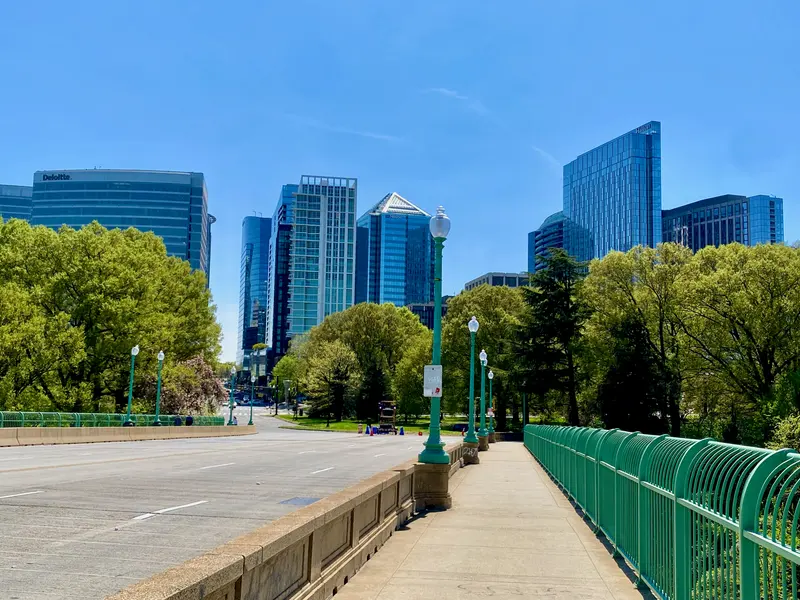
Staying in Arlington & Rosslyn for DC
When it makes sense to base across the Potomac in Arlington, Virginia — how the Metro links Rosslyn and the Orange/Silver/Blue line corridor to the National Mall, why hotel rates can run lower than in the District, and which Arlington areas actually suit tourists.
Read guide