
Washington, D.C. Metro Guide
A first-timer's guide to riding the Washington Metro — how to pay with SmarTrip or a contactless card, how distance-based fares work, which lines reach the airports and the Mall, the stations that put you closest to the monuments and museums, and the handful of mistakes newcomers make. Evergreen guidance with the volatile fares flagged to verify.

Photo: Zoshua Colah / Unsplash
- ✓Six color-coded lines — Red, Orange, Blue, Silver, Green and Yellow — run by WMATA cover most of what visitors want.
- ✓Pay with a SmarTrip card, a contactless bank card or a phone; the same tap works on Metrobus too.
- ✓Fares are distance- and time-based, so you tap both entering and exiting on rail — forgetting the exit tap is the classic mistake.
- ✓Reagan National (DCA) is on the line via its own station; Dulles is reachable on the Silver Line; BWI connects by train from Union Station.
- ✓Smithsonian, L'Enfant Plaza, Federal Triangle, Archives and Foggy Bottom drop you closest to the Mall, the museums and the monuments.
The system in a nutshell
The Washington Metro, run by WMATA, is a six-line rapid-transit network that reaches the city centre, the Mall, the suburbs of Virginia and Maryland, and two of the three airports. The lines are known by colour — Red, Orange, Blue, Silver, Green and Yellow — and several of them share central tracks, so transfers are usually a matter of walking across a platform. Trains run often enough through the day that you can turn up and go rather than plan around a timetable.
It is also one of the more handsome metro systems you will ride, with its vaulted concrete platforms and recessed lighting a deliberate piece of 1970s civic design. For a visitor, though, the practical headline is simpler: between this and your own two feet, you can see Washington without ever touching a car.


How to pay: SmarTrip and contactless
There is no paper ticket to fumble with. You ride by tapping a SmarTrip card, a contactless bank card, or a phone or watch wallet on the faregate, and the same payment method covers Metrobus as well. SmarTrip cards can be bought and topped up at station machines and added to a phone wallet; if you would rather not carry a card, a contactless bank card works straight away.
The crucial habit on rail is to tap twice: once to enter and again to exit. The fare depends on how far you travel, so the gates need your exit to calculate it — skip the exit tap and you can be charged a maximum fare. Keep enough value on your card or account to cover the trip back, and you will glide through the gates without a second thought.
- Tap a SmarTrip card, contactless bank card or phone/watch wallet at the faregate — the same method also pays for buses.
- On rail, tap entering AND exiting; the exit tap is what sets your fare.
- Buy and reload SmarTrip at station machines, or add it to a phone wallet; a contactless bank card needs no setup.
- Keep a little value loaded so you are never stranded at the gate on the way home.
How fares work
Metrorail fares are distance-based and vary with the time of day, so a short central hop costs less than a long suburban run, and peak periods can cost more than off-peak. There are also pass options aimed at visitors and frequent riders that can be worth the maths if you ride a lot. Because all of these figures move over time, treat any specific price as something to confirm on WMATA close to your trip rather than a fixed number to budget around.
Metrobus fares work differently — typically a flat fare per ride rather than by distance — and again the same SmarTrip or contactless payment applies. If you are weighing a multi-day pass against pay-as-you-go, look at how far and how often you actually expect to ride before deciding.
Lines to the airports
Two of Washington's three airports connect to the Metro directly. Reagan National (DCA) has its own station on the Blue and Yellow lines, a short, simple ride from the centre that makes it the most convenient arrival of the three. Dulles (IAD) is reachable on the Silver Line, which was extended out to a Dulles station — a longer ride than from Reagan, but a one-seat rail link rather than the old bus connection.
BWI is the outlier: it is not on the Metro, and the usual rail link is a MARC or Amtrak train between the BWI rail station and Union Station, where you pick up the Metro to your hotel. As ever, confirm the current routings, frequencies and any closures before you rely on them.
Best stations for the Mall, monuments and museums
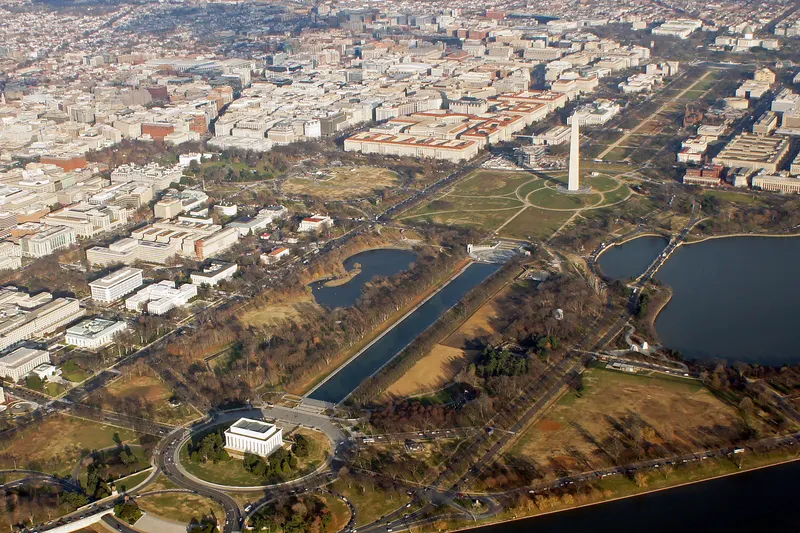
Because the Mall is so central, several stations drop you right at its edge. Smithsonian station sits in the middle of the Mall, handy for the Washington Monument and the cluster of museums around it. L'Enfant Plaza is a major interchange near the southeastern museums. Federal Triangle and Archives–Navy Memorial put you by the National Archives and the northern row of museums, while Foggy Bottom is the closest stop to the Lincoln Memorial end and to the walk into Georgetown.
For other landmarks: Capitol South and Union Station serve the Capitol and Library of Congress end; Dupont Circle, Woodley Park and others serve the neighbourhoods north of the Mall. When you map your day, pick the station nearest your first stop and let the walk between sights do the rest — on the Mall the monuments are close-set enough that you will mostly travel between them on foot.
- Smithsonian — the Mall's centre, the Washington Monument and surrounding museums.
- L'Enfant Plaza — a major interchange near the southeastern Mall museums.
- Federal Triangle / Archives–Navy Memorial — the National Archives and the northern museum row.
- Foggy Bottom — closest to the Lincoln Memorial end and the Georgetown walk.
- Capitol South / Union Station — the Capitol, the Library of Congress and Capitol Hill.
First-timer mistakes to avoid
A few habits separate a smooth first ride from a frustrating one. The big one is forgetting to tap out on exit, which can trigger a maximum-fare charge — make the exit tap automatic. Beyond that, check service hours before a late night, because the Metro closes overnight and runs less frequently in the evenings and on weekends, and a missed last train means an unplanned rideshare home.
Two smaller courtesies smooth the ride: stand to the right on escalators so walkers can pass on the left, a near-religious local rule; and there is no eating or drinking on the system, which is enforced. Finally, do not assume Georgetown has a stop — it does not — so plan a walk or a bus for that corner of the city.
- Tap out on exit, every time — the missing tap is the most common (and costly) beginner error.
- Check service hours: the system closes overnight and thins in evenings and on weekends.
- Stand right, walk left on escalators; no eating or drinking on trains or platforms.
- Georgetown has no Metro station — walk from Foggy Bottom or Dupont, or take a bus.

Sources

Related guides

How to Get Around Washington, D.C.
A clear, realistic answer to how to get around Washington, D.C. without a car — when to simply walk, when the Metro is fastest, where buses fill the gaps, when a taxi or rideshare earns its fare, and how bikes and tour buses fit in. Plain trade-offs for a city built to be crossed on foot and by rail.
Read guide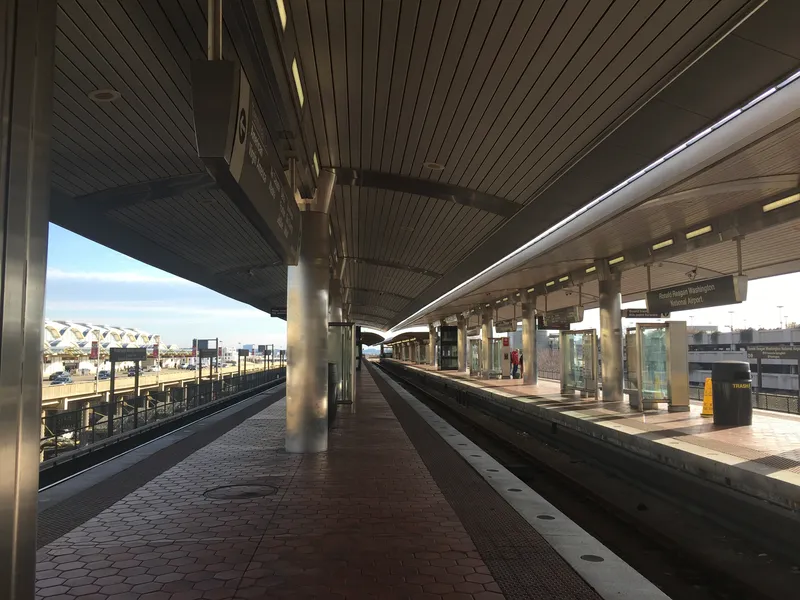
Reagan National Airport to Washington, D.C.
The simplest arrival in Washington, step by step — how to get from Reagan National Airport (DCA) into central D.C. on the Metro, when a taxi or rideshare makes more sense, and how the airport pairs with where you're staying. Evergreen guidance with fares and frequencies flagged to verify.
Read guide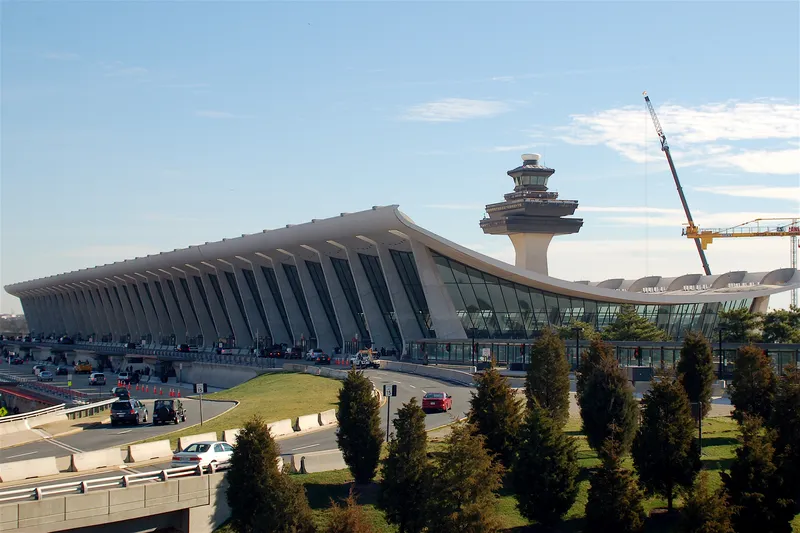
Dulles Airport to Washington, D.C.
How to get from Dulles International Airport (IAD) into Washington, D.C. — the Silver Line Metro, the Washington Flyer and 5A-style buses, taxis and rideshare, and the honest tradeoffs by time of day, budget and where your hotel sits.
Read guideMore in Travel Tips
6
Accessible Washington, D.C.
How to visit Washington with mobility, distance or stamina in mind — the step-free Metro, the largely flat but very long Mall, accessible museums and memorials, taxis and rideshare, and ways to build a low-walking plan that still reaches the city's best places.
Read guide
Are Washington, D.C. Passes Worth It?
An honest look at whether a bundled DC attraction pass saves you money — why a city built on free museums and monuments changes the maths, and the short list of paid sights where a pass or a single ticket actually helps.
Read guide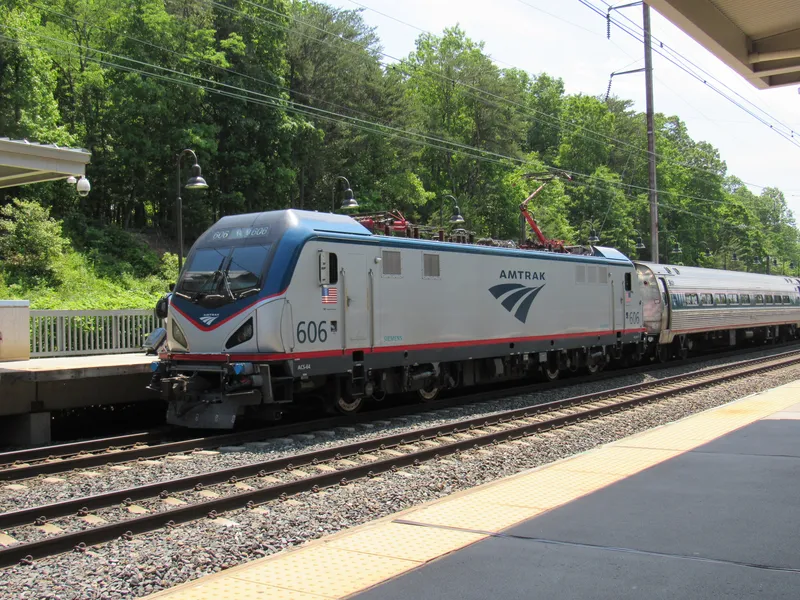
BWI Airport to Washington, D.C.
How to get from Baltimore/Washington International (BWI) into Washington, D.C. — the MARC and Amtrak trains via the BWI rail station, the free terminal shuttle, taxis and rideshare, and an honest look at whether BWI is the right airport for a DC trip.
Read guide
Capitol & White House Tour Planning
How official tours of the two most famous buildings in Washington actually work — the request windows, who to ask, the security to expect, realistic odds, and the strong free backups if a tour doesn't come through.
Read guide
Is Washington, D.C. Safe for Tourists?
An honest, practical answer to whether Washington, D.C. is safe for visitors — what the tourist core is actually like, how the Metro and monuments feel day and night, sensible advice for families and solo travelers, what to know about protests and demonstrations, and the heat that is the season's real risk.
Read guide
Luggage Storage in Washington, D.C.
Where to store your bags in Washington, D.C. so you can see the city hands-free — the options around Union Station, near the museums and the Mall, what hotels will hold, how it works on a tour or a layover, and the security realities that shape your choices.
Read guide