
Union Market Food Guide
How to eat your way through Union Market in NoMa, Washington — the city's original modern food hall in a converted warehouse, what to order, when to go to dodge the weekend crush, the murals and rooftops nearby, and how to combine it with Union Station and the rest of NoMa.
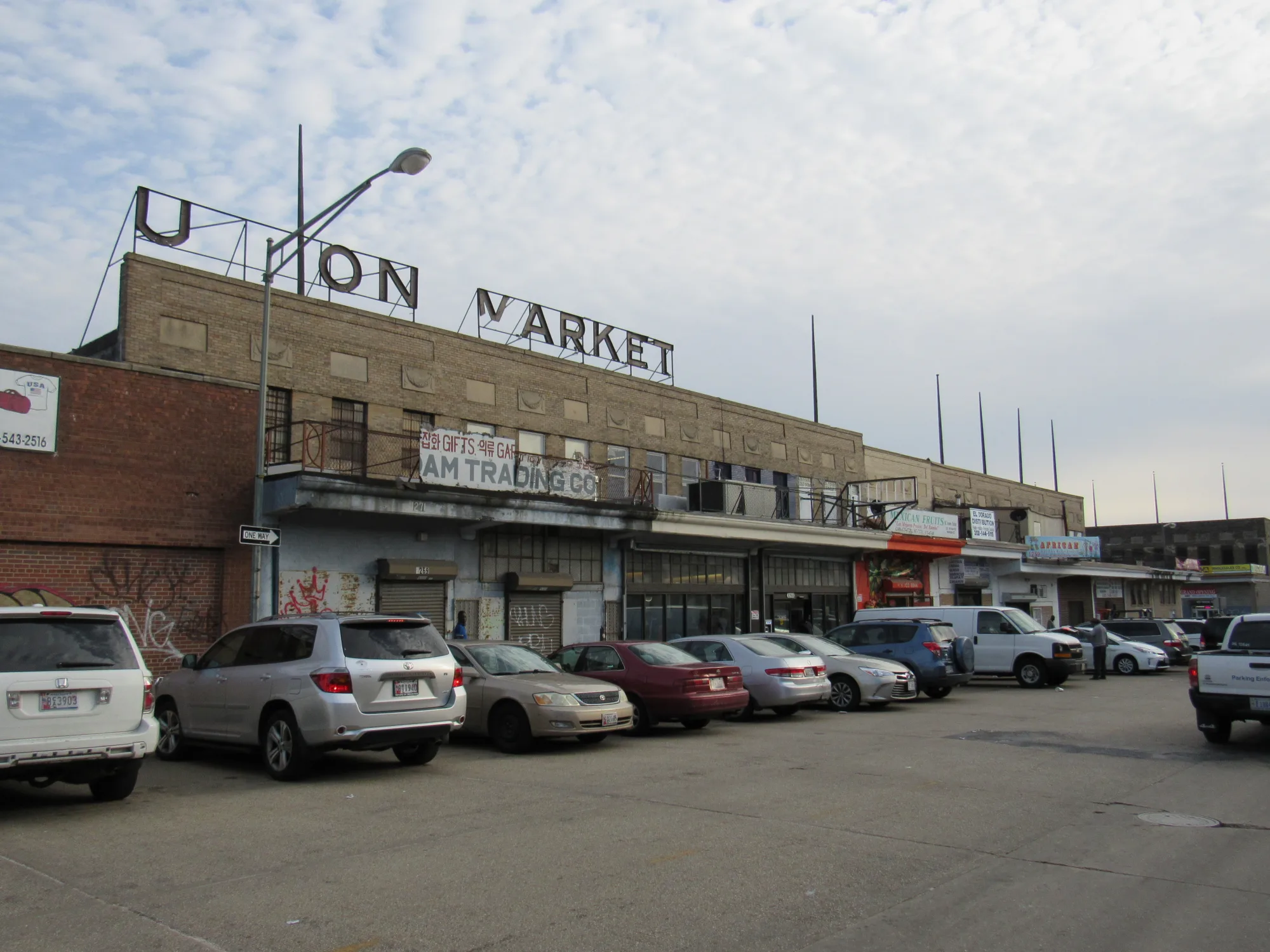
Photo: Farragutful / Wikimedia Commons · CC BY-SA 4.0
- ✓Union Market is DC's original modern food hall — a converted 1930s warehouse in NoMa packed with independent vendors under one roof, plus a sit-down restaurant row and shops around it.
- ✓It sits in what was the historic Florida Avenue / Union Terminal market district, so there's real DC food heritage under the polish, not just a new development.
- ✓Go on a weekday or early on a weekend morning: the hall is genuinely cramped at Saturday and Sunday lunch, and queues build fast at the popular stalls.
- ✓The surrounding NoMa blocks have grown into a destination of their own — murals, the neon sign, breweries, rooftop bars and newer restaurants all within a short walk.
- ✓It's a short walk or quick bus ride from Union Station and the NoMa-Gallaudet U Metro, making it an easy add-on rather than a special trip.
- ✓Vendors and hours rotate, so treat any specific stall as 'verify before you go' — the format and the building are the constant, not the line-up.
DC's original modern food hall
Union Market is the place that started Washington's food-hall era. Set in a long, low brick warehouse on the edge of NoMa — the fast-growing district just north of Union Station — it took a stretch of the city's old wholesale market district and reopened it as a single roof full of independent food vendors: butchers and bakers, oyster bars and taco counters, coffee roasters and ice-cream makers, all trading side by side around communal tables. It is the template that the Wharf's market hall and a dozen others later followed, and it remains one of the most enjoyable lunches in the city for anyone who can't decide what they want.
What makes it more than a glossy food court is the history under the floor. This corner of Northeast was Washington's wholesale market hub for the better part of a century — the Union Terminal and Florida Avenue markets fed the city's grocers and restaurants here long before the warehouse held a single artisanal popsicle. Some of that working past survives in the bones of the place and in the food businesses that have anchored the area for generations. The result is a hall that feels designed but not weightless: a genuine piece of DC food geography, refreshed rather than invented.

What to eat (and how to graze it)
The smart way to do Union Market is to treat it as a tasting tour rather than a single meal. Walk a slow loop of the hall first without committing, see what's pulling a line and what smells right, then build a spread: an order from one counter, a snack from another, a coffee or a scoop of ice cream to finish. Because it's communal seating, a group can fan out to different stalls and reconvene at one table — which makes it ideal for an indecisive party or a family where nobody agrees. The vendor mix leans toward oysters and seafood, tacos and Latin American plates, sandwiches and butcher counters, baked goods, fresh produce, cheese and chocolate, and a strong run of coffee and dessert.
Specific stalls come and go, so the honest advice is to go with appetite rather than a fixed shopping list and let the day's line-up decide for you. A few categories are reliable: the oyster and raw-bar counter is a classic Union Market move, the bakery and pastry options are worth saving room for, and there's almost always excellent coffee and ice cream to bookend a visit. If you want to take something home, the market doubles as a proper grocer in parts — cheese, charcuterie, produce and pantry goods — so you can assemble a picnic for the Mall or a hotel-room spread on the way out. Check current vendors and hours before you build your day around a particular stall.
- Walk the whole hall once before ordering — then graze across two or three stalls rather than committing to one.
- Reliable categories: oysters and raw bar, tacos and Latin plates, butcher and sandwich counters, bakery, coffee and ice cream.
- Communal seating suits groups and families — split up to different counters and meet back at one table.
- You can shop as well as eat: cheese, charcuterie, produce and pantry goods to build a picnic for later.
- Stalls rotate; verify the current vendor list and opening hours close to your visit.
When to go — and how to beat the crush
The single most useful thing to know about Union Market is that it gets busy, and at peak weekend hours the hall can feel genuinely cramped. Saturday and Sunday around lunch is the crush: long queues at the popular counters, every communal seat taken, and a slow shuffle through the aisles. If that's the only time you can come, arrive early — when the doors open or soon after — order before the rush and you'll have space and a table. The weekend is when the wider district is liveliest, so there's a trade-off between atmosphere and elbow room.
For a calmer visit, come on a weekday or mid-afternoon, when you can actually browse the stalls and snag a seat without a wait. Hours vary by day and by vendor — the hall keeps different hours from the individual restaurants and bars around it — so check the current schedule before you set out, especially if you're banking on a late lunch or an evening visit. As a rule, the building is at its best as a daytime and early-evening destination; for a full night out you'll want to pair it with the bars and restaurants in the blocks around it.
- Weekend lunch is the busiest, most cramped window — atmospheric but tight on space and seats.
- Beat it by arriving at opening or coming on a weekday or mid-afternoon for room to browse.
- The hall and the surrounding restaurants keep different hours — verify both for your dates.
- Best as a daytime / early-evening stop; extend into the night with the nearby bars and restaurants.
Beyond the hall: murals, rooftops and NoMa
Union Market is no longer just the one building — the blocks around it have grown into a small destination, and the walk between them is part of the appeal. The neighbourhood is dotted with large-scale murals and street art, and the area has leaned into being photogenic, with the market's neon signage among the most-photographed spots in this part of town. A wider food-and-drink scene has filled in around the hall too: sit-down restaurants, a brewery or two, wine and cocktail bars, and rooftop spaces that look back over the rail yards and the city. It rewards a wander once you've eaten, rather than an in-and-out lunch.
All of this sits inside NoMa (North of Massachusetts Avenue), one of DC's newest neighbourhoods — built up around the Metro and the rail corridor with modern apartments, hotels and offices. For visitors it offers a different, less monumental side of the city: contemporary, a little raw at the edges, and a useful base or detour if you want to see a Washington that isn't marble and museums. If you're weighing it as a place to stay or explore more fully, the dedicated NoMa neighbourhood guide goes into the hotels, transit and the wider scene.
- The neon Union Market sign and the area murals are among NoMa's most photogenic spots.
- A wider scene has grown around the hall: sit-down restaurants, breweries, wine and cocktail bars, and rooftops.
- NoMa shows a contemporary, non-monumental side of DC — a good contrast to the Mall.
- Verify current bars, rooftops and restaurants, as the district is still evolving fast.
Getting there and pairing it with your day
Union Market sits just northeast of Union Station, and the easiest rail approach is the NoMa-Gallaudet U station on the Red Line, a short walk away; Union Station itself is also within reach on foot or a quick bus or rideshare hop. That proximity is the key to fitting it in — it's an easy add-on to a Capitol Hill morning or an arrival/departure day, rather than a special expedition. If you're coming from the Mall, it's a straightforward Metro ride, and a SmarTrip card covers both rail and bus across the system.
For planning, the natural pairings are obvious once you look at the map. Combine a Union Market lunch with Union Station's grand hall and the Capitol Hill sights to its south, or use it as a relaxed first meal on a day you're heading north and east out of the centre. It's also a strong rainy-day or too-hot-out option, since it's all under cover, and a reliable group solution when your party can't agree on a cuisine. Confirm current Metro service and the market's hours before you go, and you can slot it into almost any DC day without much fuss.
- Nearest Metro: NoMa-Gallaudet U (Red Line), a short walk; Union Station is also close on foot or by quick bus / rideshare.
- Easy to pair with Union Station, Capitol Hill or an arrival / departure day rather than a special trip.
- A good rainy-day or hot-day pick — entirely under cover — and a reliable answer when a group can't agree.
- A SmarTrip card covers rail and bus; verify current service and market hours before you set out.

At a glance
A quick reference for slotting Union Market into your trip. Treat every specific detail as evergreen guidance and confirm the current vendor list and hours before you go, since the hall and the surrounding scene keep evolving.
- What it is: DC's original modern indoor food hall, in a converted warehouse in NoMa, plus a restaurant row and shops around it.
- Where: the NoMa district, just northeast of Union Station, in Northeast DC.
- Nearest Metro: NoMa-Gallaudet U (Red Line), a short walk; Union Station is also close.
- Best time: weekday or early weekend morning for space; weekend lunch is liveliest but cramped.
- Cost: free to enter; pay only for what you eat or buy.
- Good for: groups, families, indecisive tables, rainy or hot days, and an arrival-day meal.
- Pairs with: Union Station, Capitol Hill and a wider NoMa wander for murals and rooftops.
- Verify: vendor line-up and hours, which differ between the hall and the surrounding restaurants.
Common questions
Is Union Market worth visiting? Yes, if you enjoy food halls — it's DC's original and best-known one, with a wide vendor mix, real history and a lively neighbourhood around it. It's a good change of pace from the museums.
When is the best time to go? A weekday or early on a weekend morning for space; weekend lunch is atmospheric but crowded and cramped. Verify current hours, which vary by day.
How is it different from Eastern Market? Union Market is an indoor, modern food hall in NoMa; Eastern Market on Capitol Hill is an older public market with an outdoor weekend stall scene. Many visitors enjoy both.
How do I get there? NoMa-Gallaudet U Metro (Red Line) is closest; Union Station is a short walk or bus ride away. It's an easy add-on to a Capitol Hill or arrival day.
Is it good for groups and families? Very — communal seating and many counters mean everyone can order what they want and meet at one table. It's a classic indecisive-group solution.
Is it free to enter? Yes, the hall is free to walk through; you only pay for what you eat or buy. Treat specific vendors and prices as 'verify before you go'.
Related guides
Union Market & NoMa Guide
A traveller's guide to Union Market and NoMa — the fast-changing district north of Union Station where a historic food hall, big street murals, newer hotels and a quick Red Line link to the Mall add up to a different, more contemporary side of Washington, D.C.
Read guide
Best Food Halls & Markets in Washington, D.C.
The best food halls and public markets in Washington, D.C. — Union Market in NoMa, historic Eastern Market on Capitol Hill, the Wharf's Municipal Fish Market and more. The easiest group, family and indecisive-table meals in the city, with what to eat and when to go.
Read guide
Best Rooftop Bars in Washington, D.C.
Where to drink with a view in Washington, D.C. — the rooftop bars with monument and skyline panoramas, the riverfront terraces, the hotel rooftops, and how the city's federal height limit shapes the whole rooftop scene, plus reservation and timing advice.
Read guideMore in Food & Drink
6
Adams Morgan & U Street Nightlife
How to have a great night out in Washington, D.C. — comparing the two big going-out districts, Adams Morgan and the U Street / Shaw corridor: live music and jazz, cocktail bars and dives, rooftops, late-night food, and how to get home safely by Metro, bus and ride-hail.
Read guide
Best Brunch in Washington, D.C.
Where to brunch in Washington, D.C. — the best brunch neighbourhoods, how reservations and bottomless deals work, family-friendly picks and the smartest way to plan a slow weekend morning around the city's sights.
Read guide
Best Cocktail Bars in Washington, D.C.
Where to drink well in Washington, D.C. — the city's craft cocktail bars by mood and neighbourhood, from date-night rooms and grand hotel bars to speakeasy-style hideaways, with advice on reservations, timing and dressing the part.
Read guide
Best Coffee & Cafés in Washington, D.C.
A guide to coffee in Washington, D.C. — the local specialty roasters, the work-friendly cafés, the museum-adjacent stops near the Mall, and which neighbourhoods have the densest coffee clusters, plus how to find a good cup on a sightseeing day.
Read guide
Best Ethiopian Food in Washington, D.C.
Why Washington is one of America's great Ethiopian eating cities — where to find it in Shaw and on U Street, how to order injera and shared platters, the vegan fasting feast, and how to fit an Ethiopian dinner into a DC trip.
Read guide
Best Restaurants in Washington, D.C.
A traveller-ready guide to the best restaurants in Washington, D.C., sorted by neighbourhood, mood, budget, reservation need and sightseeing route — from the city's defining half-smoke and Ethiopian feasts to José Andrés's flagships and the rooms worth booking weeks ahead.
Read guide