
Best Ethiopian Food in Washington, D.C.
Why Washington is one of America's great Ethiopian eating cities — where to find it in Shaw and on U Street, how to order injera and shared platters, the vegan fasting feast, and how to fit an Ethiopian dinner into a DC trip.

Photo: Brooke Balentine / Unsplash
- ✓DC sustains one of the largest Ethiopian dining scenes in the United States — a genuine, only-in-Washington food experience you shouldn't skip.
- ✓The heartland is Shaw and the U Street corridor; a stretch of Ninth Street NW has long been known informally as 'Little Ethiopia'.
- ✓You eat with your hands, tearing spongy injera bread to scoop up spiced stews (wat) from a shared platter — a meal built for a table of friends.
- ✓The vegan fasting platter (beyaynetu) is entirely plant-based by religious tradition, generous, and ideal for mixed groups.
- ✓Order combination platters to sample widely, ask about spice levels, and don't fill up on the first dish — the variety is the point.
- ✓Restaurants and hours change; the neighbourhoods and the food are constants, but verify any specific place close to your trip.
One of America's great Ethiopian food cities
Of all the meals a visitor can eat in Washington, an Ethiopian feast is among the most distinctly of this place. The capital is home to one of the largest Ethiopian and Eritrean communities in the United States, built up over decades of immigration, and with it one of the country's deepest concentrations of Ethiopian restaurants. This isn't a token cuisine on the margins of the city's food scene — it's a defining part of it, as essential to understanding DC's table as the half-smoke or the Chesapeake crab.
For a traveller, that makes it a rare opportunity: a chance to eat a cuisine at a depth and authenticity you'll struggle to match in most American cities. It's communal, affordable, vegetarian- and vegan-friendly, and unlike anything on the Mall's cart menus. Put one Ethiopian dinner on the trip and you'll have eaten something genuinely Washington.
The roots of the scene run deep and are worth knowing as you eat. Ethiopians and Eritreans began settling in the capital in significant numbers from the 1970s and 1980s, many fleeing political upheaval and the long aftermath of revolution and war at home. They put down roots in and around the Shaw and U Street neighbourhoods, opening restaurants, cafés, groceries and community institutions, and over the decades built a community now numbered in the tens of thousands across the wider metropolitan area. When you sit down to a platter here, you're eating the product of that history — a cuisine that travelled, took hold, and became part of the fabric of the city.

Where to find it: Shaw, U Street and 'Little Ethiopia'
The heart of Ethiopian Washington is the Shaw and U Street corridor in Northwest, the historic centre of Black Washington and the city's old 'Black Broadway'. A stretch of Ninth Street NW in particular has long carried the informal name 'Little Ethiopia', lined with restaurants, cafés and markets — though the community and its restaurants are spread well beyond it, throughout Shaw, along U Street, and out into the suburbs of Northern Virginia.
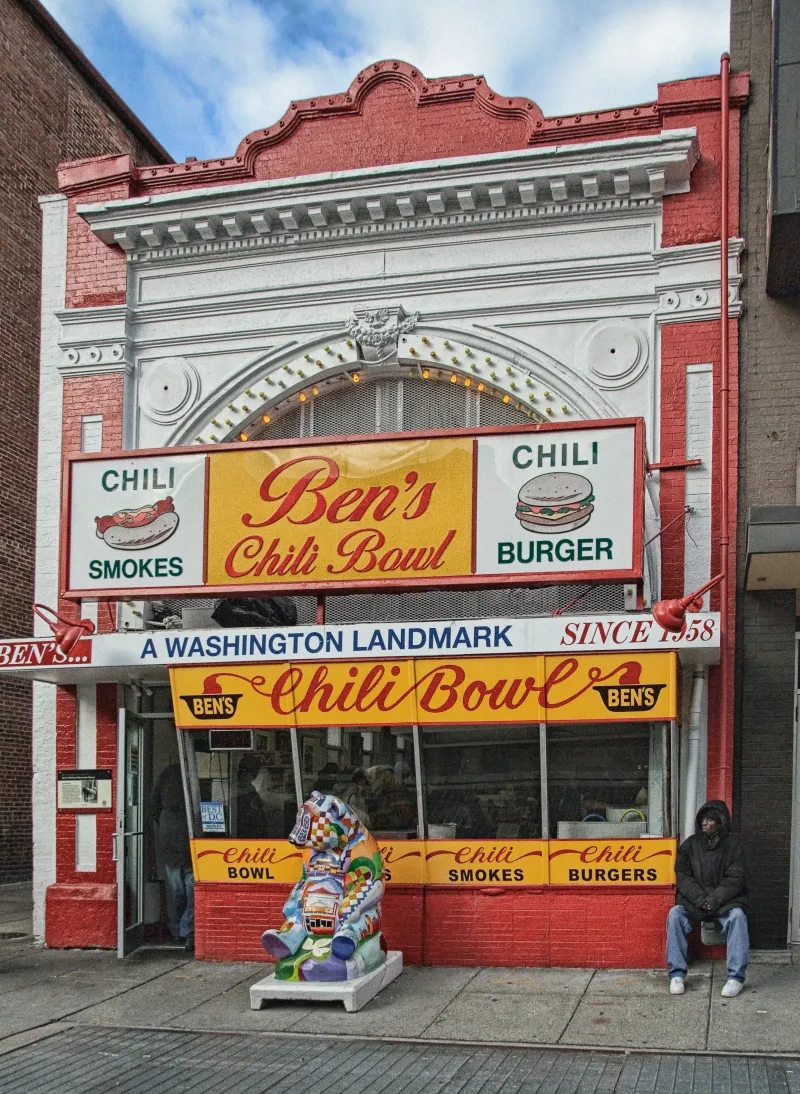
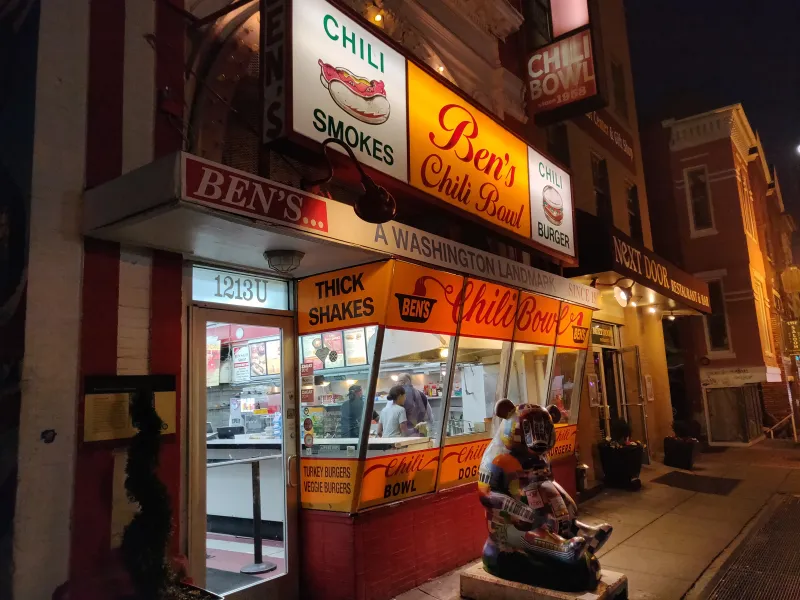
The practical happy news is that this is the same corridor that holds Ben's Chili Bowl, the U Street jazz history and a lively dinner-and-drinks scene, all served by the U Street and Shaw Metro stations. So an Ethiopian dinner slots neatly into an evening of exploring one of the city's most characterful neighbourhoods — no special trek required. Come hungry, come with a group if you can, and treat the meal as the centrepiece of a night out rather than a quick refuel.
How to eat it: injera, wat and the shared platter
If you've never eaten Ethiopian food, the form is part of the pleasure. There are no individual plates and no cutlery. Instead the meal arrives as a single large round of injera — a soft, spongy, slightly sour flatbread made from teff flour — spread with mounds of different stews and dishes. You tear off pieces of injera with your right hand and use them to pinch and scoop the food. The bread is plate, utensil and side dish all at once, and the platter is meant to be shared from the middle of the table.
The stews are called wat (or wot), simmered slowly and built on a foundation of spiced butter and berbere, the signature chilli-and-spice blend that gives many dishes their deep red colour and warmth. Doro wat, a rich chicken stew often served with a whole egg, is a celebrated classic; tibs are sautéed cubes of meat; kitfo is a spiced, often raw or lightly cooked minced beef for the adventurous. Alongside them sit lentil and split-pea purées, greens, cabbage and salads. The genius of the meal is the contrast — you're meant to range across all of it in a single bite, not work through one dish at a time.
A few small courtesies make the experience richer. It's traditional to eat with the right hand, and tearing rather than cutting the injera is part of the rhythm of the meal. Some restaurants offer gursha, the affectionate gesture of feeding a choice bite to a companion by hand — a sign of warmth and friendship at the table. Don't be shy about asking your server how a dish is meant to be eaten or what's in it; Ethiopian restaurants in DC are well used to first-timers and tend to be generous with guidance. And linger: this is slow, sociable food, not a meal to rush, and the conversation around the shared platter is half the point.
The vegan fasting feast — and ordering for a group
Ethiopian food is one of the best things that can happen to a plant-based eater in DC. Because Ethiopian Orthodox Christianity observes frequent fasting days without animal products, every traditional restaurant offers a fully vegan 'fasting' platter — usually called beyaynetu — as a standard part of the menu. It's a generous spread of lentil and split-pea stews, collard greens, cabbage, beets, carrots and salads on injera, entirely plant-based by custom rather than as a special request, and one of the great-value meals in the city.
For a mixed group, that makes ordering easy and inclusive. The smartest approach is to order combination platters — a meat combination and a vegetarian (fasting) combination — so the whole table samples widely from one shared surface and everyone, vegan or carnivore, eats well. A few ordering tips: ask about spice levels if you're heat-shy, since berbere can be assertive; don't over-order, because the portions are large; and pace yourself across the dishes rather than filling up on the first one you love. Honey wine (tej) and a properly performed Ethiopian coffee ceremony, where available, are lovely ways to round out the meal.

Fitting an Ethiopian dinner into your trip
Slotting this into a DC itinerary is simple. Ethiopian food is dinner food at its best — communal, leisurely, social — so pencil it in for an evening when you've finished with the monuments and museums and want to settle into a neighbourhood. Take the Metro to U Street or Shaw, eat your fill, and let the night continue with a drink or live music on the same blocks. It's an ideal first or last evening of a trip, a celebration meal for a group, or simply the night you eat something the federal city does better than almost anywhere else.
Two practical notes. The cuisine rewards a table of three or more, because more people means more dishes to share — solo travellers and couples can still order a combination platter, but a group gets the fullest experience. And the usual DC caveat holds: individual restaurants open, close and change hands, and hours shift, so while the neighbourhood and the food are dependable, verify any specific place you're set on close to your trip. Do that, and you'll have one of the most memorable, characterful meals Washington offers.
On budget, Ethiopian food is one of the best-value meals in the city: a generous combination platter feeds a couple comfortably, and a few platters spread across a group come in well under the cost of a comparable sit-down dinner elsewhere. That makes it a natural fit for travellers watching their spending, for students, and for anyone who'd rather put their restaurant budget into the free museums and monuments around it. It also travels well across the whole arc of a trip — a relaxed group dinner one night, a quiet vegetarian lunch another — without ever feeling repetitive, because the combination platters let you order differently each time.
If you'd like the history that comes with the food, consider pairing your dinner with a walk through the U Street and Shaw corridor, where the Ethiopian scene sits among the jazz heritage of Black Broadway and the institutions of Black Washington. A neighbourhood food tour can stitch the two together, or you can simply read up and wander on your own before sitting down to eat. Either way, an Ethiopian meal here is at its best understood not as a one-off novelty but as a window onto one of the communities that has shaped the modern capital.
 Washington DC food tours
Some neighbourhood tours weave in Ethiopian tastings and the history of the corridor.
 Best restaurants in DC
Build a full eating plan around your Ethiopian night with the wider restaurant shortlist.
 Food & drink in DC (hub)
Back to the overview of how and where to eat across the capital.
Related guides
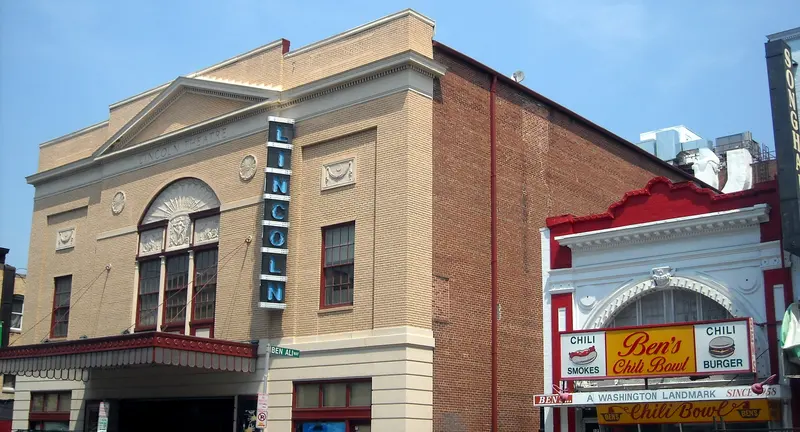
Shaw & U Street Guide
How to explore Shaw and the U Street corridor in Washington — the 'Black Broadway' heritage of Duke Ellington and the Lincoln Theatre, the half-smoke at Ben's Chili Bowl, the city's Ethiopian dining, live music and jazz, nightlife, and Metro-friendly hotels.
Read guide
Vegetarian & Vegan Washington, D.C.
How to eat plant-based in Washington, D.C. — the city's dedicated vegan kitchens, the Ethiopian fasting platters that are an accidental vegan paradise, food-hall and museum-day ordering strategies, and how to eat well without hunting for a single 'vegan restaurant'.
Read guideWashington, D.C. Food Tours
How to choose a Washington, D.C. food tour — by neighbourhood, by history angle, by group size and budget — and when a guided tasting walk genuinely beats finding your own way around the city's plates.
Read guideMore in Food & Drink
6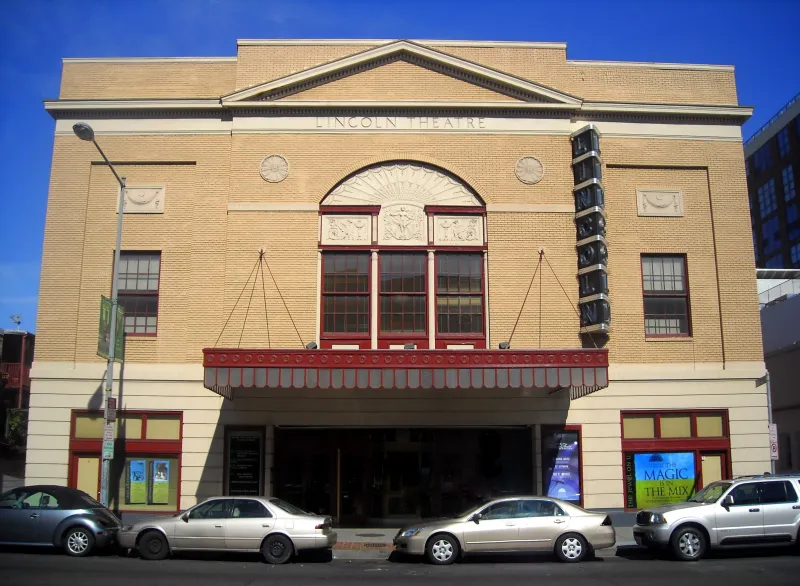
Adams Morgan & U Street Nightlife
How to have a great night out in Washington, D.C. — comparing the two big going-out districts, Adams Morgan and the U Street / Shaw corridor: live music and jazz, cocktail bars and dives, rooftops, late-night food, and how to get home safely by Metro, bus and ride-hail.
Read guide
Best Brunch in Washington, D.C.
Where to brunch in Washington, D.C. — the best brunch neighbourhoods, how reservations and bottomless deals work, family-friendly picks and the smartest way to plan a slow weekend morning around the city's sights.
Read guide
Best Cocktail Bars in Washington, D.C.
Where to drink well in Washington, D.C. — the city's craft cocktail bars by mood and neighbourhood, from date-night rooms and grand hotel bars to speakeasy-style hideaways, with advice on reservations, timing and dressing the part.
Read guide
Best Coffee & Cafés in Washington, D.C.
A guide to coffee in Washington, D.C. — the local specialty roasters, the work-friendly cafés, the museum-adjacent stops near the Mall, and which neighbourhoods have the densest coffee clusters, plus how to find a good cup on a sightseeing day.
Read guide
Best Food Halls & Markets in Washington, D.C.
The best food halls and public markets in Washington, D.C. — Union Market in NoMa, historic Eastern Market on Capitol Hill, the Wharf's Municipal Fish Market and more. The easiest group, family and indecisive-table meals in the city, with what to eat and when to go.
Read guideBest Restaurants in Washington, D.C.
A traveller-ready guide to the best restaurants in Washington, D.C., sorted by neighbourhood, mood, budget, reservation need and sightseeing route — from the city's defining half-smoke and Ethiopian feasts to José Andrés's flagships and the rooms worth booking weeks ahead.
Read guide