
U.S. Capitol Tour Guide
How to tour the United States Capitol — booking a free pass through the Capitol Visitor Center or your member of Congress, what the guided tour covers (the Rotunda, the old Hall, the Crypt), how to clear security, and how to add the Library of Congress and a House or Senate gallery visit.
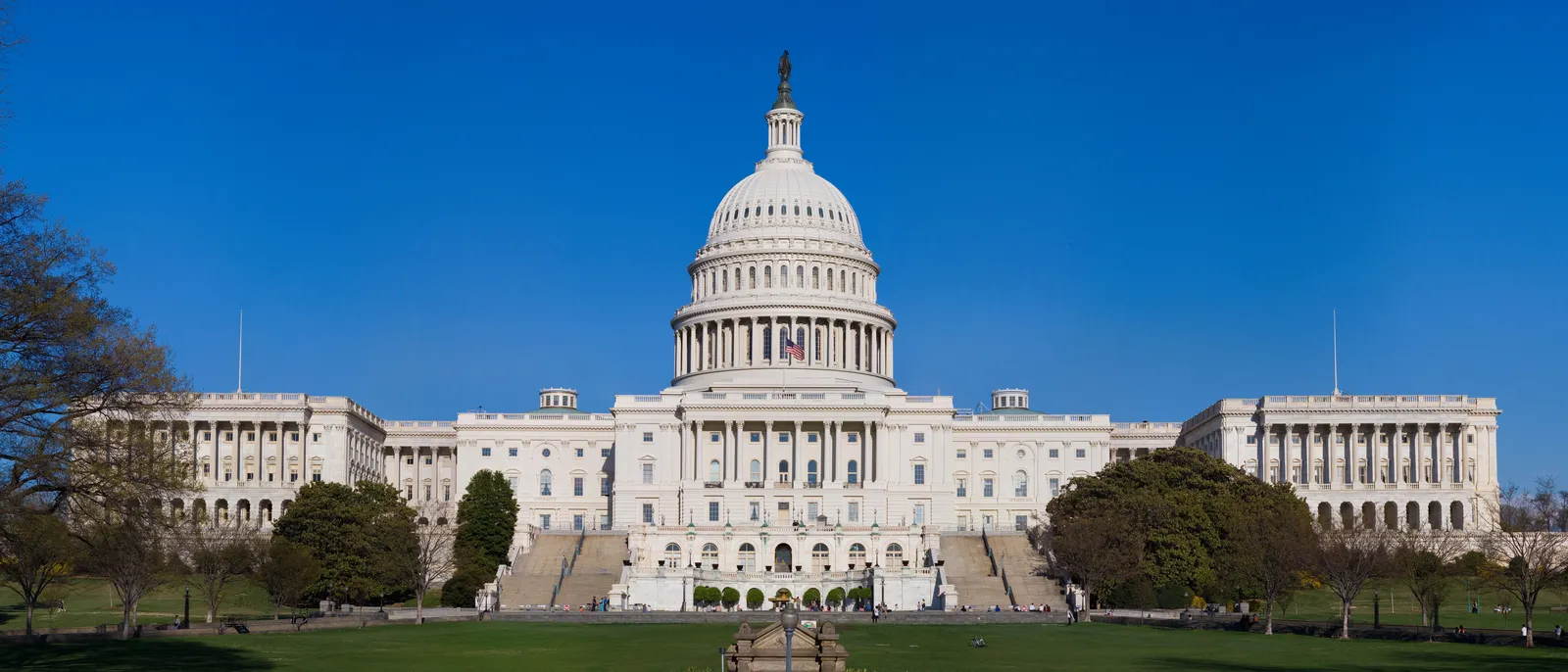
Photo: Noclip / Wikimedia Commons · Public domain
- ✓Guided tours of the Capitol are free, but you need a timed pass — reserve online through the Capitol Visitor Center, or, if you are a U.S. resident, through your senator or representative.
- ✓Tours begin underground at the Capitol Visitor Center (CVC) on the East Front, and cover the Crypt, the Rotunda under the dome, and National Statuary Hall.
- ✓A House or Senate gallery visit to watch Congress in session is separate from the building tour and arranged through your member of Congress (foreign visitors enquire at the CVC).
- ✓Security is airport-style; the list of prohibited items is long, so travel light and check it before you go.
- ✓The Library of Congress and the Supreme Court are across the street — easy to fold into the same Capitol Hill morning.
What a Capitol tour is — and what it isn't
The United States Capitol is both a working seat of government and one of the country's great public buildings, and you can go inside it for free with a little planning. The standard experience is a guided tour of the historic interior — the great domed Rotunda, National Statuary Hall, the Crypt and the Old Senate Chamber — led by a Capitol guide and starting from the Capitol Visitor Center beneath the East Front plaza. It lasts roughly an hour and is one of the best free things to do in Washington.
It helps to know what the tour is not. It does not, on its own, take you into the House or Senate chambers, and it does not let you watch Congress debate — that is a separate gallery visit, arranged differently (more below). It also does not cover the whole building; large parts are offices and committee rooms closed to the public. What it does give you is the symbolic heart of the Capitol and the story of how the building, and the country it houses, grew.
The Capitol Visitor Center itself is worth time even without a tour: it has exhibition halls on the history of Congress, a film, a restaurant and gift shops, and it is the gateway through which all visitors now enter. The detailed mechanics below — booking, security, what to see — are what most people want to get right before they come.


How to book a tour, step by step
There are two main routes to a free Capitol tour pass, and it is worth understanding both before you choose.
- Step 1 — Pick your route. Anyone, including international visitors, can reserve a free timed tour pass online through the official Capitol Visitor Center booking system. If you are a U.S. resident, you can instead request a pass through your own senator's or representative's office — these staff-led tours can sometimes reach areas the standard tour doesn't, and your member's office can also arrange gallery passes.
- Step 2 — Book ahead. Passes are released for specific dates and times and the popular slots — spring, summer, school-trip season — go early. Reserve as far in advance as you can; for congressional-office tours, contact the office weeks ahead.
- Step 3 — Note your time and arrive early. Tours start from the Capitol Visitor Center on the East Front (the side away from the National Mall). Build in time to walk there and to clear security before your slot.
- Step 4 — Bring confirmation and ID. Have your reservation (printed or on your phone) and a photo ID ready. Requirements can change, so check the confirmation email for exactly what to bring.
- Step 5 — Want to see Congress in session? Arrange a House or Senate gallery pass separately through your member of Congress; foreign visitors should enquire at the CVC's House and Senate appointments desks on the day. Gallery access depends on whether the chambers are sitting.

Clearing security, and what you can't bring
Entry to the Capitol is through airport-style security screening at the Capitol Visitor Center, so plan as you would for a flight. The list of prohibited items is long and stricter than most museums: it typically bars food and drink (including water bottles, though you can carry an empty one in some cases — verify), large bags and backpacks, aerosols, pointed objects, and a range of everyday items. There is no public coat or bag check, which means if you arrive with a prohibited item you may simply not be able to bring it in, so the safest approach is to travel light and leave anything questionable at your hotel.
Because these rules are set for a secure federal building and do change, the single most important thing is to read the current prohibited-items list on the official Capitol Visitor Center site shortly before your visit rather than relying on any guide, including this one. Allow extra time for the line at busy periods, especially in spring and summer.
Once you are through, the tour itself is relaxed and well organised, with restrooms, the exhibition hall and the restaurant all in the Visitor Center. If your timed slot is a little later, the exhibits are a good way to fill the wait.
What you'll see inside
The tour climbs from the Visitor Center into the historic centre of the building. The Crypt, directly beneath the Rotunda, is a circle of sturdy Doric columns at the building's structural heart; it was originally intended to hold George Washington's tomb (he was buried at Mount Vernon instead) and now displays statues and a compass stone marking the point from which Washington's four quadrants are measured.
Above it, the Rotunda is the showpiece — a vast circular hall ninety-six feet across and rising into the cast-iron dome. Look straight up to the 'Apotheosis of Washington', Constantino Brumidi's fresco in the eye of the dome, and around the walls to the huge historical paintings and the frieze of American history that rings the room. This is where presidents and other honoured figures lie in state, and it is the room most visitors remember.
Adjoining it, National Statuary Hall is a graceful semicircular chamber that once served as the House of Representatives' meeting room. Each state contributes two statues to the national collection, displayed here and through the building, and guides love to demonstrate the room's famous 'whispering' acoustics — a quiet word at one focus can be heard clearly across the hall. Depending on the day and the route, tours may also pass the Old Senate Chamber and other historic spaces. Throughout, the building doubles as a museum of American art and a working legislature at once.

A little history to bring on the tour
The Capitol has grown with the country it houses, and a guide will weave that story through the rooms. The cornerstone was laid by George Washington in 1793, and the first wing was occupied by Congress in 1800. During the War of 1812 the British burned the unfinished building in 1814; a timely rainstorm is often credited with saving it from total destruction, and the scorch marks are still pointed out in places today. Reconstruction and expansion followed through the nineteenth century as new states joined and Congress outgrew its rooms.
The great cast-iron dome you see now is not the original. The first dome was a lower, copper-sheathed structure; the soaring white dome that defines the skyline was built during the Civil War, and President Lincoln insisted the work continue through the conflict as a deliberate sign that the Union would endure. It is crowned by Thomas Crawford's bronze Statue of Freedom, a nearly twenty-foot figure that was, in a grim irony of its moment, partly cast with the help of an enslaved ironworker, Philip Reid. Guides increasingly tell that fuller history, including the labour of enslaved people in building the early Capitol.
Carrying even a little of this with you turns the tour from a circuit of grand rooms into a walk through the country's story — the wars survived, the union held together, the building expanded room by room as the republic grew.
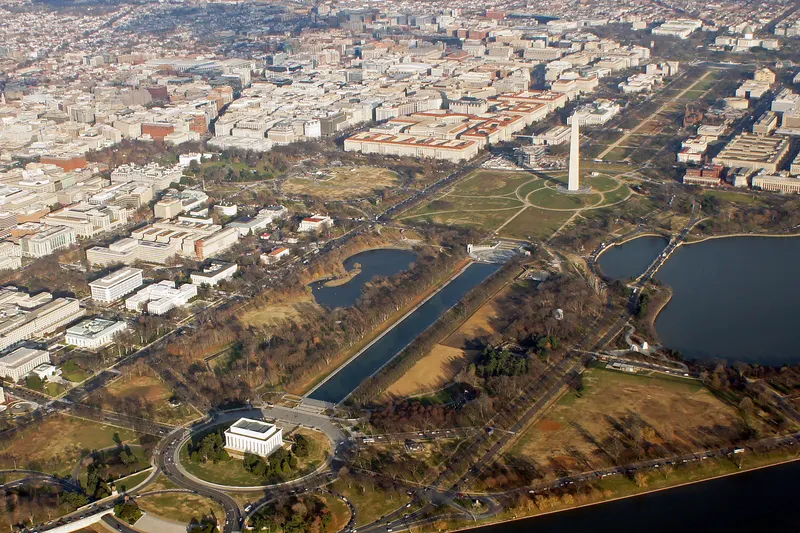
Add the Library of Congress and the Supreme Court
The Capitol sits in a cluster of landmark public buildings, and a morning at the Capitol pairs naturally with at least one of them. Directly across the East Plaza, the Library of Congress's Thomas Jefferson Building is, for many visitors, the single most beautiful interior in Washington — a riot of marble, mosaic and the soaring Main Reading Room. It is free and, helpfully, an underground tunnel connects the Capitol Visitor Center to the Library, so you can walk between them without going back through security. Check current tunnel access and Library hours before you rely on this.
Across First Street, the Supreme Court of the United States is also open to visitors. You generally cannot tour the building freely the way you can the Capitol, but you can usually enter the public areas, see exhibits, and — when the Court is sitting — attend or queue for oral arguments. Like everything on Capitol Hill, hours and access depend on the Court's calendar, so verify before you go.
Together these three — the Capitol, the Library and the Court — let you stand inside all three branches of the U.S. government within a single block. Few capitals make that as easy or as free.
Common questions
Is the Capitol tour free? Yes — both the building tour and the gallery visits are free. You only need to reserve the timed passes in advance.
Do I need a pass to enter the Capitol Visitor Center? You can enter the Visitor Center and see its exhibition hall, film and restaurant without a tour pass; you need a timed pass for the guided tour of the historic building, and a separate arrangement for the House or Senate galleries.
Can I watch Congress in session? Yes, from the visitor galleries, but only when the chambers are sitting and only with a gallery pass — arranged through your member of Congress, or for foreign visitors at the CVC appointment desks on the day.
How long does it take? The guided building tour runs about an hour; add time for security and, if you like, the Visitor Center exhibits, the Library of Congress and the Supreme Court.
How do I get there? The nearest Metro stations are Capitol South and Union Station; the Visitor Center entrance is on the East Front, the side away from the Mall. As always, verify current hours, security rules and closures on the official Capitol Visitor Center site close to your visit, as they change with the congressional calendar and security posture.

Best time to go, and a realistic plan
The Capitol is busiest in spring, when school groups descend on Washington in huge numbers, and through the summer holidays; book your pass well ahead for those months, and pick a morning slot to beat both the heat and the worst of the security queue. Quieter shoulder seasons in autumn and winter make for an easier, more relaxed visit, though always check the calendar — the building's rhythms follow Congress, and access can tighten around major events, state occasions or security situations.
A sensible Capitol Hill plan looks like this: arrive at the Capitol Visitor Center with time to spare before your timed tour, clear security, see the CVC exhibits if you are early, take the roughly hour-long guided tour, and then — if you have arranged it — head up to a House or Senate gallery. From there, walk the tunnel to the Library of Congress for the Jefferson Building and the Main Reading Room, and finish across the street at the Supreme Court. That sequence fills a satisfying half-day to a day and keeps you inside the climate-controlled buildings during the hottest or coldest hours.
One practical reminder runs through all of it: the Capitol is a working, secure seat of government, so hours, tour availability, security rules and gallery access genuinely do change with the congressional calendar and the security situation. Confirm the current details on the official Capitol Visitor Center site shortly before you go, and have a flexible backup in case a closure lands on your date.

At a glance
Cost: free, by timed pass. Book online via the Capitol Visitor Center, or through your senator/representative if a U.S. resident.
Tour covers: the Crypt, the Rotunda (under the dome), National Statuary Hall and historic spaces — about one hour.
Watching Congress: a separate gallery pass, arranged through your member of Congress (or the CVC desks for foreign visitors).
Security: airport-style screening, long prohibited-items list, no public bag check — travel light and check the current rules.
Nearby & combinable: Library of Congress (Capitol tunnel) and the Supreme Court, both across the East Plaza. Nearest Metro: Capitol South or Union Station.

Related guides
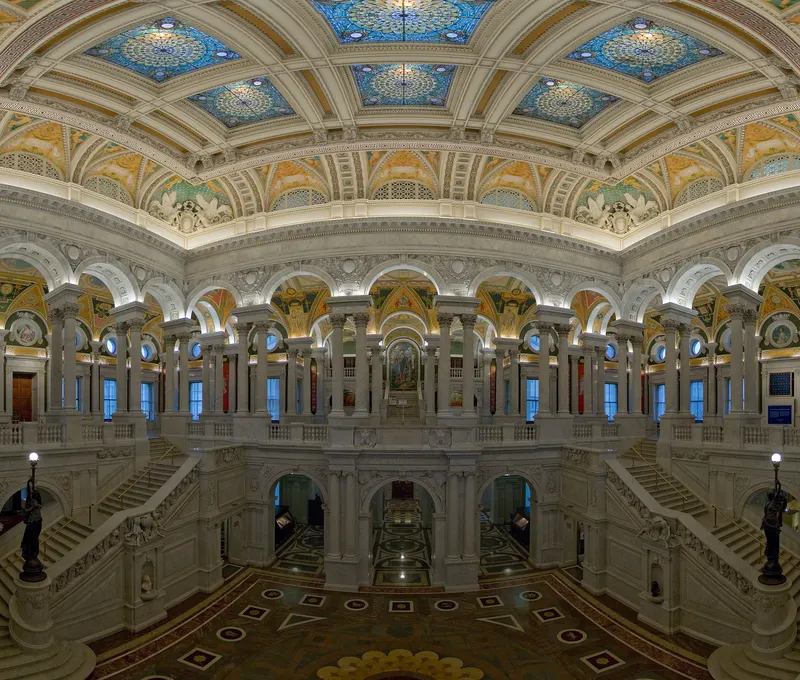
Library of Congress Guide
How to visit the Library of Congress — the free timed-entry passes for the magnificent Thomas Jefferson Building, the Great Hall and Main Reading Room views, the Gutenberg Bible and Jefferson's library, and the easy Capitol Hill walk that links it to the Capitol and the Supreme Court.
Read guide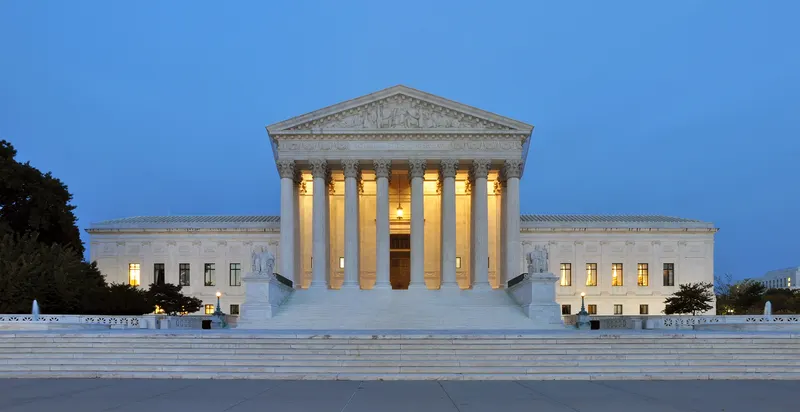
Supreme Court Visitor Guide
How to visit the U.S. Supreme Court — when the building is open to the public, hearing arguments, the courtroom lectures, the ground-floor exhibits, security, and the easy Capitol Hill walk that links it to the Capitol and the Library of Congress.
Read guide
Capitol Hill, Washington, D.C.
The neighbourhood behind the dome — Capitol Hill's pastel rowhouses, the U.S. Capitol and Library of Congress, the weekend bustle of Eastern Market, the Barracks Row restaurants and the family-friendly, residential character that makes it one of the best bases in the city.
Read guide