
Iconic Washington, D.C. Foods
The dishes that actually taste like Washington, D.C. — the half-smoke and mumbo sauce, the Ethiopian injera feasts of Shaw, Chesapeake blue crab and Old Bay, Senate bean soup, Salvadoran pupusas and the jumbo slice — what each one is, where the tradition lives, and how to order it.
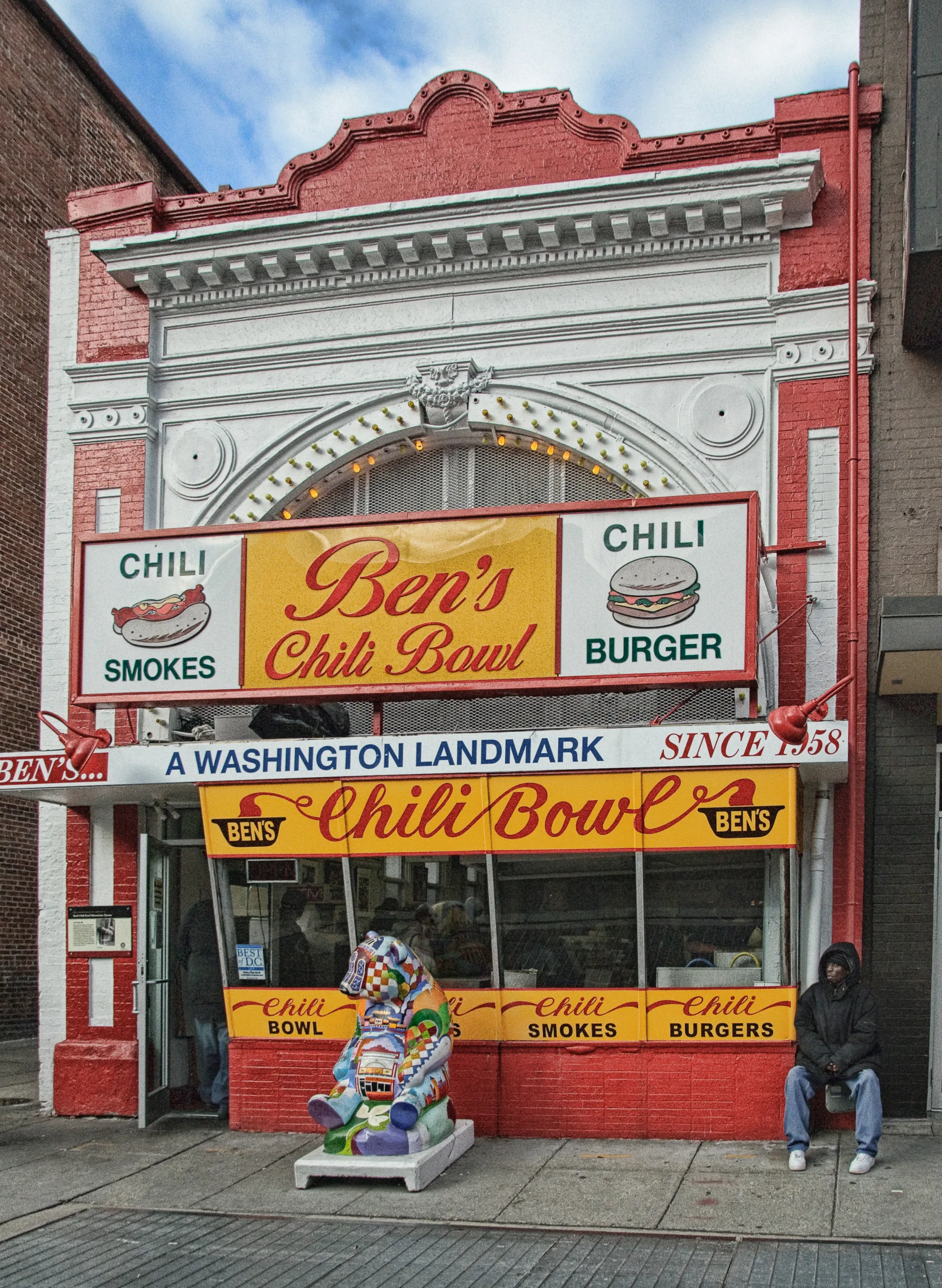
Photo: Bob Jagendorf / Wikimedia Commons · CC BY 2.0
- ✓The half-smoke is DC's own dish — a coarse, smoky half-beef, half-pork sausage under chili and onions, classically at Ben's Chili Bowl on U Street.
- ✓Mumbo sauce is the city's homegrown condiment, a sweet-tangy red sauce on wings, fries and fried rice from neighbourhood carry-outs.
- ✓Shaw and the U Street corridor hold one of the largest Ethiopian dining scenes in the country — a shared injera feast is an essential DC meal.
- ✓Chesapeake blue crab and Old Bay are the regional taste, from steamed crabs at the Wharf fish market to crab cakes and crab dip.
- ✓Senate bean soup has been served in the U.S. Capitol's dining rooms for over a century — a genuinely civic dish.
- ✓Round it out with Salvadoran pupusas and the late-night jumbo slice; most of these are casual, walk-in and affordable. Verify specific hours close to your trip.
DC has its own food — here's the canon
Washington's reputation as a buttoned-up government town does its food no favours, and it is wrong. This is a real, layered American city with dishes that are genuinely its own, plus one of the deepest immigrant food cultures of any U.S. capital. Before you fuss over which restaurant to book, it helps to know what to order — because here the right dish matters far more than the right address, and most of the icons are counter food rather than fine dining.
Think of the local canon in layers. First, the dishes born here or shaped by the place: the half-smoke, mumbo sauce, Chesapeake blue crab and the oddly endearing Senate bean soup. Then the immigrant cooking that defines daily eating across the region — above all the Ethiopian restaurants of Shaw, but also Salvadoran pupusas and a sprawling pan-Asian and West African scene out in the suburbs. Eat across both and you have tasted the actual Washington, not the postcard.
This guide walks the icons one by one — what each dish is, where the tradition lives, and how to order it without looking like you got off the tour bus. None of it is precious, and almost none of it is expensive. The throughline of DC eating is variety and value: order widely, share generously, and don't let the marble fool you into thinking the capital can't cook.
The half-smoke
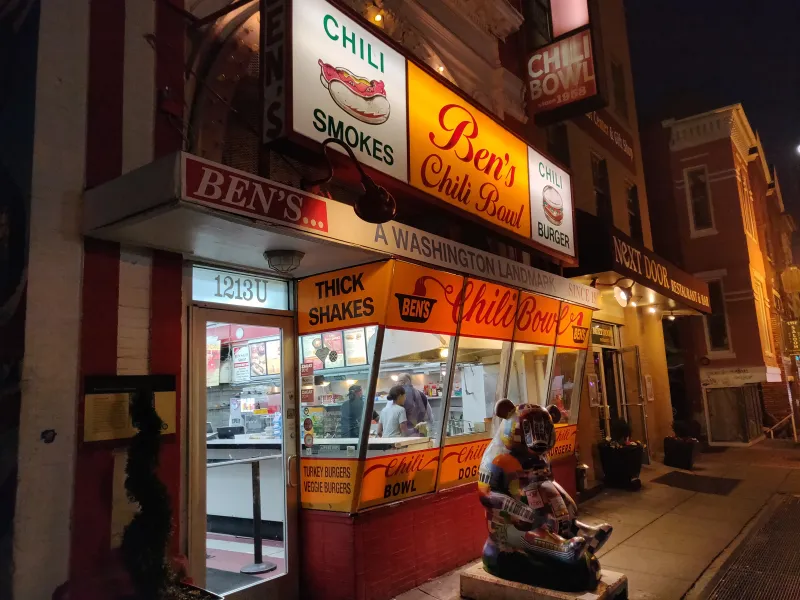
If Washington has a single signature dish, it is the half-smoke. The name describes a coarse, smoky sausage — traditionally a half-beef, half-pork blend — spicier and more textured than a standard hot dog. It is split, griddled and served on a bun, classically buried under chili, chopped onions and yellow mustard. It is unfussy, deeply local, and the closest thing the city has to a hometown order. Ask for it 'all the way' and you'll get the full treatment.
The place to eat one is Ben's Chili Bowl, the U Street institution open since 1958 that fed the neighbourhood through its jazz heyday, survived the hard decades after the 1968 unrest, and became a genuine DC landmark. It is still a working diner rather than a tourist set piece, and its chili half-smoke is the canonical version. You'll find half-smokes elsewhere too — at Nationals Park, food halls and corner diners — but the U Street original is the pilgrimage, and it pairs naturally with a walk along Black Broadway.
- What it is: a coarse, smoky half-beef/half-pork sausage, split and griddled, served under chili and onions.
- Where: Ben's Chili Bowl on U Street is the canonical home; also at ballgames, food halls and diners.
- How to order: 'a chili half-smoke, all the way' gets you chili, onions and mustard.
- Casual, cash-friendly and quick — verify current hours before a special trip.
Mumbo sauce
Mumbo sauce — sometimes spelled mambo sauce — is DC's homegrown condiment, a sweet, tangy, faintly spicy red sauce whose exact recipe and origin locals will cheerfully argue about for hours. It is the standard finish on chicken wings, fried rice and french fries at carry-out spots across the city, especially in the historically Black neighbourhoods east of the river and through the older parts of town where it took hold.
There is no fine-dining version, and there doesn't need to be — mumbo sauce is carry-out food, ordered at a counter, sometimes behind plexiglass, and eaten from a styrofoam box. Trying it is less about a specific restaurant than about ordering wings with mumbo at a neighbourhood spot and tasting a flavour you'll find nowhere else in the country. A few bottlers now sell it retail, so you can take some home, but the real experience is the corner-store box.
- What it is: a sweet-tangy-spicy red sauce, DC's own, with much-debated origins.
- On what: chicken wings, fried rice, french fries from carry-out counters.
- Where: corner carry-outs citywide, with deep roots east of the Anacostia.
- Buy a bottle to take home, but order it on wings to taste it right.
An Ethiopian feast in Shaw
One of the great surprises of eating in Washington is that it sustains one of the largest Ethiopian dining scenes in the United States, concentrated in Shaw and along the U Street corridor — an area locals have long nicknamed for its Ethiopian community. An Ethiopian meal here is as essential a DC experience as any monument, and arguably the single best 'new thing' to eat in the city.
The format is communal and hands-on. A large round of spongy, slightly sour injera bread arrives topped with mounds of richly spiced stews — doro wat (chicken), key wat (beef), misir (lentils), gomen (collards) and vegetable purées — and you tear the injera to scoop everything up, no cutlery required. It's built for sharing, unusually generous with vegetarian and vegan options, and a wonderful meal for a table of friends. If you're unsure, order a combination platter and let the kitchen show you the range; a cup of buna, the strong Ethiopian coffee, is the proper finish.
- What it is: spiced stews scooped with spongy injera bread, eaten by hand and shared.
- Where: Shaw and the U Street corridor, one of the biggest Ethiopian scenes in the US.
- How to order: a combination platter is the safe, generous starting point.
- Strongly vegetarian/vegan-friendly; finish with buna (Ethiopian coffee).
Chesapeake blue crab & Old Bay
Washington sits at the head of the Chesapeake Bay, and the regional palate is shaped by it. The defining taste is blue crab, classically steamed and dusted heavily in Old Bay seasoning, then picked by hand at a paper-covered table — a messy, social, summer ritual across the wider region, mallets and all. You'll also meet crab in its more portable forms: the crab cake, ideally more sweet lump crab than filler, and warm, gooey crab dip with bread.
In the city itself, the Municipal Fish Market at the Wharf — among the oldest continuously operating open-air fish markets in the country — is the place to see it at the source, with steamed crabs and shucked oysters sold off the barges. The moment you take a day trip toward Annapolis or the Eastern Shore, crab stops being a dish and becomes the entire point of the journey. Old Bay, meanwhile, ends up on nearly everything here — fries, popcorn, even the rim of a drink — so don't be surprised when it turns up uninvited.
- What it is: blue crab steamed with Old Bay and picked by hand; also crab cakes and crab dip.
- Where: the Municipal Fish Market at the Wharf; crab houses out toward Annapolis and the Eastern Shore.
- When: best in warm months, when picking a steamed crab is a proper summer ritual.
- Old Bay is the regional seasoning — expect it on fries and more.

Senate bean soup — the most civic dish in town
For a dish that tastes of the federal city in the most literal sense, there is Senate bean soup — a simple navy-bean, ham-hock and onion soup that has been served in the U.S. Senate restaurants every single day for more than a century. The origin stories vary, attributed to different senators in the early 1900s, but the tradition is real and the recipe is published; it's about as 'Washington' as a bowl of food can be.
You won't generally eat it on a casual visit — the Senate dining rooms aren't a walk-in tourist stop — but it's worth knowing as a piece of the city's food lore, and the recipe is easy to make at home if you want a taste of the institution. It's a reminder that DC's food identity isn't only the cool, immigrant-driven scenes; some of it is plain, old and stubbornly governmental, in the best way.
- What it is: a navy-bean and ham-hock soup served in the U.S. Senate dining rooms daily for 100+ years.
- The history is genuine; the recipe is published and easy to make at home.
- Not a typical walk-in for visitors — more food lore than a stop, but a true DC dish.
Pupusas and the immigrant table
The Washington region is home to one of the country's largest Salvadoran and Central American communities, and the pupusa is their great gift to the everyday local table — a thick, hand-patted corn cake stuffed with cheese, beans or pork, griddled until golden and served with curtido (a tangy fermented cabbage slaw) and salsa roja. They are cheap, filling and found across Columbia Heights, Adams Morgan, Mount Pleasant and the inner Maryland and Virginia suburbs.
Beyond pupusas, the immigrant table runs deep and is where some of the region's best-value eating happens: Vietnamese pho and banh mi (the Eden Center across the river in Falls Church is a destination in its own right), Korean barbecue along the Maryland corridor, West African stews and Central American bakeries. None of it is hidden — it's simply how a huge share of the region actually eats, and a corrective to anyone who thinks the capital's food begins and ends on the Mall.
- Pupusas: griddled stuffed corn cakes with curtido and salsa, a regional everyday staple.
- Where: Columbia Heights, Adams Morgan, Mount Pleasant and the inner suburbs.
- Beyond: Vietnamese (Eden Center, Falls Church), Korean BBQ, West African and Central American kitchens.
- Some of the best value in the region — venture off the Mall for it.
The jumbo slice & late-night DC
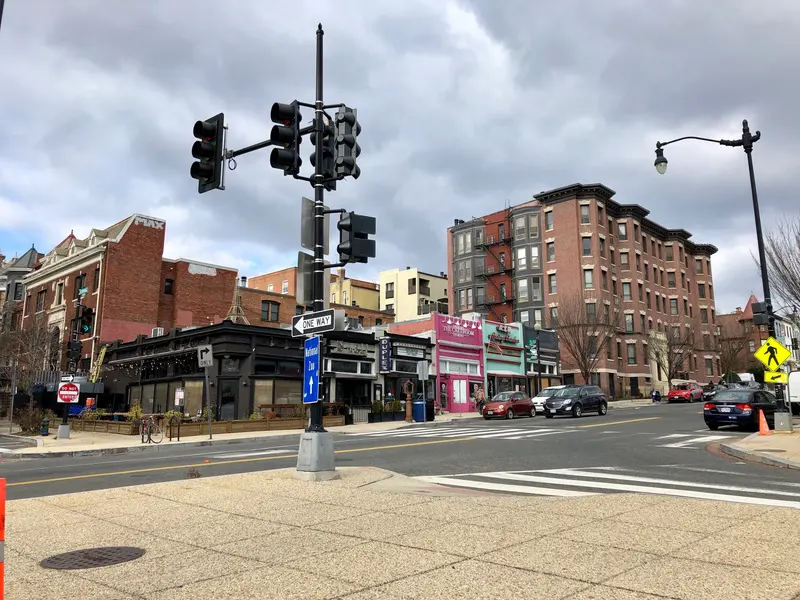
No account of DC eating is complete without the jumbo slice — the absurdly oversized, fold-it-in-half pizza slice that has fuelled Adams Morgan's late nights for decades. It is not high cuisine, and that is entirely the point: it's the city's classic after-the-bars order, a rite of passage for students and night owls, best eaten standing on 18th Street at an hour you'll later struggle to recall.
Late-night Washington has more than pizza, of course. Half-smokes, dumplings and global street food keep the small hours fed, especially around Adams Morgan, U Street and the H Street corridor. If your evening runs long, lean into it; some of the city's most fondly remembered meals happen well after midnight. Just check current closing times, since the kitchens and the Metro don't always keep the same hours.
- The jumbo slice: a giant fold-in-half pizza slice, Adams Morgan's classic late-night order.
- Where the night food lives: Adams Morgan, U Street and the H Street corridor.
- Also late: half-smokes, dumplings and global street food.
- Verify closing times — kitchens and the Metro keep different hours.
Sweets, markets and where to taste it all
Round out the icons with the softer pleasures and the easiest ways to graze them. Eastern Market on Capitol Hill is famous for its weekend blueberry-buckwheat pancakes, a Saturday-morning institution worth getting up for, and the city's oldest continuously operating public market besides. Georgetown is the sweet-tooth stroll, with cupcake shops and waterfront ice cream, while Union Market in NoMa gathers a couvent of small vendors under one roof for the indecisive.
If you'd rather have the dishes pulled together with their history attached, a food tour does exactly that — walking U Street, Eastern Market or the Wharf with the stories behind the half-smoke, the market and the bay. However you do it, taste across the layers: a half-smoke on U Street, an Ethiopian platter in Shaw, a steamed crab by the river, a box of mumbo wings from a corner store. That's the city on a plate.
- Eastern Market's weekend pancakes and Union Market's stalls are the easy grazing options.
- Georgetown is the dessert stroll — cupcakes and waterfront ice cream.
- A food tour bundles the dishes with their history along U Street, Capitol Hill or the Wharf.
- Build a 'city on a plate' day across the layers — local, immigrant and Chesapeake.

Related guides
What to Eat in Washington, D.C.
The dishes that define eating in Washington, D.C. — the half-smoke and mumbo sauce, the Ethiopian injera feasts of Shaw, Chesapeake blue crab and Old Bay, Salvadoran pupusas, jumbo slices and the local orders worth seeking out before you worry about which restaurant.
Read guide
Washington, D.C. Food Tours
How to choose a Washington, D.C. food tour — by neighbourhood, by history angle, by group size and budget — and when a guided tasting walk genuinely beats finding your own way around the city's plates.
Read guide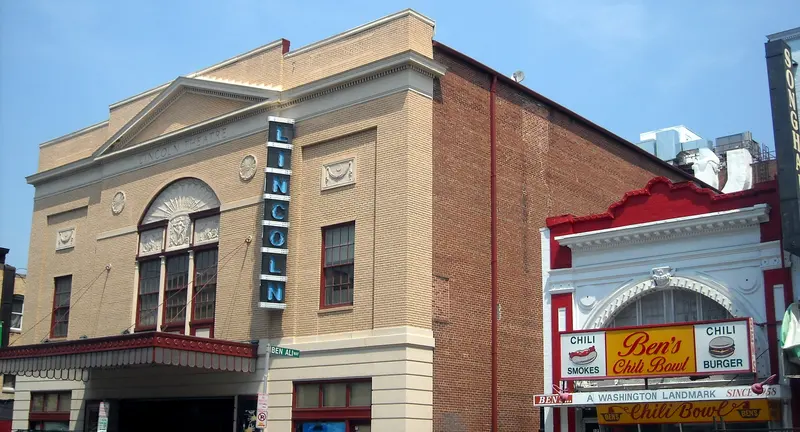
Shaw & U Street Guide
How to explore Shaw and the U Street corridor in Washington — the 'Black Broadway' heritage of Duke Ellington and the Lincoln Theatre, the half-smoke at Ben's Chili Bowl, the city's Ethiopian dining, live music and jazz, nightlife, and Metro-friendly hotels.
Read guideMore in Food & Drink
6
Adams Morgan & U Street Nightlife
How to have a great night out in Washington, D.C. — comparing the two big going-out districts, Adams Morgan and the U Street / Shaw corridor: live music and jazz, cocktail bars and dives, rooftops, late-night food, and how to get home safely by Metro, bus and ride-hail.
Read guide
Best Brunch in Washington, D.C.
Where to brunch in Washington, D.C. — the best brunch neighbourhoods, how reservations and bottomless deals work, family-friendly picks and the smartest way to plan a slow weekend morning around the city's sights.
Read guide
Best Cocktail Bars in Washington, D.C.
Where to drink well in Washington, D.C. — the city's craft cocktail bars by mood and neighbourhood, from date-night rooms and grand hotel bars to speakeasy-style hideaways, with advice on reservations, timing and dressing the part.
Read guide
Best Coffee & Cafés in Washington, D.C.
A guide to coffee in Washington, D.C. — the local specialty roasters, the work-friendly cafés, the museum-adjacent stops near the Mall, and which neighbourhoods have the densest coffee clusters, plus how to find a good cup on a sightseeing day.
Read guide
Best Ethiopian Food in Washington, D.C.
Why Washington is one of America's great Ethiopian eating cities — where to find it in Shaw and on U Street, how to order injera and shared platters, the vegan fasting feast, and how to fit an Ethiopian dinner into a DC trip.
Read guide
Best Food Halls & Markets in Washington, D.C.
The best food halls and public markets in Washington, D.C. — Union Market in NoMa, historic Eastern Market on Capitol Hill, the Wharf's Municipal Fish Market and more. The easiest group, family and indecisive-table meals in the city, with what to eat and when to go.
Read guide